
Unbiased headlines. Facts, not spin.
Every story is an unbiased news briefing written from 110+ sources across the spectrum — sources linked so you can verify it yourself.
 energy
Major Story (8/10)
June 23, 2026 at 04:06 AM
energy
Major Story (8/10)
June 23, 2026 at 04:06 AM
Iran Oil Moving Again, But the Strait of Hormuz Is Not Fixed and Gas Prices Are Not Back to Normal
Since the U.S.-Iran memorandum of understanding was signed on June 17, the situation in and around the Strait of Hormuz has been moving fast in some ways and barely at all in others.
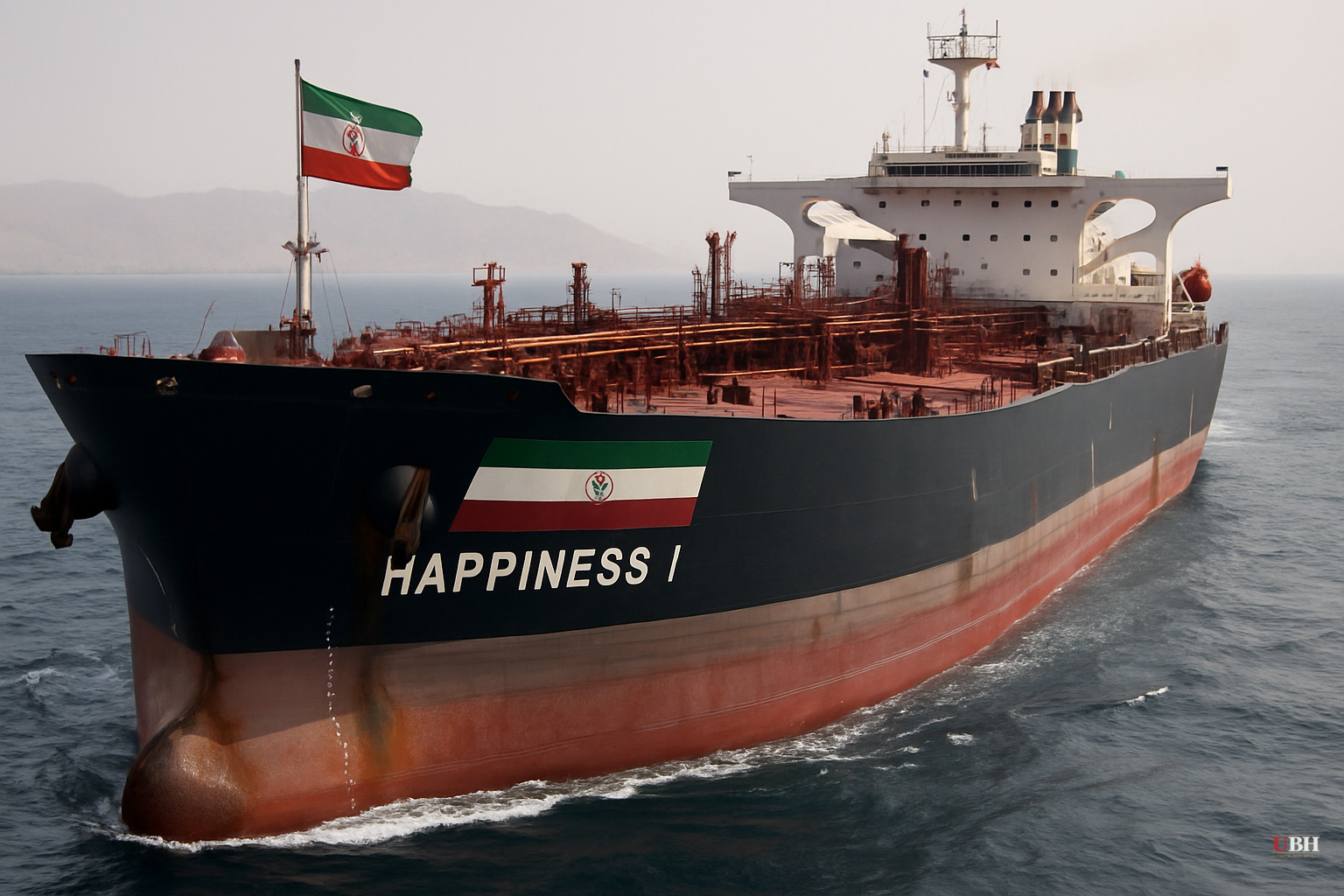
On the export side, Iran wasted no time. According to Bloomberg data cited by ZeroHedge, at least three supertankers carrying a combined 6 million barrels of Iranian crude transited Hormuz outbound on Monday, the most Iranian oil openly departing Kharg Island in a single day since the war began on February 28. Their AIS transponders were on, signaling destinations near Singapore, a well-known ship-to-ship transfer point before the oil heads to Chinese refiners.
The U.S. matched that momentum diplomatically. Treasury Secretary Scott Bessent on Monday authorized a 60-day general license permitting the production, delivery, and sale of Iranian oil, including imports into the U.S. with payment in dollars. The license expires August 21 unless renewed, according to CNBC.
The Food-for-Oil Commitment Nobody Signed
Trump told CNBC's Eamon Javers at the White House that Iranian oil revenues would be spent on American agricultural products — corn, soybeans — and that U.S. farmers would be the exclusive beneficiaries. "Should be a lot of money. I hope it's a lot of money," he said.
But Abdolnaser Hemmati, governor of Iran's central bank, told the Iranian news agency Tasnim the same day: "There is no obligation to purchase agricultural inputs from the U.S." He said Iran would buy from wherever price and quality were competitive, adding, "We need to buy billions of dollars worth of essential goods and medicine annually, and it does not matter to us from which source we pay."
When CNBC pressed Trump on whether he could guarantee Iran wouldn't funnel oil money into military rebuilding, his answer was: "Well, they're not supposed to be doing that, so we'll see."
Two parties describe two different understandings of the same agreement. No signed document obligating Iran to buy American farm goods has been made public.
The Strait Is Technically Open. Operationally, That's Complicated.
Vice President JD Vance reported "great progress" from the Switzerland talks, Iran's Foreign Minister Abbas Araghchi acknowledged progress on social media, IAEA weapons inspectors are being allowed back in, and Iran committed to toll-free transit through Hormuz for 60 days, according to CNBC.
But OilPrice.com and maritime intelligence firm Windward tell a messier story. Iran declared Hormuz closed on Saturday in response to continued Israeli strikes in Lebanon, hours after agreeing to reopen it. U.S. Central Command said the strait remained open and that 55 merchant ships transited Saturday moving more than 17 million barrels. Windward's data showed transits dropping to 12 vessels on Sunday from more than 21 on Saturday, with neutral and European commercial tonnage absent and five of eight inbound vessels traveling in "dark mode" with AIS off.
"The MOU-driven recovery that began June 18 has stalled within 24 hours of the announcement," Windward said, describing the traffic profile as "resembling the late-blockade baseline more than a functioning open strait."
Kpler trade risk analyst Ana Subasic, writing via OilPrice.com, flagged a problem broader than the open/closed question. GPS spoofing in the region is compromising vessel tracking, which means insurance underwriters and sanctions-compliance teams cannot reliably verify voyage records even when a ship physically makes it through. BIMCO, the largest international shipowners' association, said publicly last week that the MOU "does not offer sufficient information regarding key aspects such as safe routes, measures to separate traffic, sequencing of ships leaving the Gulf, reporting procedures" and emergency response.
Iran also launched mandatory insurance for every vessel transiting Hormuz, to be issued exclusively by its newly created Persian Gulf Strait Authority, according to Lloyd's List reporting cited by OilPrice.com. Coverage is currently free, but the PGSA has explicitly reserved the right to introduce fees later. The Authority will also be the only entity that can issue transit permits and dictate routes. This is a structural change to how Hormuz operates, and it did not exist before the war.
What Critics Are Saying, and Why It Matters
Ron Paul, writing via ZeroHedge, argued that Trump deserves credit for attempting to end the war and that the bipartisan congressional backlash reveals more about Washington's appetite for conflict than about the MOU's merits. Sen. Adam Schiff called it a "capitulation," Sen. Chris Murphy called it an "embarrassing document," and Sen. Amy Klobuchar falsely claimed Trump was paying Iran $300 billion to reopen the strait, according to Paul's piece. Klobuchar's $300 billion figure does not appear in any sourced document, and characterizing a ceasefire framework as a capitulation without specifying what alternative outcome Congress was prepared to pursue militarily or diplomatically is not a serious policy position.
Analysts raise a substantive concern. OilPrice.com's in-house analysis argues the world is approaching what it calls "tank bottoms" — a depletion of commercial and strategic oil inventories that were acting as buffers during the blockade. Even if Hormuz fully normalizes, replenishing those inventories creates its own demand surge that will keep prices elevated.
When Does Gas Get Cheaper?
Not soon. Robert Rapier, writing via OilPrice.com, noted that the national average gasoline price climbed from under $3 a gallon before the conflict to more than $4 during the spring. Futures markets have priced in a peace scenario quickly, but tanker routes, insurance markets, refinery supply chains, and inventory stockpiles normalize on a timeline of weeks to months, not days. Rapier's conclusion: a drop from $4.50 to $4.05 is real and helpful, but it still leaves prices far above pre-war levels, and the path back is "likely to be slower and more uneven than the recent drop in crude prices might suggest."
Scott Chronert, managing director of U.S. Equity Strategy at Citi Research, told CNBC's Squawk Box Asia that markets are pricing in increasing confidence the conflict is nearing its end and that "this energy price overhang with its inflation connotation should be lessening in the weeks and months to come." That is an optimistic read, conditional on the MOU holding, which as of June 23 remains an open question.
The 60-day Treasury license expires August 21. Whether it gets renewed, extended, or cancelled depends entirely on whether Iran keeps Hormuz functionally open, allows IAEA inspectors to operate, and refrains from using oil revenue to reconstitute the military capabilities the U.S. and Israel spent months degrading. None of those conditions comes with an enforcement mechanism that has been publicly explained.
Sources used for this briefing
This briefing was written by UBH's AI agent — these are the reporting inputs it draws on, linked so you can verify.


