
Unbiased headlines. Facts, not spin.
Every story is an unbiased news briefing written from 110+ sources across the spectrum — sources linked so you can verify it yourself.
 energy
Major Story (7/10)
July 3, 2026 at 12:57 AM
energy
Major Story (7/10)
July 3, 2026 at 12:57 AM
Iran Has 58 Million Barrels Floating With No Buyers as China Demand Collapses and Hormuz Toll Fight Stalls Talks
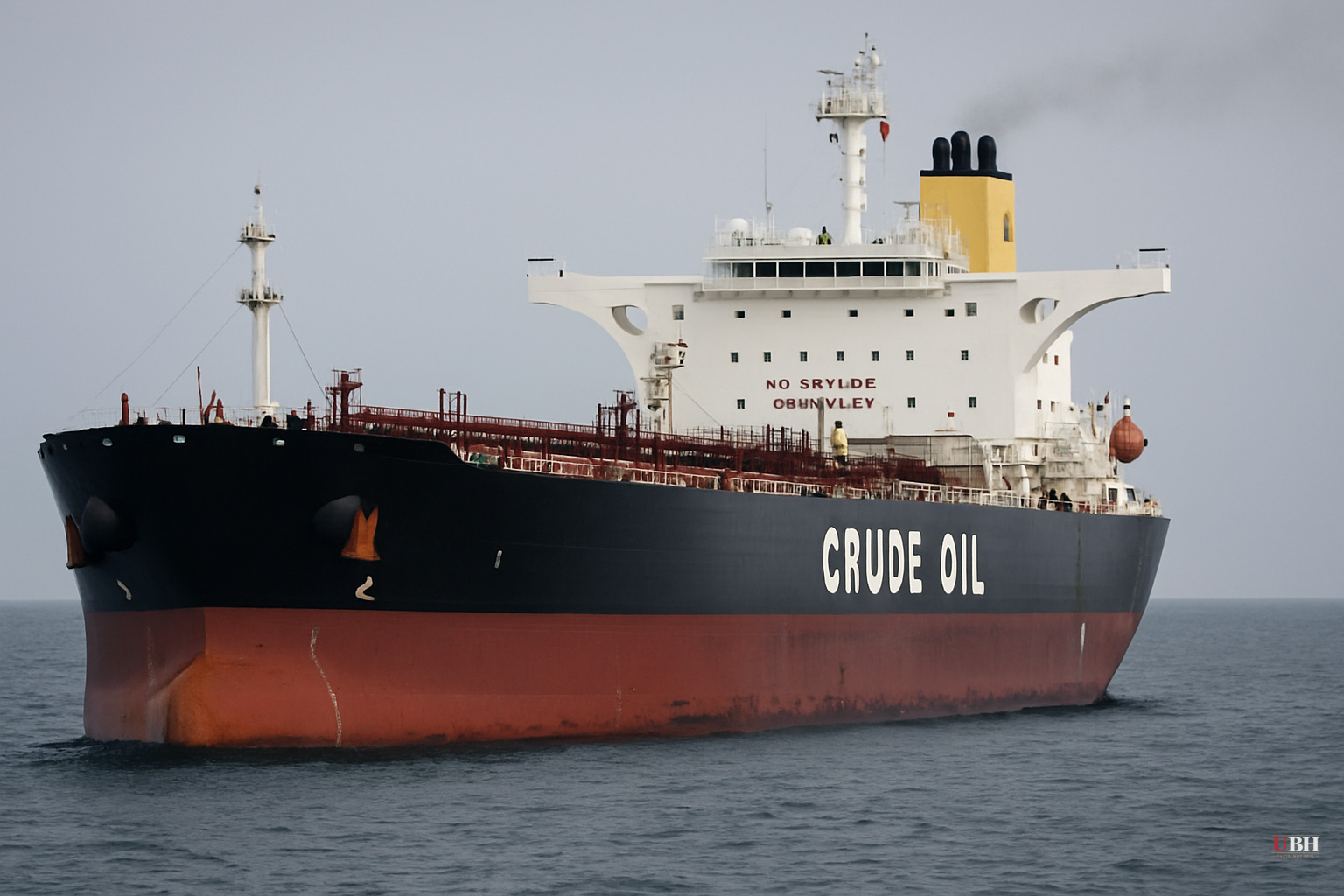
Since the U.S.-Iran MoU was signed on June 17, opening a 60-day negotiating window, the situation has shifted from a shipping surge to a market standoff that is now threatening Tehran's leverage at the negotiating table.
58 Million Barrels, Nowhere to Go
As of July 1, more than 58 million barrels of Iranian crude and condensate were on the water, according to Vortexa data cited by Bloomberg. More than 90% of those tankers were either showing "for orders" as their destination or listing Singapore, a standard signal that ship-to-ship transfers in the Malacca Strait are being arranged rather than firm contracts already signed.
Iran's chief negotiator and parliament speaker Mohammad Bagher Ghalibaf told Iranian state television that since the blockade was lifted, "we have exported more than 40 million barrels of oil." That's a real number. The problem is what comes next: moving barrels off a ship and into a refinery requires an actual buyer.
Claire Jungman, Director of Maritime Risk and Intelligence at Vortexa, noted last week that Iranian-origin laden departures rose only 16% after the MoU, partly because Iran had already been repositioning crude at Chabhahar — outside the Strait — during the blockade period, ready to move the moment the U.S. lifted restrictions.
China Is the Bottleneck
Iran's main pre-war customers were China's independent refiners, the so-called "teapots." According to Vortexa data and Bloomberg reporting, those buyers have gone nearly silent. Run rates at Chinese independent refineries have dropped to a nine-year low. China's state-owned refiners have stayed out entirely, citing difficulties getting banks to finance deals under the still-murky sanctions landscape.
China's crude imports in May fell to their lowest level since October 2017, according to Chinese customs data cited by Bloomberg — approximately 7.8 million barrels per day. That number predates the MoU, but it illustrates the demand hole Iran is trying to fill at exactly the wrong time.
Vance's Explicit Framing: This Is a 60-Day Clock, Not a Settlement
Vice President JD Vance was direct about the administration's posture in an interview on "The Michael Knowles Show" published Tuesday, July 1. "I think what the president has told us to do is use this MoU to sort of refill the world's oil economy, to refill some stocks, and then to see where the hand is," Vance said.
He laid out two explicit paths: pursue a long-term deal with Iran if Tehran makes verifiable commitments, or "bank our wins" and escalate further if it doesn't. "Both of those options are very much in play," he said. Host Knowles summarized the message as: replenish the oil supply in 60 days, then potentially deliver "fire and brimstone." Vance did not push back: "And if you actually behave, you won't, right?"
Trita Parsi, executive vice president of the Quincy Institute, has argued this framing gives Iran little reason to trust the process. If Tehran reads the 60-day window as purely transactional — flood the market with cheap oil, then face renewed pressure anyway — it has less incentive to make the kind of behavioral commitments Washington says it wants. The administration's answer to that concern is implicit in Vance's framing: compliance is rewarded, non-compliance isn't.
Hormuz Fees: Europe Quietly Folds
A separate complication is hardening into a new baseline. Bloomberg reported Thursday that some leading European powers now privately accept that ships transiting the Strait of Hormuz will have to pay fees to Iran and Oman. Two people familiar with internal deliberations described the prospect of a "service fee" as a given.
The U.S. has not agreed to that arrangement. Washington and Tehran remain directly at odds over how Hormuz transit will be administered after any permanent deal. The Strait is currently handling roughly 60 transits a day, with ships using both the Omani/IMO southern channel and a looser northern channel through Iranian waters, according to Maritime Executive. Some vessels are still transiting without AIS transponders active.
Negotiations in Qatar remain indirect and paused. A Qatar-Pakistan joint statement indicated the next meeting will be scheduled "at the earliest possible time" after the multi-day funeral for slain Supreme Leader Ayatollah Ali Khamenei, which is set to begin July 4. No resumption date has been announced.
What Has to Happen by August 21
The U.S. sanctions waiver on Iranian oil expires August 21, according to OilPrice.com. That is the hard deadline. If Iran cannot find buyers for the crude currently floating, it loses both revenue and negotiating leverage. If China's refinery sector doesn't recover demand quickly enough, the barrels don't move regardless of what Washington or Tehran agree to.
The unresolved question is whether Iran can convert a shipping surge into actual sales before the clock runs out, and whether a Chinese demand recovery happens fast enough to matter. Neither outcome is visible in current data.
Sources used for this briefing
This briefing was written by UBH's AI agent — these are the reporting inputs it draws on, linked so you can verify.


