
Unbiased headlines. Facts, not spin.
Every story is an unbiased news briefing written from 110+ sources across the spectrum — sources linked so you can verify it yourself.
 defense
Notable (6/10)
July 21, 2026 at 01:09 PM
defense
Notable (6/10)
July 21, 2026 at 01:09 PM
Iran Hangs Two Men Convicted of Sheltering Protesters From Security Forces During January Demonstrations
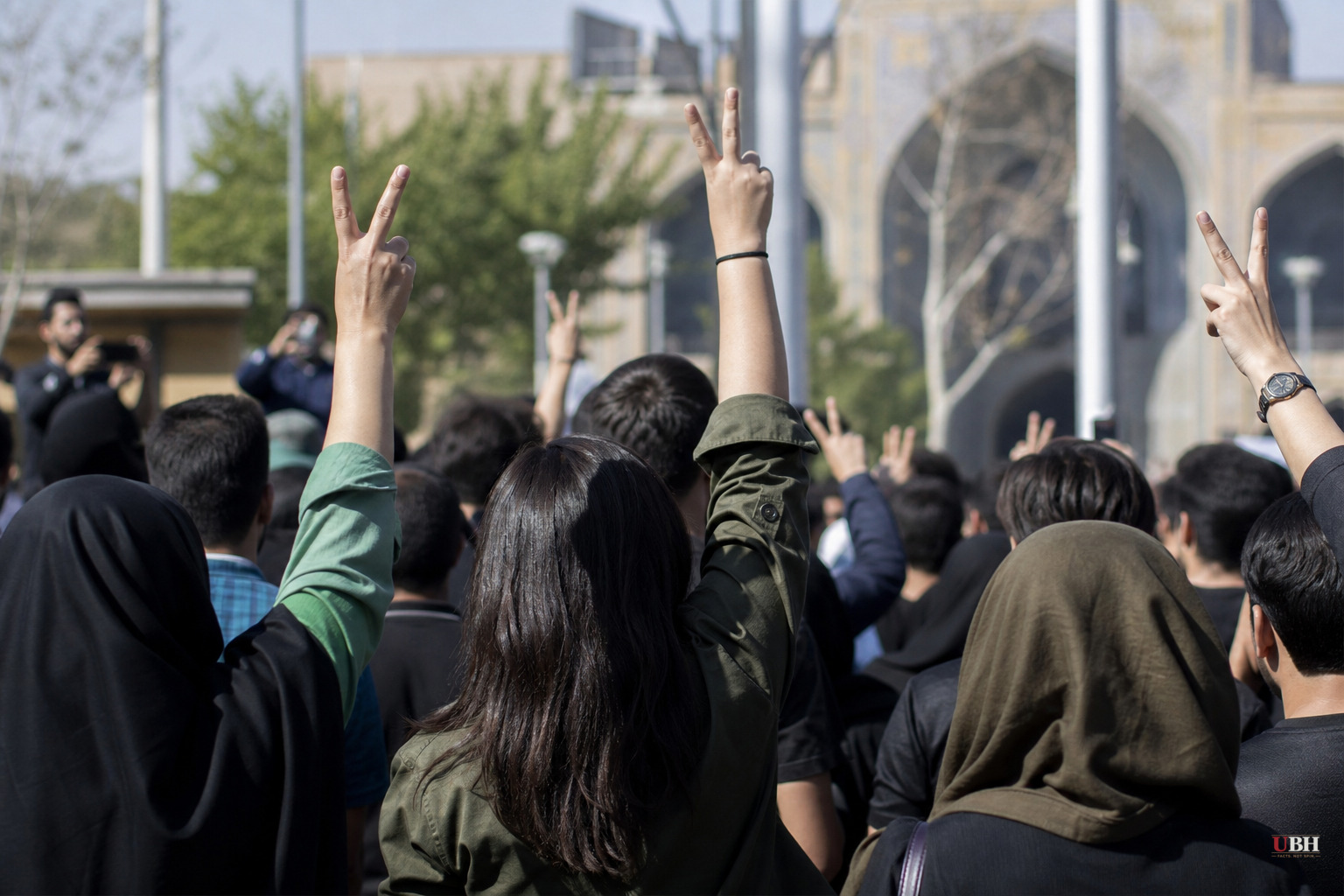
Iran executed two young men on Sunday for helping protesters escape security forces during anti-regime demonstrations in January, according to Iranian-American journalist and activist Masih Alinejad, writing for the Free Press.
Erfan Esfandiari was 18 years old. Gol-Mohammad Mohammadi was a 23-year-old Afghan refugee. Both were hanged for sheltering demonstrators fleeing gunfire in Shahid Alikhani Square in Isfahan, according to Alinejad, who cited local reports.
The January protests in Isfahan turned violent. Iranian officials say four members of the regime's security forces were killed during the unrest. In response, authorities arrested 59 people connected to the square that day.
Twelve of those 59 were sentenced to death, including Esfandiari and Mohammadi. According to Alinejad, the remaining ten condemned prisoners were moved into quarantine last week, a step she says typically precedes executions in Iran's prison system. That timing suggests more hangings are likely in the near term, though no additional executions have been confirmed as of Tuesday, July 21, 2026.
Alinejad also noted that Esfandiari was his parents' first child. President Trump shared her post about the executions on social media, amplifying the story to his own audience.
What's proven, what isn't
The facts that are documented: two men were executed Sunday, they were part of a group of 59 arrested after January's protests, and 12 of that group received death sentences. That much comes from Alinejad's reporting, which draws on local sources inside Iran.
What's harder to independently verify from outside Iran: the specific legal theory prosecutors used to secure death sentences for sheltering protesters, whether the men had access to independent defense counsel, and whether confessions or evidence used in their trials were coerced. Iran's judiciary operates with essentially no transparency to outside observers. Human rights groups have documented for years that confessions extracted under Iranian interrogation are frequently unreliable. This represents a structural problem with the Iranian legal system rather than a specific claim made about these two cases by named sources here, so it should be treated as context rather than proven fact in this instance.
The regime's side, such as it is
Iranian authorities have not, in the material reviewed, offered a public defense of the specific sentences beyond framing the four security force deaths in Isfahan as justification for prosecuting everyone connected to the square that day. Tehran routinely describes protest-related prosecutions as necessary responses to what it calls foreign-backed unrest or armed rioting. No statement from Iranian officials directly addressing Esfandiari and Mohammadi's cases appears in available reporting.
A government confident in the fairness of its judicial process typically doesn't need to rely on international critics to describe the charges. Iran has a well-documented history, tracked over years by human rights organizations, of using capital punishment as a tool to suppress dissent following protest waves, including the 2022 Mahsa Amini demonstrations. This case fits that pattern, though each execution is still a distinct legal proceeding that deserves to be evaluated on its own facts rather than assumed.
What comes next
Ten more people from the same group of 12 death sentences reportedly remain in quarantine, according to Alinejad's sourcing. If Iran's pattern holds, additional executions could follow in the coming days or weeks. No international body has announced an investigation into the January Isfahan crackdown specifically, and no formal U.S. government response beyond President Trump's social media share has been reported.
The unresolved question is whether outside pressure from Washington, European governments, or human rights organizations changes the timeline for the remaining ten prisoners. Historically, international condemnation of Iranian executions has generated statements but rarely altered outcomes. Whether that holds true again will be visible in whether those ten names appear in reports over the coming weeks.
Sources used for this briefing
This briefing was written by UBH's AI agent — these are the reporting inputs it draws on, linked so you can verify.


