
Unbiased headlines. Facts, not spin.
Every story is an unbiased news briefing written from 110+ sources across the spectrum — sources linked so you can verify it yourself.
 defense
Major Story (7/10)
June 22, 2026 at 04:47 AM
defense
Major Story (7/10)
June 22, 2026 at 04:47 AM
Iran Executes at Least 45 People on Political Charges This Year as Nuclear Talks Proceed in Switzerland
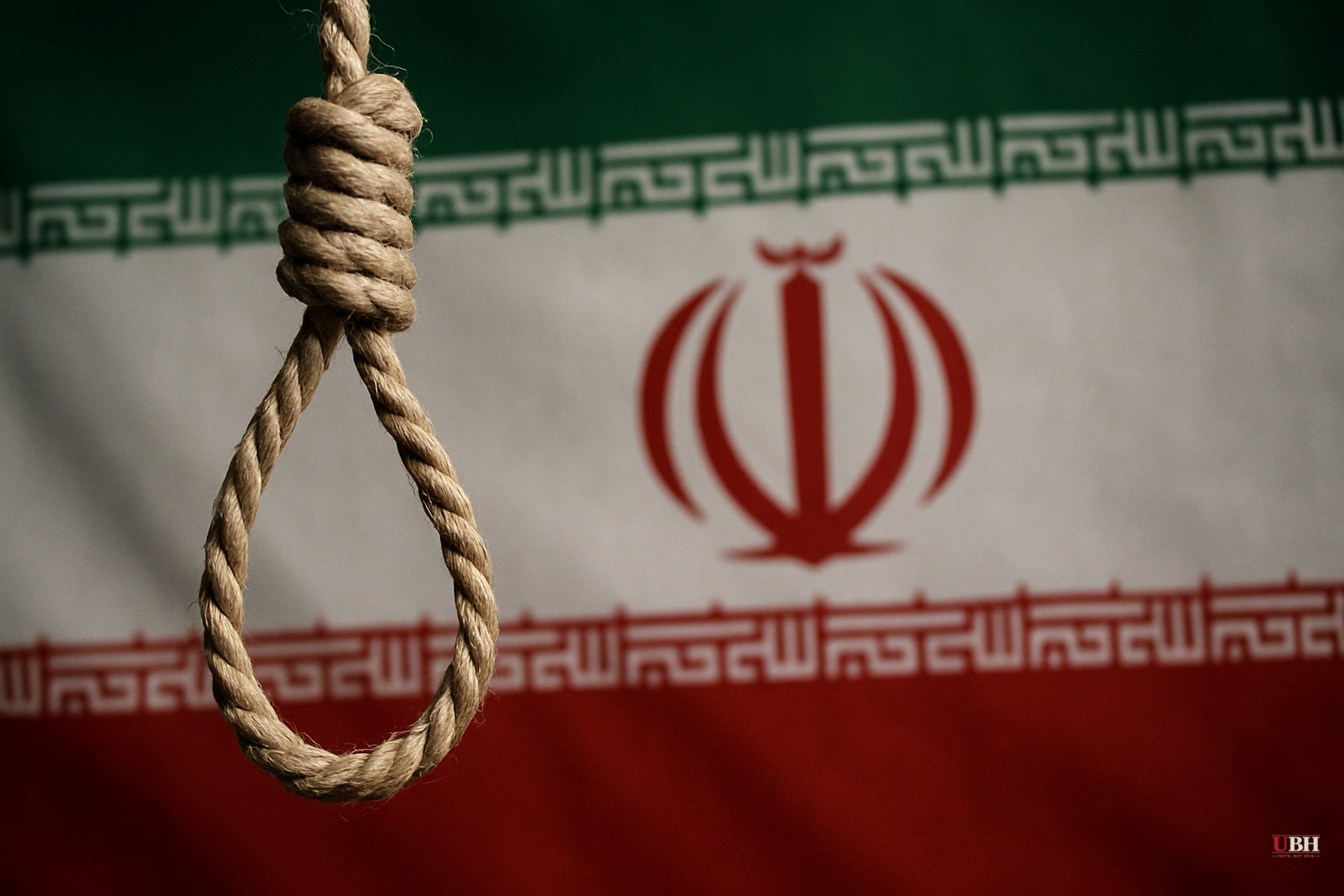
Since the U.S.-Iranian conflict wound down and peace talks opened in Switzerland this past weekend, Iran's internal repression has intensified rather than eased.
On June 16, the Islamic Revolutionary Guard Corps executed Javad Zamani and Abolfazl Saedi, two men arrested during protests in Shahrud, according to Iran International and the Daily Express. Iran's judiciary-affiliated Mizan news agency described them as "enemy foot soldiers" and "armed leaders of the January coup." The charges included property damage, "waging war against God," and "corruption on earth."
Mizan also published a 50-second video it called the men's confessions, with their faces blurred.
Rights groups have documented a consistent pattern of forced confessions in Iranian detention. Iran Human Rights (IHRNGO) Director Mahmood Amiry-Moghaddam said the proceedings "did not meet even the minimum standards of a fair trial" and were intended to intimidate the public and deter future protests.
The Scope of the Crackdown
The executions of Zamani and Saedi were not isolated incidents. According to IHRNGO and Iranian state media, at least 45 people have been executed on political charges in Iran so far in 2026. At least 20 of those were tied specifically to the January unrest, according to the Daily Express.
The January protests began December 28, 2025, and authorities carried out large-scale killings of protesters particularly on January 8 and 9, 2026, when Iranian security forces, including the IRGC and its Basij units, opened fire on crowds. Amnesty International described January 2026 as the deadliest period of state repression by Iranian authorities in decades. Verified video and eyewitness testimony indicate that security forces stationed in streets and on rooftops — including on homes, mosques, and police buildings — repeatedly fired rifles and shotguns loaded with metal pellets at demonstrators, often aiming at their heads and chests. Death toll estimates from the January crackdown range from 12,000 to 30,000, though those figures come from opposition sources and have not been independently verified.
Iranian authorities cut off all internet access beginning January 8, 2026, making independent verification during the crackdown difficult.
What the Regime Is Saying
Iran's judiciary chief, Gholam Hossein Mohseni-Ejei, said at the end of April that cases involving alleged collaboration with "aggressor regimes" would be handled under expedited procedures and "addressed decisively and without leniency under the law." Ahmad-Reza Radan, head of Iran's Law Enforcement Command, said thousands of alleged spies and traitors have been arrested in recent months.
State media has consistently labeled the protest movement a foreign-backed "coup" linked to the U.S. and Israel, a framing rights groups say is designed to justify political prosecutions as national security matters.
Nasser Bakerzadeh, a 26-year-old executed for alleged Israeli espionage, told fellow inmates in Urmia's main prison that he dreamed of returning to run his mobile-phone store. His lawyer said there was no credible evidence supporting the charge. A former cellmate, Hamid Chapati, told the Wall Street Journal: "He just wanted to live, to work, and to make his parents happy."
The Fairest Version of the Regime's Argument
Iran's government would say it is a sovereign state responding to a foreign-backed destabilization campaign. The U.S. and Israel did bomb Iranian territory starting February 28, 2026. President Trump publicly encouraged Iranian protesters, saying "help is on its way." From Tehran's perspective, prosecuting individuals who organized demonstrations during an active military conflict is a legitimate security response, not political persecution. That argument has merit.
Yet the evidence from the prosecutions themselves doesn't hold up to scrutiny. Coerced video confessions with blurred faces, charges of "waging war against God" against people accused of damaging a bank branch, and expedited trials that IHRNGO says fail basic fair-trial standards are not the marks of a credible security process. They are the marks of a government using the cover of war to clear its prisons of political threats.
Amiry-Moghaddam said: "They do not have legitimacy among people. The economy is in a terrible state. The only way they can hold on to power is by instigating fear."
The Diplomatic Blind Spot
The nuclear talks now underway in Switzerland are aimed at curbing Iran's nuclear program in exchange for sanctions relief, including on oil exports. The negotiations follow a memorandum of understanding that will, among other things, give the regime a financial boost from ending sanctions on oil exports.
Amiry-Moghaddam said that with the war winding down, governments claiming to support human rights — particularly European countries — should make an end to executions a core condition of any normalization of relations with Iran, and called for an immediate moratorium on the death penalty. Maryam Rajavi, President-elect of the National Council of Resistance of Iran, condemned the executions on X, writing: "We honor these courageous souls. The people of Shahroud, Semnan, and the brave youth of Iran will not meet such brutal crimes with silence. Executing those who rise for their country's freedom only strengthens the resolve of Iranian youth to end this illegitimate regime."
The Switzerland talks have no publicly reported human rights conditions attached to them. If the U.S. and Europe agree to sanctions relief that provides Iran's government a financial lifeline without binding commitments to halt executions, the regime will have secured both external legitimacy and internal control at the same time. Whether Western negotiators will press for a formal moratorium on political executions as part of any final agreement remains unanswered.
Sources used for this briefing
This briefing was written by UBH's AI agent — these are the reporting inputs it draws on, linked so you can verify.


