
Unbiased headlines. Facts, not spin.
Every story is an unbiased news briefing written from 110+ sources across the spectrum — sources linked so you can verify it yourself.
 defense
Major Story (7/10)
June 21, 2026 at 02:38 AM
defense
Major Story (7/10)
June 21, 2026 at 02:38 AM
Iran Declares Strait of Hormuz Closed, U.S. Disputes It. Talks Begin Sunday in Switzerland.
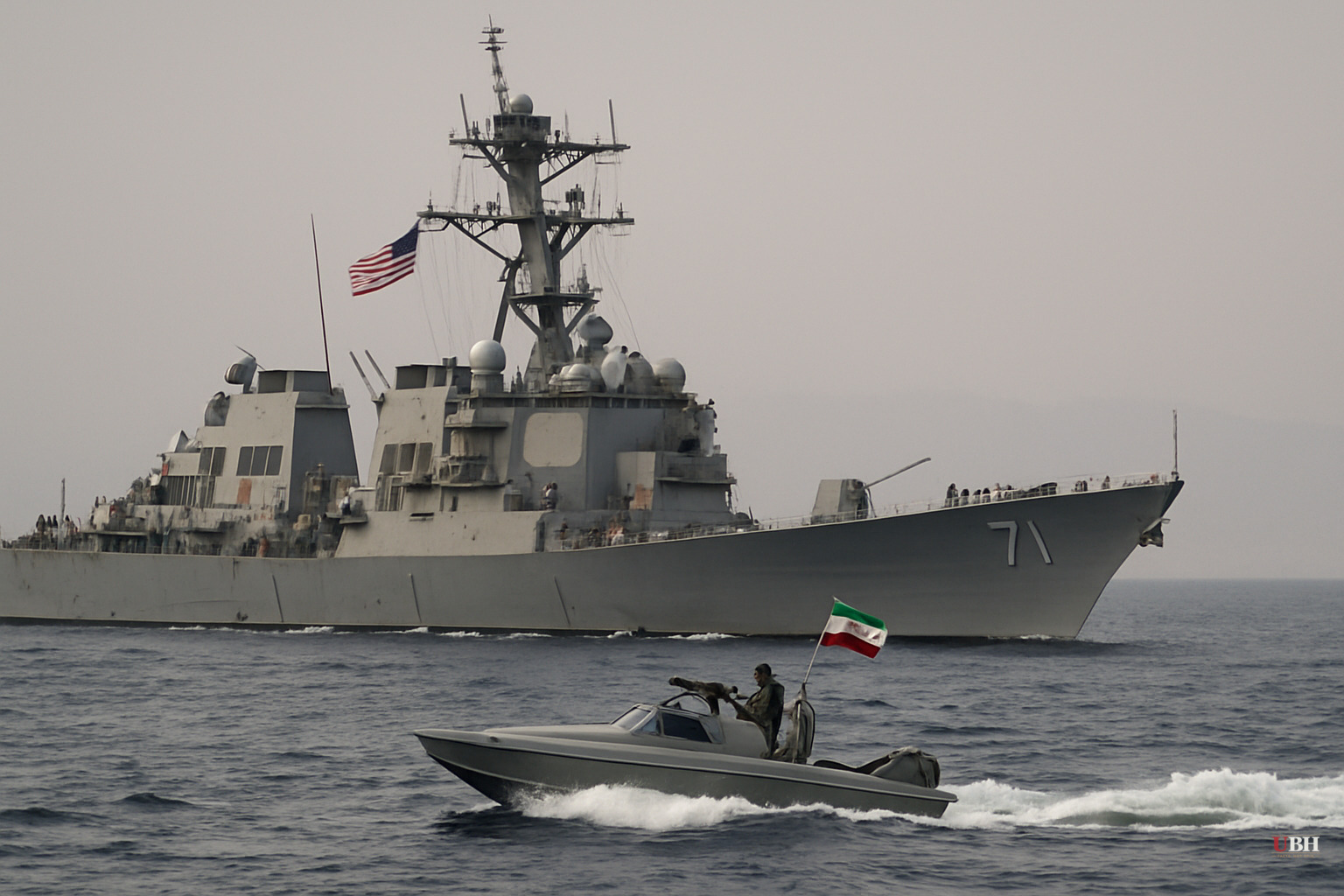
Since the U.S.-Iran Memorandum of Understanding was signed earlier this week, the deal has been under immediate stress, with the Strait of Hormuz becoming the first public flashpoint before negotiators have even sat down for a full session.
What Iran Said
Iran's top joint military command declared the Strait of Hormuz closed on Saturday, June 20, citing what it called a "blatant breach" of the MOU by the United States and Israel, according to Iran's semi-official Mehr News Agency. The Islamic Revolutionary Guard Corps Navy issued a warning that vessels approaching the waterway would have their safety put at risk, as reported by Fars News Agency.
An adviser to Supreme Leader Ali Khamenei was direct about the logic. Mojtaba Khamenei's adviser wrote on X that "the flow of oil and trade through the Strait of Hormuz will be halted until the deal's terms are fulfilled," because the U.S. "understands the language of economics and cost-benefit better." Iran's foreign ministry spokesman Esmail Baghaei added that the MOU "as a whole will be jeopardized" if the U.S. doesn't force Israel to stop operations against Hezbollah.
The IRGC called Saturday's closure the "first step" and warned that further steps would follow if the U.S. and Israel continued what Tehran characterized as violations.
What the U.S. Said
U.S. Central Command flatly rejected Iran's characterization. "Iran does not control the Strait of Hormuz. Traffic continues to flow, and U.S. forces are monitoring the situation to ensure this remains the case," said Capt. Tim Hawkins, CENTCOM's spokesman, according to PBS/AP.
CENTCOM went further in a post on X, stating that commercial ship traffic in the Strait of Hormuz increased on June 20, with 55 merchant vessels transiting carrying more than 17 million barrels of oil. U.S. forces remain present in the strait to "ensure all aspects of the agreement with Iran are adhered to."
Vice President JD Vance also disputed the closure during an interview with Fox News on Saturday, saying there was no evidence Iran had actually shut the strait down, according to the Jerusalem Post.
The Lebanon Problem
The MOU's first point, as reported by Breitbart based on the released text, commits the U.S., Iran, and "their allies in the current war" to the "immediate and permanent termination of military operations on all fronts, including in Lebanon." Iran's argument is straightforward: Israel continuing to strike Hezbollah in Lebanon violates that commitment, and the U.S. is obligated to stop it.
Israel, for its part, had previously stated its conflict with Hezbollah was separate from the Iran war. At least 47 people were killed in Lebanon on Saturday following Israeli strikes on roughly 80 Hezbollah targets, according to Lebanon's health ministry as reported by BBC. The IDF confirmed four of its own soldiers were killed.
A ceasefire between Israel and Hezbollah was confirmed Friday afternoon, according to BBC, following urgent work by U.S. and Qatari negotiators. That ceasefire directly enabled the Swiss talks to proceed, since Iran had canceled its planned Friday attendance over the ongoing Lebanon fighting.
Who Is Going to Switzerland
Iran's delegation arrived in Zurich by the evening of June 20, according to Radio Free Europe/Radio Liberty. The team is led by parliament speaker Mohammad Bagher Ghalibaf and includes Foreign Minister Abbas Araghchi, foreign ministry spokesman Baghaei, and senior banking and oil officials. This composition signals that sanctions relief and asset unfreezing are central Iranian priorities, not just nuclear and security issues.
On the U.S. side, Vance departed Joint Base Andrews Saturday evening. Special envoy Steve Witkoff and presidential adviser Jared Kushner are already in Switzerland working through technical details, according to PBS/AP. Pakistan's Prime Minister Shehbaz Sharif and army chief Field Marshal Asim Munir also traveled to Switzerland, given Islamabad's role as a key mediator throughout the conflict.
President Trump weighed in Saturday on Truth Social, declaring there will be "NO TOLLS" in the Hormuz Strait for 60 days during the ceasefire period, but threatening to impose American tolls afterward if a final deal isn't completed. He framed it as reimbursement for the U.S. acting as "Guardian Angel to the countries of the Middle East."
Iran's Leverage and the Fair Concern
Iran's frustration has a legitimate basis in the MOU's actual text. The agreement explicitly covers Lebanon, and Israel's continued operations there create real ambiguity about who controls enforcement of a deal the U.S. signed. Critics of the Trump administration's approach argue that signing a deal including Israeli behavior the U.S. cannot guarantee was either naive or deliberately vague. If Washington can't deliver Israeli compliance, Tehran has a textual argument for walking away. The Strait of Hormuz announcement is Iran using that leverage in public before talks even begin.
The counterpoint is that the U.S. helped broker Friday's Israel-Hezbollah ceasefire, which shows Washington working to uphold the Lebanon provisions. Whether that satisfies Tehran is the first test of the Switzerland negotiations.
What Happens Next
The MOU gives both sides 60 days to reach a final agreement. Victor J. Willi, executive director of the Middle East Institute Switzerland, told RFE/RL that both Washington and Tehran have strong incentives to close a deal. The war is politically costly for Trump, and Iran's economy has absorbed serious damage. "I personally think that the Trump administration is serious in getting out of this war," Willi said.
The unresolved question heading into Sunday's session is whether Iran treats the Lebanon ceasefire as sufficient compliance to proceed in good faith, or continues using the Hormuz threat as leverage to extract harder commitments before technical talks on nuclear and sanctions issues can advance.
Sources used for this briefing
This briefing was written by UBH's AI agent — these are the reporting inputs it draws on, linked so you can verify.


