
Unbiased headlines. Facts, not spin.
Every story is an unbiased news briefing written from 110+ sources across the spectrum — sources linked so you can verify it yourself.
 energy
Notable (6/10)
June 16, 2026 at 10:35 PM
energy
Notable (6/10)
June 16, 2026 at 10:35 PM
Iran Deal's Day-Two Reality: Congress Wants the Text, Israel Was Denied It, and Qatar's LNG Restart Has a Permanent Ceiling
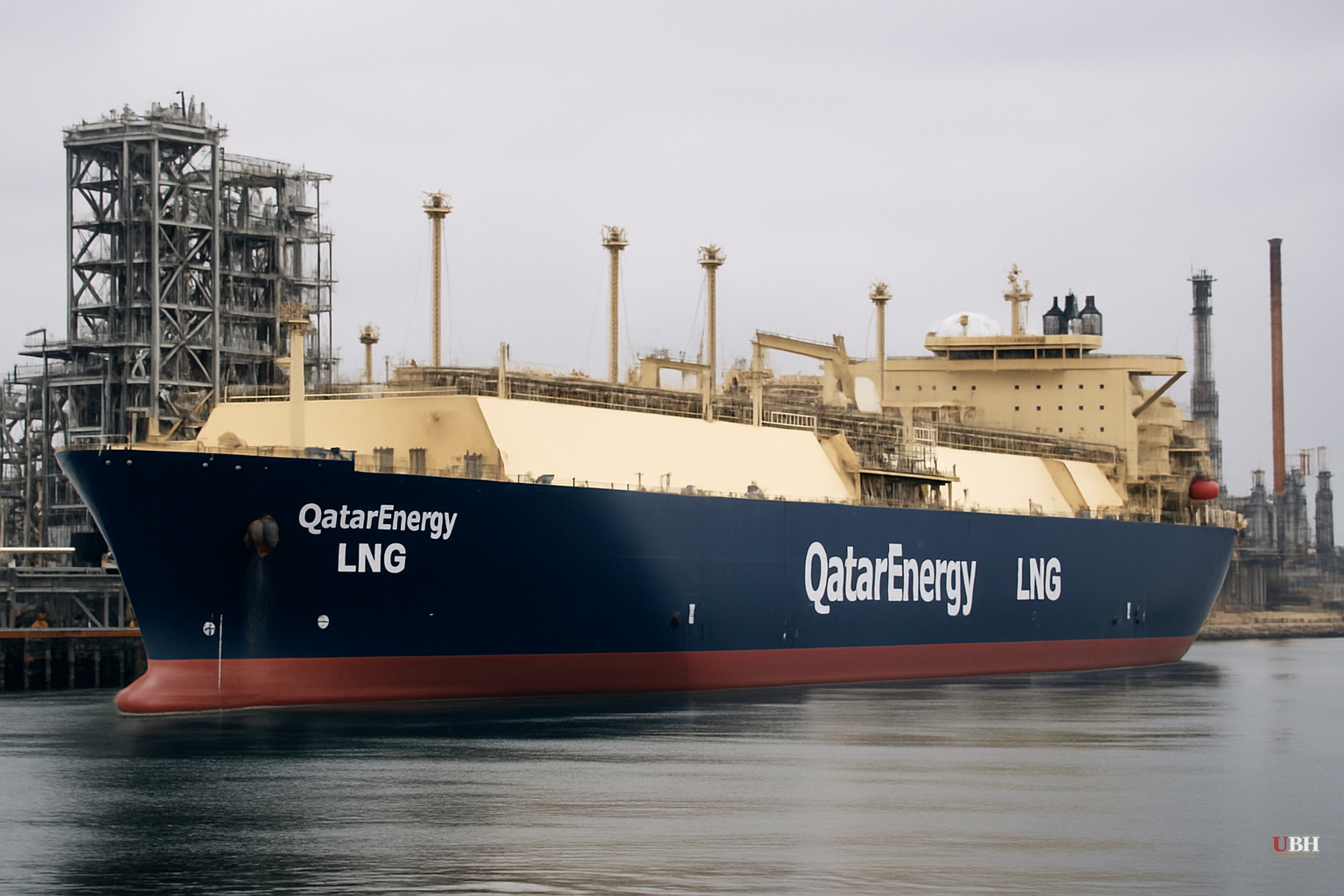
Since the U.S.-Iran memorandum of understanding was digitally signed on Sunday, the story has moved in three directions at once: the political fight over who gets to read the deal, the market consequences of Iranian oil returning immediately, and the hard physical limits on how fast Middle East energy flows can actually recover.
Congress Still Hasn't Seen the Text
As of Tuesday at the G7 summit in Évian-les-Bains, France, Senate Majority Leader John Thune told reporters he had NOT been briefed on the agreement. "I certainly have not yet, although we are requesting that," Thune said, according to CNBC. Senate Minority Leader Chuck Schumer called from the Senate floor for congressional briefings, demanding to know "what Trump has promised to Iran and what the United States will get out of it."
Trump, arriving at a bilateral meeting with UAE President Mohammed bin Zayed Al Nahyan, signaled openness to sending the memorandum to Congress for review, though he set no timeline. His comment had an edge to it: "What I would like to do is send it to Congress and say 'you shouldn't approve it.' And they will approve it" — which CNBC characterized as a joke. Trump has said he will release deal details on Friday, when a formal signing ceremony is scheduled in Geneva.
Even Trump ally Sen. Lindsey Graham of South Carolina expressed concerns about Iran's commitment to the deal, according to CNBC. The text has been unavailable for three days. Amos Hochstein, who advised former President Biden on energy, told CNBC's Squawk Box: "Nobody has seen any text, so if there's an agreement that was reached three days ago, it is a bit odd that we haven't seen it."
Israel Was Denied the Document
I24NEWS Hebrew reporter Guy Azriel reported Tuesday that Israel formally requested access to the Iran MoU and was denied. Azriel called it "a remarkable and highly unusual development between close allies on an issue of such critical national security importance."
Hardline Israeli politicians have not taken it quietly. National Security Minister Itamar Ben-Gvir posted on X that the agreement "does not bind us" and that Israel is "not subject to the United States." Finance Minister Bezalel Smotrich declared the deal "bad for Israel and for the entire free world," vowing to continue the campaign against the Iranian regime. Former Prime Minister Naftali Bennett attacked Netanyahu at the Knesset, saying his term "began with a civil war, continued with the massacre of October 7, and ends with a historic failure against Iran," and pledged to revive the "Octopus Doctrine" under new leadership, per ZeroHedge citing the Jerusalem Post.
The hardliners argue that the deal as reported leaves Iran's nuclear infrastructure, ballistic missiles, and regional proxy networks largely intact. Iranian and Lebanese officials have added their own complication, with Lebanese Parliament Speaker Nabih Berri and Iranian Parliament Speaker Mohammad Bagher Qalibaf jointly calling on the U.S. to compel Israel to withdraw from southern Lebanon as a condition for broader regional peace, according to Turkey's state-run Anadolu Agency. Washington and Tehran have given conflicting accounts of whether the deal covers a cessation of Israeli military activity in Lebanon. The Atlantic reported that Iranian officials said it does; American officials said it does not. The two versions are substantively different.
Polymarket prediction markets as of Tuesday put the probability of a permanent Israel-Hezbollah peace deal by June 30 at 26 percent yes, 74 percent no, according to ZeroHedge.
The Oil Price Drop Is Real. The Supply Recovery Is Slower.
Brent crude futures fell 5 percent Tuesday to settle at $78.96 per barrel, the lowest level since March, according to CNBC. WTI lost 5.8 percent to settle at $76.05. The Wall Street Journal reported, citing people familiar with the matter, that Iran's oil sanctions relief takes effect immediately upon signing. A senior U.S. official told CNBC that Iran can only access those benefits if it abides by its commitments, including not pursuing a nuclear weapon and not interfering with Hormuz traffic.
Oil prices have now fallen from war-driven highs near $120 per barrel, according to ZeroHedge's reporting on the commodity debate.
Commodities strategist Jeff Currie, formerly of Carlyle and Goldman Sachs, argues that structural underinvestment and declining spare capacity leave the market more vulnerable than the current price drop implies. Energy economist Anas Alhajji has taken the opposing view, warning against extrapolating geopolitical disruptions into permanent supply deficits, calling out "permabulls" on X this week. They are scheduled to debate the question Tuesday evening, according to ZeroHedge.
Qatar's LNG Math Doesn't Add Up to 100 Percent
QatarEnergy has been preparing since April to restart production at Ras Laffan, keeping some trains running at reduced levels and performing maintenance, according to Bloomberg News as cited by ZeroHedge and OilPrice.com. The restart timeline stands at 50 percent capacity within one month of Hormuz reopening and roughly 80 percent within two months.
Commodity analyst Jack Prandelli laid out what those numbers actually mean on X: Iranian drone and missile attacks damaged two full liquefaction trains at Ras Laffan, destroying 17 percent of Qatar's total LNG capacity, or approximately 12.8 million tonnes per year. Full recovery will take three to five years minimum. Before the conflict, Qatar supplied close to 20 percent of all global LNG trade. European gas prices jumped 40 to 50 percent in weeks when Ras Laffan went dark. "80% is not 100%. And it never will be... not for years," Prandelli wrote.
Meanwhile, a structural shift has already taken root. Dirty tanker shipments from the Americas hit an all-time high of 14.5 million barrels per day in May, up 40 percent from May 2025, according to OilPrice.com citing industry figures. Strait of Hormuz transits dropped 89 percent from February to May. A senior source who works closely with the EU's energy security complex told OilPrice.com that the American hemisphere's dominance of global oil flows is "likely to continue even when the Strait opens up again. Some key sites will take several years" to recover.
The Atlantic, citing Columbia University's Center on Global Energy Policy founding director Jason Bordoff, raised the comparison to the Red Sea. Even after Yemen's Houthi rebels halted their rocket campaign last November, tanker traffic through that corridor remains at half its 2023 level. Shipping executives, Bordoff noted, will need weeks or months of assurances before committing vessels to the Persian Gulf. That behavioral caution is independent of what any memorandum of understanding says.
The unresolved question sitting at the center of all of this: Iran and the U.S. have given publicly contradictory accounts of what the MoU actually contains on Israeli withdrawal from Lebanon, on Iranian tolls in the Strait, and on the nuclear program timeline. Trump has said he will release the text Friday. If that release clarifies the contradictions rather than deepens them, the 60-day negotiating clock can start with some credibility. If the text confirms that both sides signed genuinely different understandings of the same document, the deal has a structural problem no signing ceremony will fix.
Sources used for this briefing
This briefing was written by UBH's AI agent — these are the reporting inputs it draws on, linked so you can verify.


