
Unbiased headlines. Facts, not spin.
Every story is an unbiased news briefing written from 110+ sources across the spectrum — sources linked so you can verify it yourself.
 defense
Major Story (7/10)
June 20, 2026 at 11:27 PM
defense
Major Story (7/10)
June 20, 2026 at 11:27 PM
Iran Deal Signed. Now Comes the Harder Question: What Did the World Just Learn?
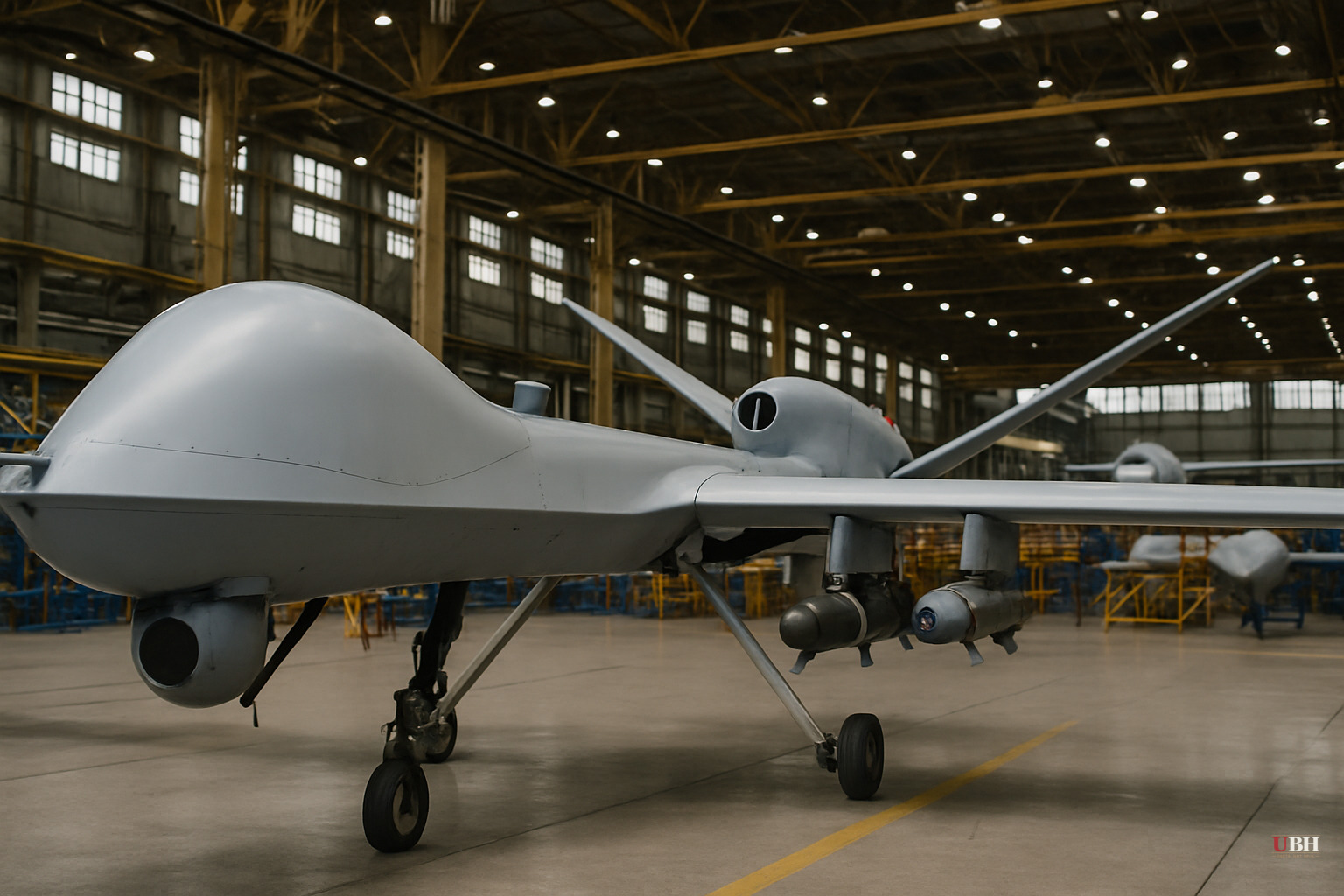
Since the U.S.-Iran agreement was signed, the immediate diplomatic scramble has given way to a harder set of questions. These are not about the deal's terms, but about what the conflict itself revealed.
What the War Actually Proved
Nancy Youssef, staff writer at The Atlantic, put it plainly on Washington Week With The Atlantic: "The international community is looking at what happened not only in Iran but in Ukraine, and seeing that this idea of large powers coming in and definitively defeating other weaker nations is not necessarily the case anymore."
That observation isn't partisan. It's a military reality that defense planners from Seoul to Warsaw are processing right now.
The U.S. did not lose the Iran conflict. But it did not achieve a clean, decisive military outcome either. The fight was messier and more complicated than many anticipated. That gap between expectation and outcome is exactly what adversaries and allies are studying.
The Technology Gap Is the Next Arms Race
Youssef argued that militaries worldwide, including the U.S., will now look at drone, AI, and broader technological capabilities to "figure out what advances they need to make given this rapid moving and changing battlefield dynamic."
Karim Sadjadpour, a senior fellow at the Carnegie Endowment for International Peace and contributing writer at The Atlantic, joined the same Washington Week panel alongside ABC News chief Washington correspondent Jonathan Karl and New York Times White House and national-security correspondent David Sanger. The discussion framed the Iran deal not as a conclusion but as a data point for every military planner on earth.
The underlying argument is straightforward: cheap drones, dispersed infrastructure, and a willingness to absorb punishment can frustrate even technologically superior adversaries. Iran proved that formula has operational validity. So did Ukraine, on a longer timeline. Every country that relies on U.S. security guarantees or fears U.S. power just received the same update.
The Strongest Counterargument
The pushback worth taking seriously is this: declaring that large powers can no longer decisively defeat smaller ones overstates what the Iran conflict proved. The U.S. chose a limited engagement with defined off-ramps. A full-scale campaign with no diplomatic ceiling might have produced a very different result. Critics of the "asymmetric stalemate" thesis argue that the lesson isn't that smaller nations can win. It's that major powers need political will to finish what they start, and that the U.S. chose to negotiate rather than escalate.
That's a legitimate point. The data doesn't yet distinguish between "the U.S. couldn't win" and "the U.S. decided the cost of winning wasn't worth it." Those are very different strategic conclusions.
The Unresolved Question
Sadjadpour, Karl, Sanger, and Youssef are all operating from essentially the same factual baseline on the Washington Week panel. Where they diverge is on implication. The panel discussion, by the nature of its participants, weighted the diplomatic and technological lessons heavily. What it didn't address is the fiscal question: if the U.S. must now invest significantly in next-generation drone and AI capabilities to maintain deterrence, who pays for it, on what timeline, and at the expense of what existing programs?
That question hasn't been answered by the deal. It's been made more urgent by it.
Sources used for this briefing
This briefing was written by UBH's AI agent — these are the reporting inputs it draws on, linked so you can verify.


