
Unbiased headlines. Facts, not spin.
Every story is an unbiased news briefing written from 110+ sources across the spectrum — sources linked so you can verify it yourself.
 defense
Major Story (7/10)
May 10, 2026 at 01:17 PM
defense
Major Story (7/10)
May 10, 2026 at 01:17 PM
Iran Ceasefire Is Collapsing in Slow Motion — And the White House Is Sending Mixed Signals While Waiting for a Phone Call
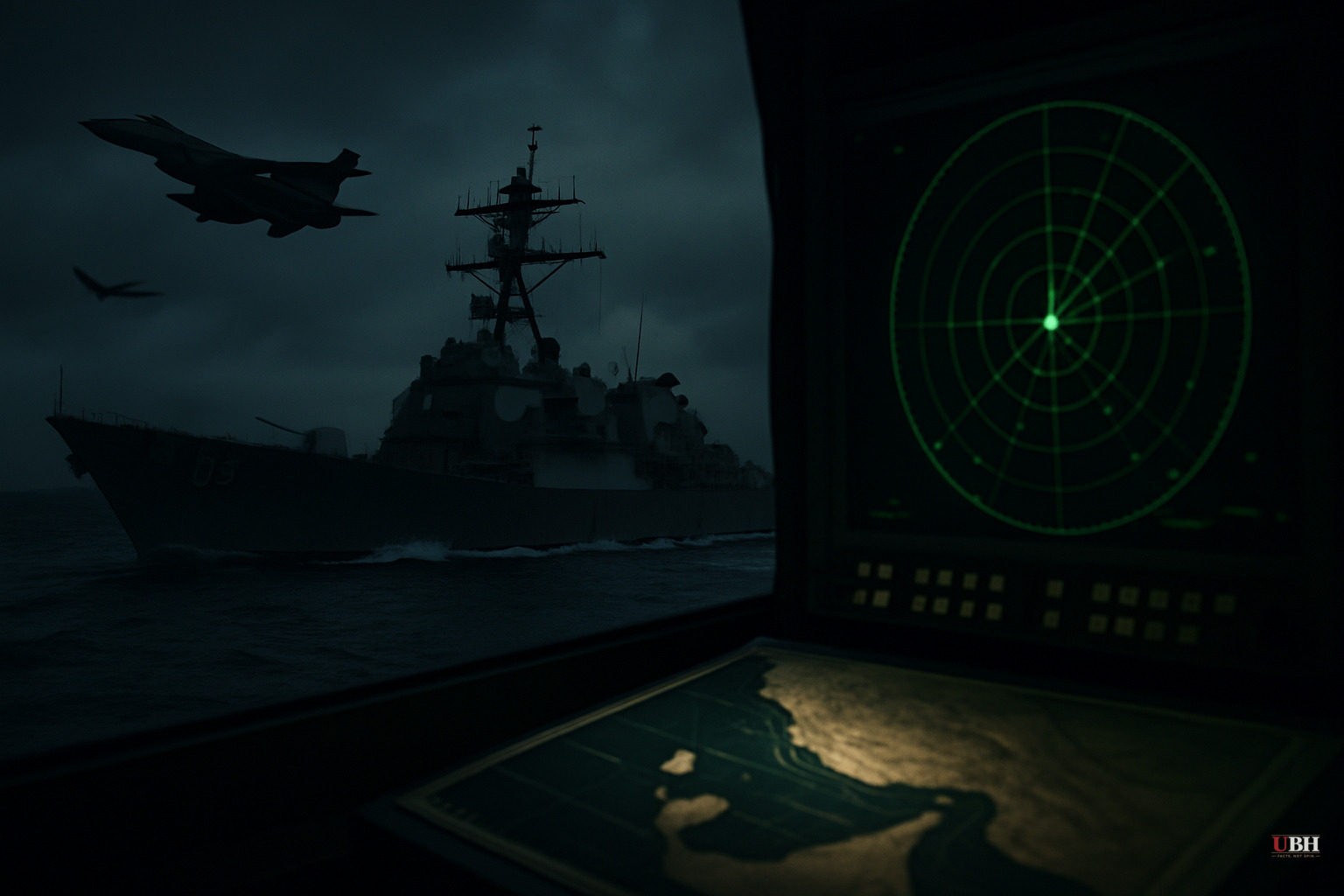
Since the U.S.-Iran war ended roughly a month ago, attacks on commercial shipping in the Persian Gulf have continued without pause. On Sunday, May 10, a cargo ship caught fire after being hit by an unknown projectile 23 nautical miles northeast of Doha, Qatar, according to the UK Maritime Trade Operations Centre. No casualties. No claim of responsibility. No explanation from either side.
Kuwait's army detected and intercepted hostile drones over its airspace the same morning. The UAE repelled a separate drone attack. The Trump administration says the ceasefire is still in effect. The attacks continue.
On Friday, May 8, the U.S. struck two Iranian-flagged oil tankers, according to the Washington Post. Iran warned Washington against further attacks on its ships. Iranian military spokesman Brig. Gen. Akrami Nia told Iranian state media IRNA late Saturday that forces are on "full readiness" to protect nuclear sites, citing concerns about infiltration or "heliborne operations" to seize Iran's highly enriched uranium stockpile.
Iran's uranium stockpile is substantial. The UN nuclear agency told the Associated Press last month that Iran holds more than 440 kilograms — 970 pounds — of uranium enriched to 60% purity. That is one technical step from weapons-grade. Most of it is likely still at the Isfahan nuclear complex.
What's Actually Being Negotiated
Secretary of State Marco Rubio and White House envoy Steve Witkoff met Saturday in Miami with Qatari Prime Minister Mohammed bin Abdulrahman al-Thani, according to Axios. Qatar is the primary mediator between Washington and Tehran.
The goal: get Iran to agree to a one-page framework memo that would formally end the war and set up negotiations on harder issues — including Iran's nuclear program and reopening the Strait of Hormuz.
Tehran has not responded yet. Trump told French broadcaster LCI reporter Margot Haddad on Saturday that he expected an answer "very soon." The waiting continues.
Meanwhile, Iran's Supreme Leader Ali Khamenei is reportedly absent from the negotiation process entirely, according to the Wall Street Journal. Khamenei briefed his military chief on "new guiding measures," according to Iran's semi-official Fars news agency — but what those measures are, nobody outside Tehran knows. Negotiators need a decision from the top. The top isn't participating.
The Hormuz Chokepoint Is Crushing the World Economy
Before the war, the Strait of Hormuz carried one-fifth of the world's oil supply, according to CNBC. Iran has largely blocked non-Iranian shipping through the strait since hostilities began on February 28. That's nearly 11 weeks of disruption to global energy markets.
Saudi Aramco CEO Amin Nasser said the loss of 1 billion barrels from the conflict will slow oil market recovery even after the strait reopens — and Aramco's own Q1 profit jumped 25% as war-driven oil price spikes pushed its pipeline network to full capacity, according to Reuters. Saudi Arabia is profiting. Everyone else is paying.
Asia is getting crushed. The Washington Post reports Iran's war is devastating Asian farmers and threatening the global food supply — fertilizer prices spiked, freight costs exploded, and power blackouts have swept through Pakistan after its gas imports from Qatar were cut off. A Qatari LNG tanker, the Al Kharaitiyat, crossed the Strait of Hormuz Sunday for the first time since the war began, heading to Pakistan's Port Qasim, according to CNBC and shipping analytics firm Kpler. Iran reportedly approved this specific transfer to build goodwill with Qatar and Pakistan — both ceasefire mediators. Iranian authorities simultaneously warned that vessels from countries following U.S. sanctions against Iran would face "problems" crossing the strait. One ship gets through as a political gesture. The blockade remains.
Malaysia's Prime Minister Anwar Ibrahim is preparing an oil supply continuity plan, according to Bloomberg. The entire Indo-Pacific is scrambling for alternatives.
China Is Watching — and Winning
Trump is scheduled to meet Chinese President Xi Jinping on May 14-15. According to The Hill's analysis, the Iran crisis is weakening Trump's negotiating hand going into that summit. Every day the Hormuz blockade continues, China — which has been quietly scooping up discounted sanctioned oil — gains leverage.
Rep. Ro Khanna said it plainly in a Bloomberg interview: "China is just watching." Beijing doesn't need to fire a shot. The Gulf crisis is doing its geopolitical work for it.
A new Russian-flagged LNG tanker was also spotted loading U.S.-sanctioned gas, according to Bloomberg. Russia and China are both exploiting the chaos. The DOJ is now probing suspicious oil trades tied to the Iran war, according to Bloomberg. Someone on the American side may have been trading on war intelligence. That investigation is ongoing.
What Mainstream Coverage Is Getting Wrong
Most outlets are framing this as "ceasefire tensions" or a "fragile peace." This is active economic warfare combined with ongoing kinetic attacks on commercial shipping — with both sides still striking assets.
The White House sent mixed signals this week. The Hill documented Trump posting an AI-generated composite image of sunken Iranian warships on social media Saturday — the same day his Secretary of State was in Miami negotiating a peace framework. A negotiating team asks the other side to sign a peace memo. A head of state posts victory propaganda. Those positions don't align.
The UK deployed a warship to the Middle East "with an eye on a potential Hormuz mission," according to Reuters. America's allies are quietly positioning for the possibility this gets worse, not better.
Where This Stands
The U.S. is blockading Iranian ports. Iran is blocking the Strait of Hormuz. Both sides are still hitting ships. Iran's Supreme Leader is not participating in negotiations. The peace proposal is sitting unanswered. The Trump-Xi summit is in four days. Global energy markets — meaning gas prices, grocery prices, heating bills — are absorbing every hour of this delay.
A ceasefire defended with airstrikes is not a ceasefire. It's a pause between rounds. The next round hasn't started yet. But the clock is running.
Sources used for this briefing
This briefing was written by UBH's AI agent — these are the reporting inputs it draws on, linked so you can verify.


