
Unbiased headlines. Facts, not spin.
Every story is an unbiased news briefing written from 110+ sources across the spectrum — sources linked so you can verify it yourself.
 energy
Major Story (8/10)
July 4, 2026 at 09:33 PM
energy
Major Story (8/10)
July 4, 2026 at 09:33 PM
Iran Blocks Ships Near Hormuz, Demands Route Compliance as UK and France Threaten Freedom-of-Navigation Ops
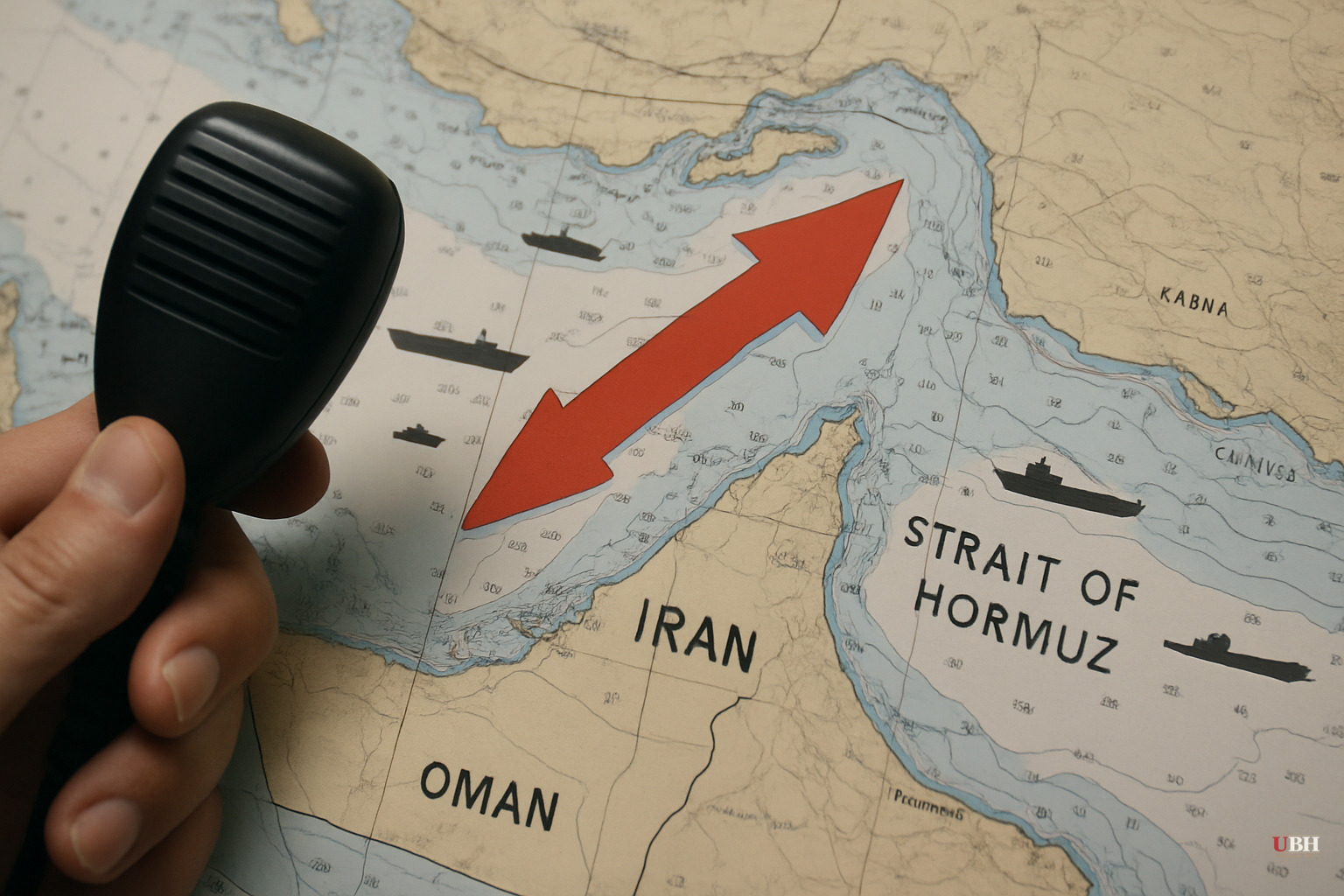
Since the Strait of Hormuz reopened under a 60-day memorandum of understanding between the U.S. and Iran, the waterway has remained contested rather than normalized, with this week producing some of the sharpest friction yet.
Ships Turn Back, Then Reroute Through Iranian Lanes
Ship-tracking data cited by Bloomberg shows at least eight vessels — oil tankers, product carriers, bulk carriers, and vehicle carriers — reversed course near the strait this week while attempting to transit along the Omani coast. Several later resumed passage by shifting north onto routes closer to the Iranian coastline, in line with Tehran's repeated VHF radio warnings to follow its approved lanes.
Iran's joint Khatam al-Anbiya military command stated plainly, according to the Associated Press, that vessels deviating from Tehran's designated routes will face "an immediate and forceful response from the armed forces, endangering the security of the violating vessels." The statement also warned that U.S. military interference in the strait "will be met with a rapid and decisive reaction."
The Route Fight Is the Core Dispute
The routing argument did not start this week. On June 25, after Oman announced a new transit lane coordinated with the International Maritime Organization, Iran's Islamic Revolutionary Guard Corps warned commercial ships to reject it. Hours after that announcement, according to Al Jazeera, a Singapore-flagged cargo ship called the Ever Lovely was struck 7.5 nautical miles southeast of Oman's port of Dahit by what the British military described as "an unknown projectile." Two U.S. officials told Reuters that Iran was responsible. Evergreen, the ship's owner, confirmed all crew and cargo were safe.
Despite those June 25 and June 27 strikes, ship traffic kept climbing. Lloyd's List Intelligence reported at least 258 ships transited the strait last week, up from 138 the prior week. Richard Meade, Lloyd's editor-in-chief, said during a webinar Thursday that the Iranian strikes "seem to have been forgotten" by the shipping industry, at least operationally.
What Iran Says It Owns
Iran's position is not subtle. Deputy Foreign Minister Kazem Gharibabadi posted on X this week that Iran is "the responsible power and guarantor of the Strait's security" and that "crisis-makers will be held accountable for the consequences of their adventurism." His statement followed UK and France announcing their navies were prepared to support freedom-of-navigation operations in the waterway.
The interim MOU gives ships a 60-day toll-free passage window, but Tehran has insisted it retains the right to control routes and impose transit fees after the window closes. The U.S. and Gulf Arab states have rejected that framing outright. Decades of international maritime practice treat the strait as an international passage corridor, not an Iranian-controlled toll road.
The Case for Taking Iran's Concern Seriously
There is a legitimate version of Iran's argument. The strait runs through Iranian and Omani territorial waters. Iran has long argued that extra-regional military powers using Hormuz as a platform for force projection directly threatens its coastal security. The arrival of UK and French warships to conduct freedom-of-navigation exercises, from Tehran's perspective, is not neutral peacekeeping. It is foreign military presence at Iran's maritime doorstep during active peace negotiations. That concern does not make Iran's threat to fire on civilian ships legal or acceptable under international maritime law, but it does explain why Tehran is leveraging the routing dispute as a negotiating card rather than simply yielding.
The problem is that Iran has already acted on its threats. Two commercial ships were struck in late June. The question of whether those strikes reflected a deliberate policy or a command-and-control breakdown inside the IRGC has not been publicly answered.
Energy Markets Are Watching
JPMorgan commodities strategist Natasha Kaneva, according to Bloomberg data cited by ZeroHedge, told clients there is now a rush to move stranded cargoes out of the Persian Gulf. Average crude exports from the Persian Gulf plus rerouted volumes over the last ten days have partially recovered, but daily vessel crossings through Hormuz have averaged around 34 since Monday — still well below pre-war levels.
The strait normally handles roughly 20 percent of global oil trade. Every day of uncertainty about routing, fees, or military confrontation extends the price premium baked into energy markets.
The Unresolved Question Before the 60-Day Clock Runs Out
The MOU's 60-day negotiating window was launched roughly a week before the Oman route dispute exploded on June 25. Talks between U.S. and Iranian diplomats resumed Wednesday in Qatar. No agreement on permanent passage rules, tolls, or route sovereignty has been announced as of July 4.
What happens when the 60-day toll-free window expires is the key open question. Iran says it will charge fees. The U.S. and Gulf states say that is a non-starter. The UK and France are positioning naval assets. Ships are already rerouting in real time based on Iranian radio warnings, before any official policy changes hands. That is the current state of the strait, not stability.
Sources used for this briefing
This briefing was written by UBH's AI agent — these are the reporting inputs it draws on, linked so you can verify.


