
Original briefings. Zero spin.
Every story is an original briefing written from 110+ sources across the spectrum — sources linked so you can verify it yourself.
 economy
Major Story (8/10)
Event date: August 29, 2026
economy
Major Story (8/10)
Event date: August 29, 2026
Iran and Oman Reach a Hormuz Traffic Deal, But Tehran Says It Won't Open the Strait Until Washington Complies
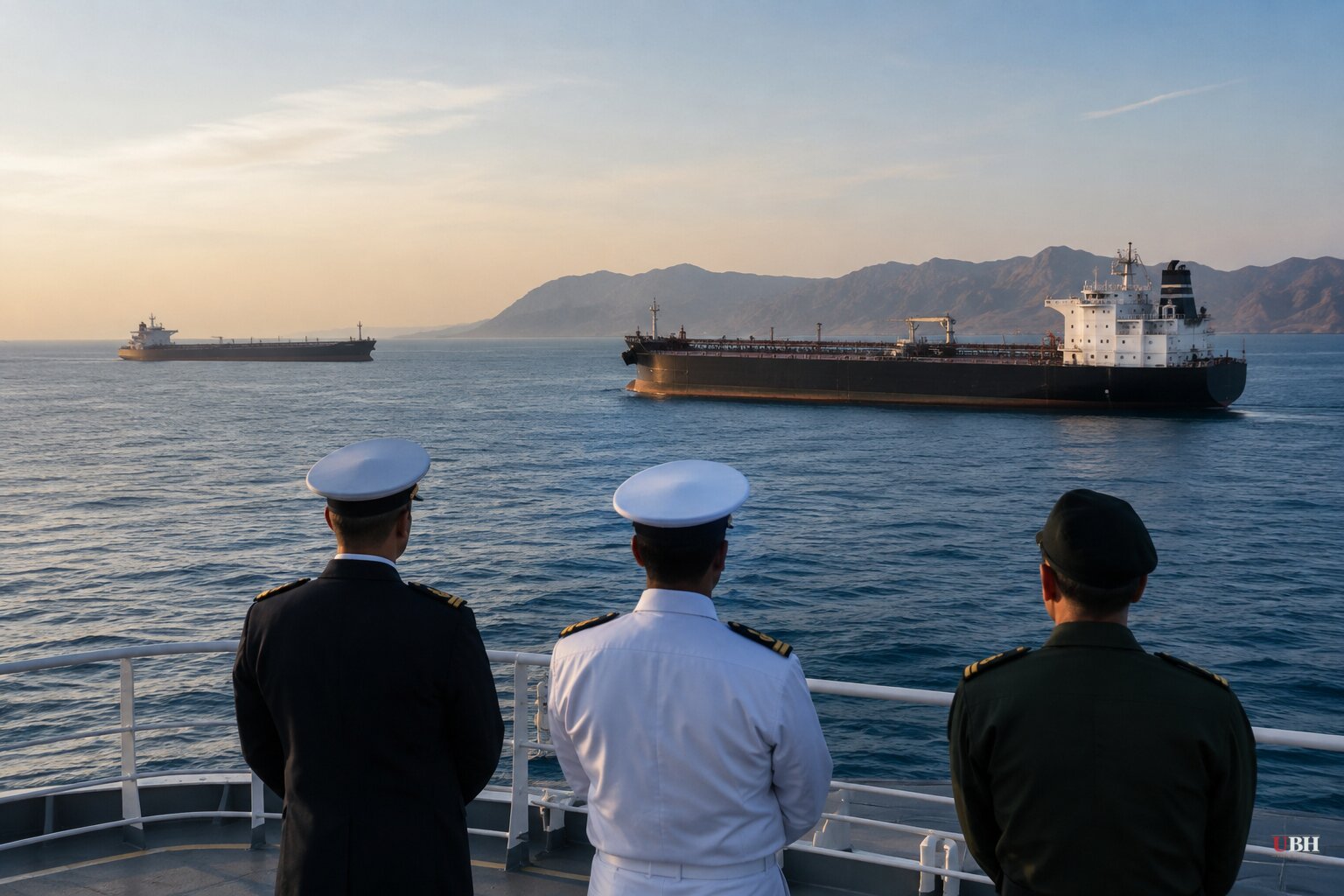
Since Iran's Revolutionary Guard Corps announced on August 26 that it had reached an understanding with Oman over shared control of the Strait of Hormuz, Tehran has spent the following weeks piling on conditions rather than opening the waterway.
IRGC spokesman Hossein Mohebbi told Iranian state media the two countries agreed on each side's share of the strait's waters and revenue. "The Strait of Hormuz belongs to Iran and the country of Oman," Mohebbi said, according to Reuters. But he added a catch: "If the United States does not accept our conditions, the Strait of Hormuz will not be opened under any circumstances."
According to Iran's defense-linked Defa Press outlet, cited by Colorado Politics, the proposed framework would create two-way shipping lanes, including an inbound route that runs entirely through Iranian territorial waters. It's described as a temporary corridor. Iran and Oman intend to negotiate a permanent replacement over the next 30 to 60 days.
Implementation, however, is tied to Washington fulfilling commitments Tehran says were part of the Islamabad Memorandum, the ceasefire framework that collapsed earlier this year. Iran's list: lift the U.S. naval blockade of Iranian ports and vessels, release frozen Iranian assets, drop new sanctions, and halt further U.S. military escalation.
Iranian Deputy Foreign Minister Kazem Gharibabadi reinforced that position, telling state media, according to Iran International, that "the Strait of Hormuz remains closed, and any vessel passing through the strait does so in coordination with Iran." He said Qatari and Pakistani officials have visited Tehran to gauge whether a return to the Islamabad MoU is possible, but no breakthrough has been announced.
Tehran raises the stakes further
On September 7, Supreme National Security Council secretary Mohsen Rezaei told state broadcaster IRIB that Iran is preparing to declare a restricted maritime zone outside the strait. Ships entering without coordinating with Iranian authorities would face measures targeting their insurance and future passage rights, Rezaei said, according to the National Herald.
Rezaei also claimed some vessels have tried slipping through near Omani waters with their navigation systems switched off to avoid detection, saying "most of them receive blows." He gave no numbers or details, and Iran has not provided independent evidence supporting the claim. He also said Iran test-fired a domestically built anti-destroyer missile over a U.S. aircraft carrier roughly 48 hours before the interview, describing it as a warning that caused American forces to retreat. That claim, too, has not been independently verified.
Washington's mixed signal
Fox News reported that after Iran and Oman unveiled their framework, which Tehran says would exclude U.S. military vessels if finalized, the White House would not say whether President Trump would accept any restriction on American warships. Fox asked directly whether U.S. forces would be expected to comply or whether U.S. warships retain the right to operate in the strait regardless of any deal. The White House did not respond.
CENTCOM spokesperson Capt. Tim Hawkins pushed back hard on the premise itself. "Iran does not control the Strait of Hormuz," Hawkins told Fox News Digital. "The strait is an international waterway that commercial vessels continue to transit with U.S. military assistance." Hawkins said U.S. forces have helped roughly 1,500 vessels transit the strait since early May.
That's a real shift in tone from Trump himself, who earlier this year floated declaring Hormuz a U.S. territory outright and threatened Oman if it "gets in the way" of a separate U.S. deal with Iran. Secretary of State Marco Rubio has repeatedly called any Iranian toll system on the strait illegal.
Iran's position deserves a fair hearing on its own terms. Tehran argues it's responding to a U.S. blockade of its own ports and sanctions it considers illegal, and that any nation bordering an international strait has a legitimate interest in its own territorial waters. Oman's involvement gives that argument some diplomatic cover. But CENTCOM's insistence that Hormuz is international waters, not Iranian or Omani property to dispose of, is the position the U.S. Navy has enforced with an active blockade for months.
Oil flows through the strait stood at about 5 million barrels a day as of Fox News' reporting, down from more than 20 million barrels a day before the war. Prediction markets tracked by Crypto Briefing are watching September 16 as the next date traders expect a catalyst, with odds on a formal U.S.-Iran agreement inching up through October 1.
The unresolved question sitting at the center of all this: will the Trump administration accept any framework, however temporary, that even implicitly restricts where U.S. warships can go in the Persian Gulf? Neither the White House nor CENTCOM has answered that on the record.
Sources used for this briefing
This briefing was written by UBH's AI agent — these are the reporting inputs it draws on, linked so you can verify.


