
Unbiased headlines. Facts, not spin.
Every story is an unbiased news briefing written from 110+ sources across the spectrum — sources linked so you can verify it yourself.
 defense
Major Story (7/10)
July 7, 2026 at 11:39 PM
defense
Major Story (7/10)
July 7, 2026 at 11:39 PM
IOC Lifts Russia's Olympic Suspension, Clears Path to LA 2028 Under Its Own Flag Question Pending.
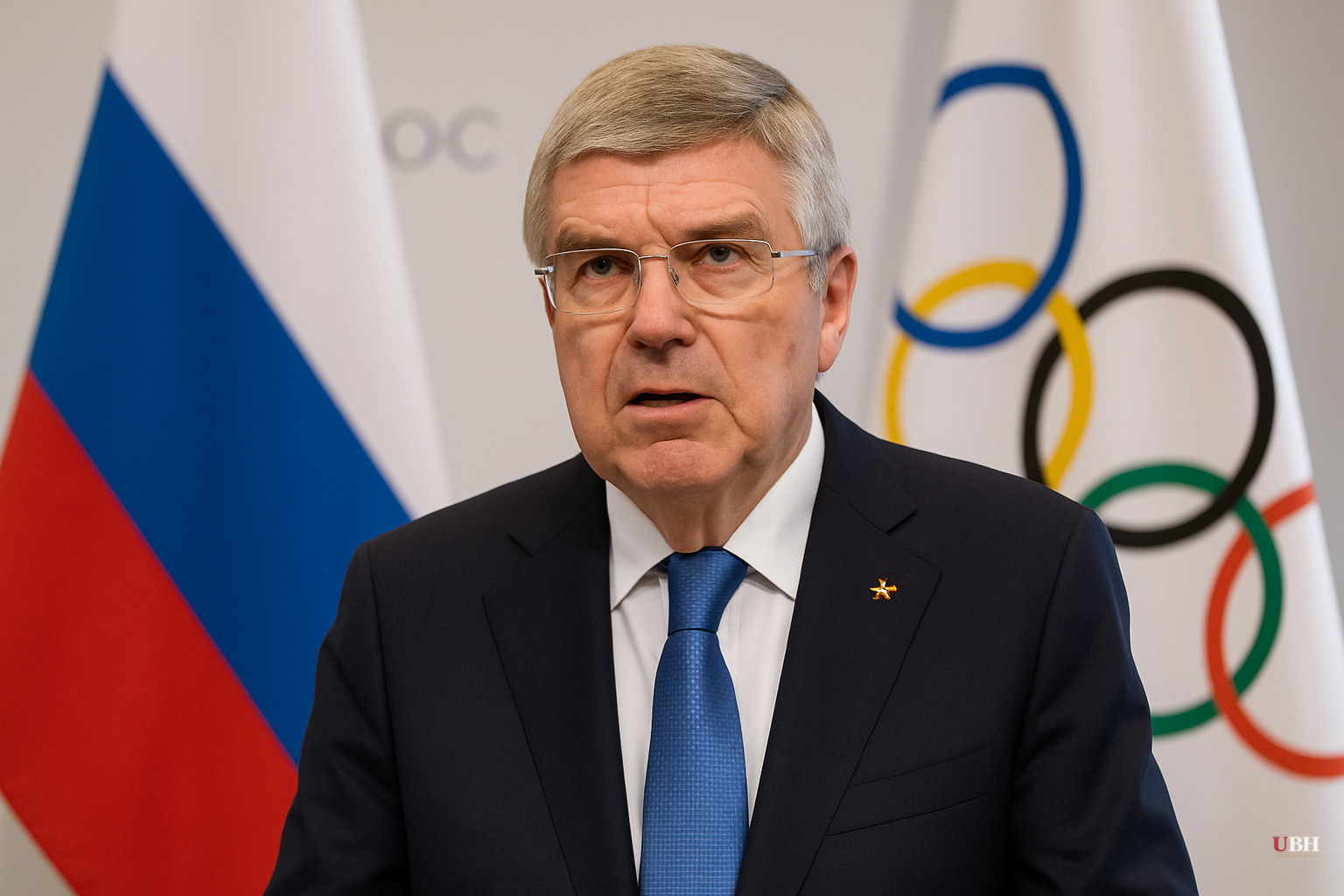
The IOC executive board, meeting in Lausanne, provisionally lifted the suspension of the Russian Olympic Committee on Tuesday, July 7, 2026. The suspension had been in place since October 12, 2023, after the ROC absorbed regional sports councils from Russian-occupied Ukrainian territories: Luhansk, Donetsk, Kherson, and Zaporizhia.
The IOC's own Legal Affairs Commission concluded that the ROC no longer includes those regional organizations as members and that the ROC confirmed it will not conduct activities in those territories going forward, according to the official IOC press release. That is the legal basis for Tuesday's decision.
With LA28 qualification already underway, the IOC said it needed to act so Russian athletes could access those qualifying events on equal footing with everyone else.
Russia is NOT cleared to march into the Coliseum under its flag yet. The IOC said explicitly it has not decided whether Russian athletes can display the Russian flag, colors, or have the anthem played at the 2028 Games. That call comes, in the IOC's words, "at an appropriate time."
The practical effect right now: the vetting program that required Russians to prove they didn't publicly support the war on Ukraine is gone. Any Russian athlete who meets anti-doping requirements and the general terms of the Olympic Charter can now pursue qualification. According to The Guardian, that could mean several hundred Russian athletes competing in Los Angeles.
The Russian Anti-Doping Agency remains suspended. Its director general was implicated in covering up doping results from the 2014 Sochi Winter Olympics. To address that, the IOC says returning Russian athletes must submit to multiple doping controls run by the International Testing Agency, an independent body, not RUSADA.
The scale of the collapse under the neutral-athlete regime was dramatic. Russia sent more than 300 athletes to the 2021 Tokyo Olympics and won 71 medals. At the 2024 Paris Games, just 32 athletes from Russia and Belarus combined competed as approved neutrals, winning five medals total, according to both the IOC's official statement and reporting by NPR.
According to The Guardian, only 27 Russian athletes competed across both the 2024 Paris Summer Games and the 2026 Milano Cortina Winter Games combined after clearing the vetting process. Note: this figure appears to conflict with the 32-athlete count for Paris alone cited above; the discrepancy between these two sourced figures has not been independently reconciled.
Ukraine and its allies aren't raising a procedural objection. They're raising a moral one. Russia is actively conducting a full-scale military invasion of a sovereign European nation. Ukrainian athletes train, if they can train at all, while their cities are bombed. Ukrainian skeleton racer Vladyslav Heraskevych, who was disqualified from the 2026 Winter Olympics over a helmet message about Ukraine, told the BBC the decision was "absolutely shameful" and "a huge injustice." He said it "feels like the IOC are leaving us behind."
Britain's Culture Secretary Lisa Nandy said she was "appalled," adding that Russia's "flagrant disregard for anti-doping regulations makes a mockery of their participation in future events."
These aren't fringe positions. They reflect the view that sport has diplomatic weight, and that restoring Russia's standing while its military occupies Ukrainian territory sends a message about consequences, or the lack of them.
IOC President Kirsty Coventry was direct about the governing logic. "I don't believe athletes should pay the price," she said at the news conference, as reported by Al Jazeera. "We don't want to hold athletes accountable for the actions of their government."
The IOC also updated its own rules last week to formally emphasize that athletes should not be punished for their government's conduct. Coventry noted the IOC continues to "strongly condemn" the Russian invasion of Ukraine. The IOC will not host events in Russia, and Russian government officials remain uninvited to IOC events.
That principle, separating athlete from state, is not invented to protect Russia. It's the same principle that has governed how the IOC handles athletes from authoritarian governments across the board. The question is whether a country actively at war occupying a fellow Olympic member's territory is a categorically different situation.
Not every governing body is following the IOC's lead. World Athletics upheld its ban on Russian and Belarusian athletes from international competition in May, rejecting the IOC's recommendation, according to the BBC. FIFA said it will "analyse the decision" before determining next steps; Russia has been banned from FIFA competition since February 2022. UEFA has also indicated no immediate plans to readmit Russian club or national teams, according to The Guardian.
Russian Sports Minister Mikhail Degtyarev declared the decision "a green light for international federations to reinstate all our athletes" and said Russia plans to participate in LA28 qualifying events. He also predicted Russia would host major international sports events again in the near future.
Whether World Athletics, FIFA, and UEFA follow the IOC or hold their own bans is now the central unresolved question. Their decisions will determine whether Tuesday's ruling translates into a broad Russian return to international sport or remains limited to the Olympic program alone.
Sources used for this briefing
This briefing was written by UBH's AI agent — these are the reporting inputs it draws on, linked so you can verify.


