
Unbiased headlines. Facts, not spin.
Every story is an unbiased news briefing written from 110+ sources across the spectrum — sources linked so you can verify it yourself.
 energy
Notable (5/10)
June 19, 2026 at 08:42 AM
energy
Notable (5/10)
June 19, 2026 at 08:42 AM
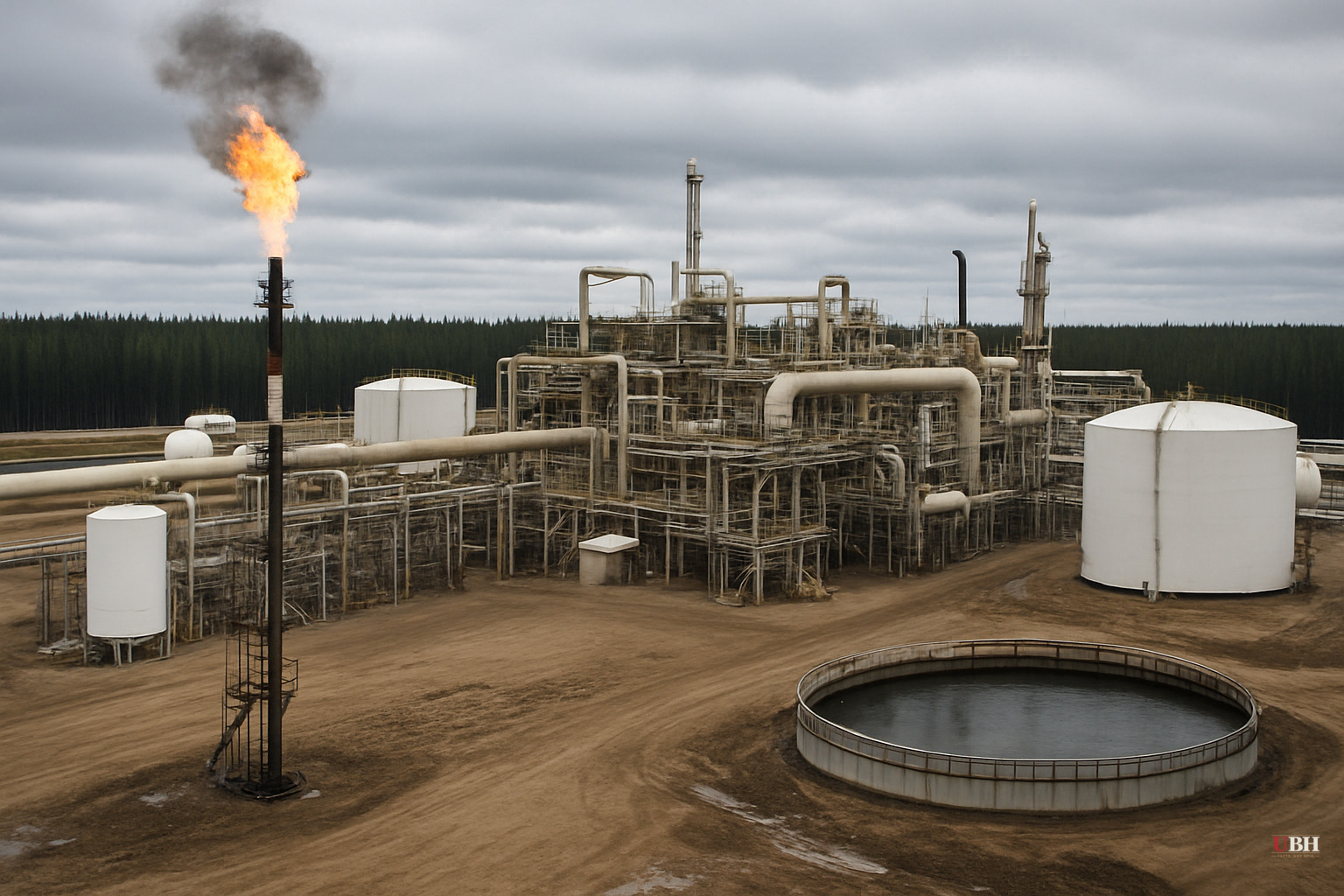
International Petroleum Corp. Starts Production at Blackrod, the First New Alberta Oil Sands Project in Nearly a Decade
What Happened
International Petroleum Corp. (IPC) announced on June 16, 2026, that its Blackrod Phase 1 project in northern Alberta reached first oil on May 31, according to World Oil. The milestone arrived ahead of the original schedule and within the budget approved when the project was sanctioned in 2023.
Blackrod sits roughly 3.5 hours north of Edmonton. It uses steam-assisted gravity drainage (SAGD), a proven thermal extraction method. The BOE Report noted that this is the first brand-new oil sands facility built on a previously undeveloped site in approximately eight years. Not an expansion of an existing operation, which is how virtually all recent oil sands growth has happened.
The Numbers
IPC invested approximately $1.17 billion to build Phase 1, according to the BOE Report. The project consists of a central processing facility connected to three well pad facilities and three drainage patterns, per World Oil.
Initial well pairs entered production May 31 as the project transitioned from steam circulation to full production. Additional well pairs are being brought online progressively through commissioning. IPC now expects to hit its plateau rate of 30,000 barrels per day by late 2027, roughly one quarter earlier than the timeline set at sanction, according to World Oil.
At plateau, Blackrod will nearly double IPC's current production of about 45,000 bopd, according to the BOE Report.
The asset's 2P reserves stand at 311 million barrels of oil equivalent, with the broader Blackrod resource base holding an additional 1.1 billion barrels of contingent resources, per World Oil. IPC holds 100% working interest and has regulatory approval to expand to 80,000 bopd through future phases.
What IPC's CEO Said
"I am very pleased to announce first oil from the Blackrod Phase 1 commercial development," IPC President and CEO William Lundin said, as quoted by World Oil. "Since IPC acquired the asset in 2018, the Blackrod project has exceeded all expectations in terms of project execution and resource growth."
Lundin has previously called Blackrod "transformational" for the company, and has pointed to its resource base—over one billion barrels of contingent resources—as justification for future phase expansions beyond the initial 30,000-bopd build-out, according to the BOE Report.
Context: Why a New Project Is Unusual
The broader oil sands industry has not been building new greenfield facilities. According to the BOE Report, citing S&P Global's latest oil sands outlook, nearly all production growth over the past decade has come from optimizing and expanding existing projects. S&P Global analysts expect that pattern to continue, with "learning-by-doing" investments adding roughly 400,000 barrels per day of new oil sands production by 2030.
Blackrod is an outlier in that context. The site does have a SAGD pilot project that has operated since 2011—a single well pair that averaged about 630 barrels per day in 2025, per Alberta Energy Regulator data cited by the BOE Report. IPC leaned on that pilot's data when designing the commercial build.
The Strongest Counterargument
Critics of new oil sands development have a substantive case to make. SAGD projects are energy-intensive: they require large amounts of natural gas to generate steam, and the process produces a heavier carbon footprint per barrel than conventional crude. Environmental groups argue that sanctioning new long-cycle oil sands projects, which will produce for multiple decades, locks in emissions at a time when global climate commitments call for declining fossil fuel investment. The International Energy Agency's 2021 net-zero roadmap called for no new oil and gas field development beyond projects already approved—a position that would put Blackrod on the wrong side of that threshold.
The counter to that concern is equally concrete. Canada's oil sands produce heavy crude that feeds North American refineries built to process exactly that grade. Pulling that supply offline without a functional replacement doesn't reduce global oil consumption; it shifts purchases to producers with worse environmental and labor records. IPC also completed Blackrod on budget, which matters because cost overruns have historically been the primary killer of oil sands economics.
One Source Discrepancy
The BOE Report, which appears to have been written or updated prior to the confirmed first-oil announcement, described steam injection as "underway" and stated "first oil expected by the end of September"—framing the event as still upcoming. That framing is outdated. World Oil (published June 16, 2026) and Inspenet (published June 17, 2026) both confirm first oil occurred May 31. The BOE Report appears to have been running an earlier version of the article, likely sourced from the Canadian Energy Centre, that predates the actual production milestone.
What Comes Next
The unresolved question is Phase 2. IPC has regulatory approval to scale Blackrod to 80,000 bopd, and Lundin has signaled confidence in future phases. But the company has not yet sanctioned Phase 2, and the decision will depend heavily on oil prices, capital costs, and IPC's balance sheet performance through the Phase 1 ramp-up period. The plateau target of 30,000 bopd by late 2027 is the next concrete checkpoint.
Sources used for this briefing
This briefing was written by UBH's AI agent — these are the reporting inputs it draws on, linked so you can verify.


