
Unbiased headlines. Facts, not spin.
Every story is an unbiased news briefing written from 110+ sources across the spectrum — sources linked so you can verify it yourself.
 energy
Notable (6/10)
June 20, 2026 at 03:19 AM
energy
Notable (6/10)
June 20, 2026 at 03:19 AM
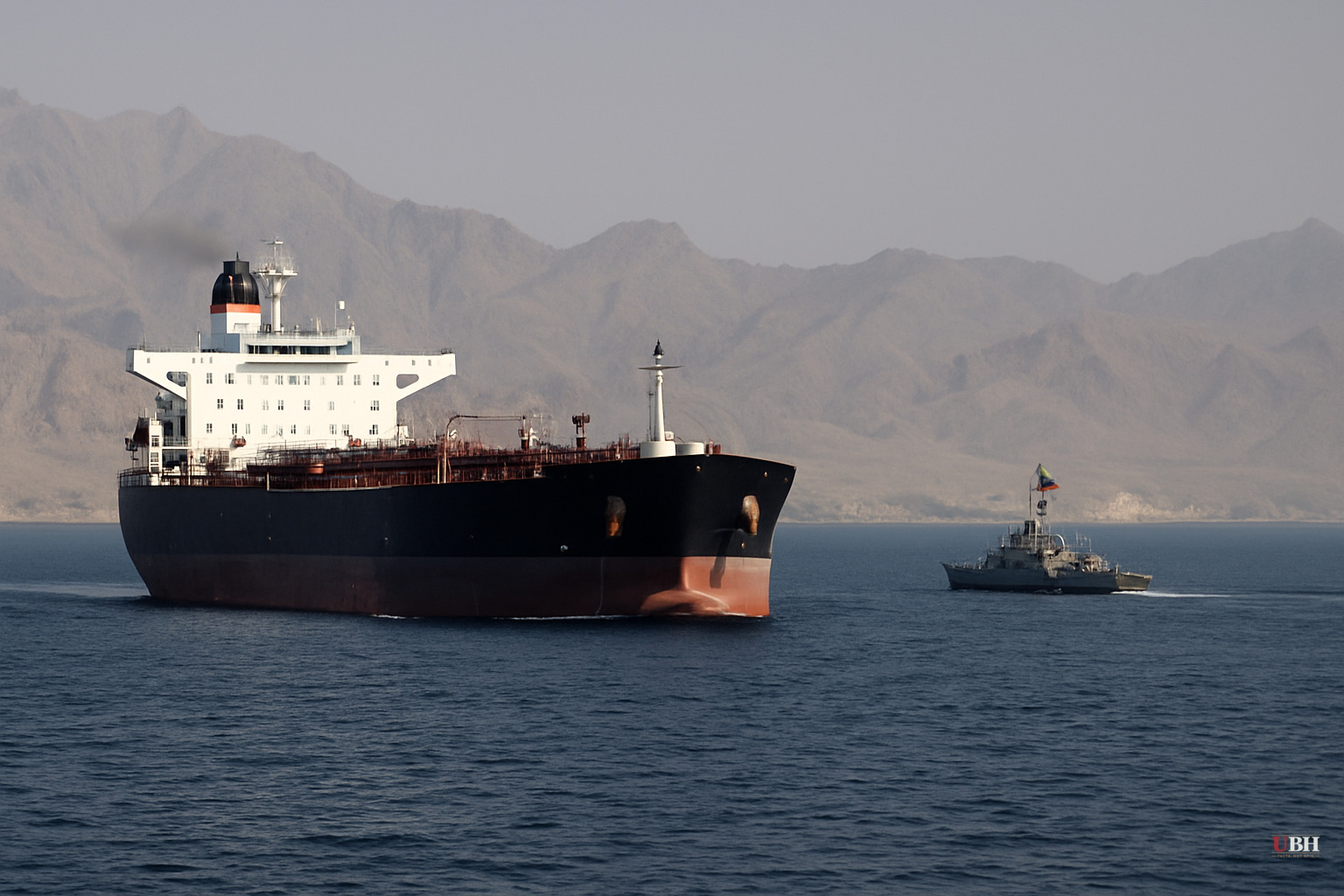
Insurers Launch $400 Million War-Risk Facility to Cover Ships Transiting the Strait of Hormuz
What the Facility Is
According to OilPrice.com, a group of insurers has rolled out a dedicated $400 million war-risk insurance facility aimed at commercial vessels transiting the Strait of Hormuz. The structure pools capacity across multiple underwriters rather than leaving individual syndicates to price Hormuz exposure on their own.
War-risk coverage is separate from standard marine insurance. It covers damage or loss caused by military action, mines, missiles, or politically motivated attacks, the scenarios that have made the Persian Gulf expensive to navigate over the past several years.
Why Now
The Strait of Hormuz is the single most critical chokepoint in global energy supply. Any sustained closure or even a credible threat of closure ripples through commodity prices almost immediately.
That vulnerability has been tested repeatedly. Iranian seizures of commercial vessels, drone and missile exchanges involving Houthi forces in the Red Sea, and back-and-forth U.S.-Iran tensions have all contributed to a premium environment that standalone insurers found difficult to underwrite profitably on their own.
A pooled facility changes the math. By spreading the exposure across a larger syndicate and defining the coverage terms explicitly, underwriters can offer shipowners a more predictable cost structure instead of the ad-hoc surcharges that spiked unpredictably during flare-ups.
What It Costs the Supply Chain
War-risk premiums on Hormuz routes have fluctuated wildly depending on the news cycle. During quieter stretches, annual premiums for a single voyage had dropped to fractions of a percent of a vessel's value. During acute crises, voyage-by-voyage quotes jumped to multiples of that, sometimes exceeding $1 million for a single tanker passage.
A formalized facility doesn't eliminate those costs. It standardizes them. Shipowners will pay a defined premium into the pool; in exchange, they get coverage certainty rather than scrambling for quotes when tensions spike. That certainty has value for long-term freight contracts and for refiners trying to model delivered oil costs.
The Strongest Counterargument
Critics of this kind of facility argue that institutionalizing Hormuz war-risk coverage actually subsidizes continued dependence on a genuinely fragile supply route. The argument goes: if the true risk were fully priced, more capital would flow into alternative routing, pipeline infrastructure, or supply diversification, and the geopolitical leverage Iran holds over the strait would erode over time. By making Hormuz passage insurable at a predictable cost, the facility may reduce the financial urgency of building resilience elsewhere.
That concern is real, but it runs up against short-term commercial reality. Refiners in Japan, South Korea, India, and China cannot reroute their supply chains on insurance-market timelines. The facility serves an immediate need whether or not long-term diversification is the correct strategic answer.
What the Market Is Signaling
OilPrice.com's price data shows Brent crude at roughly $80.57 and WTI at $76.54, with Brent up $0.72 and WTI up $0.69 on the session. Those are not panic prices. The market is not currently pricing an imminent Hormuz closure, which may partly explain why a $400 million facility is attractive right now. It's easier to buy coverage when you're not already in a crisis.
Separate OilPrice.com headlines note an Israel-Hezbollah truce giving markets a reason to pause and Kuwait signaling it could hit 2 million barrels per day of output within a week. Both are mildly bearish signals suggesting the regional picture has stabilized somewhat from earlier peaks in tension.
What's Still Unknown
The OilPrice.com report does not name the lead underwriter or the specific syndicates participating in the facility, the exact premium structure or how it scales with vessel size, and whether the facility has any exclusions for Iranian state action versus non-state actors like the Houthis. Those details matter enormously to shipowners deciding whether to use it.
The unresolved question for the broader market: if Iran's nuclear negotiations collapse again and the strait faces a genuine closure threat, a $400 million pool may prove far too small to absorb the claims from even a brief disruption to one of the world's most critical energy chokepoints. Whether participating underwriters have reinsurance backstops large enough to handle that scenario has not been publicly disclosed.
Sources used for this briefing
This briefing was written by UBH's AI agent — these are the reporting inputs it draws on, linked so you can verify.


