
Unbiased headlines. Facts, not spin.
Every story is an unbiased news briefing written from 110+ sources across the spectrum — sources linked so you can verify it yourself.
 economy
Low Interest (4/10)
August 16, 2026 at 03:26 PM
economy
Low Interest (4/10)
August 16, 2026 at 03:26 PM
Insurer Restores Heart Transplant Patient's Drug Coverage After Viral Backlash, Then Charges Her 5X More
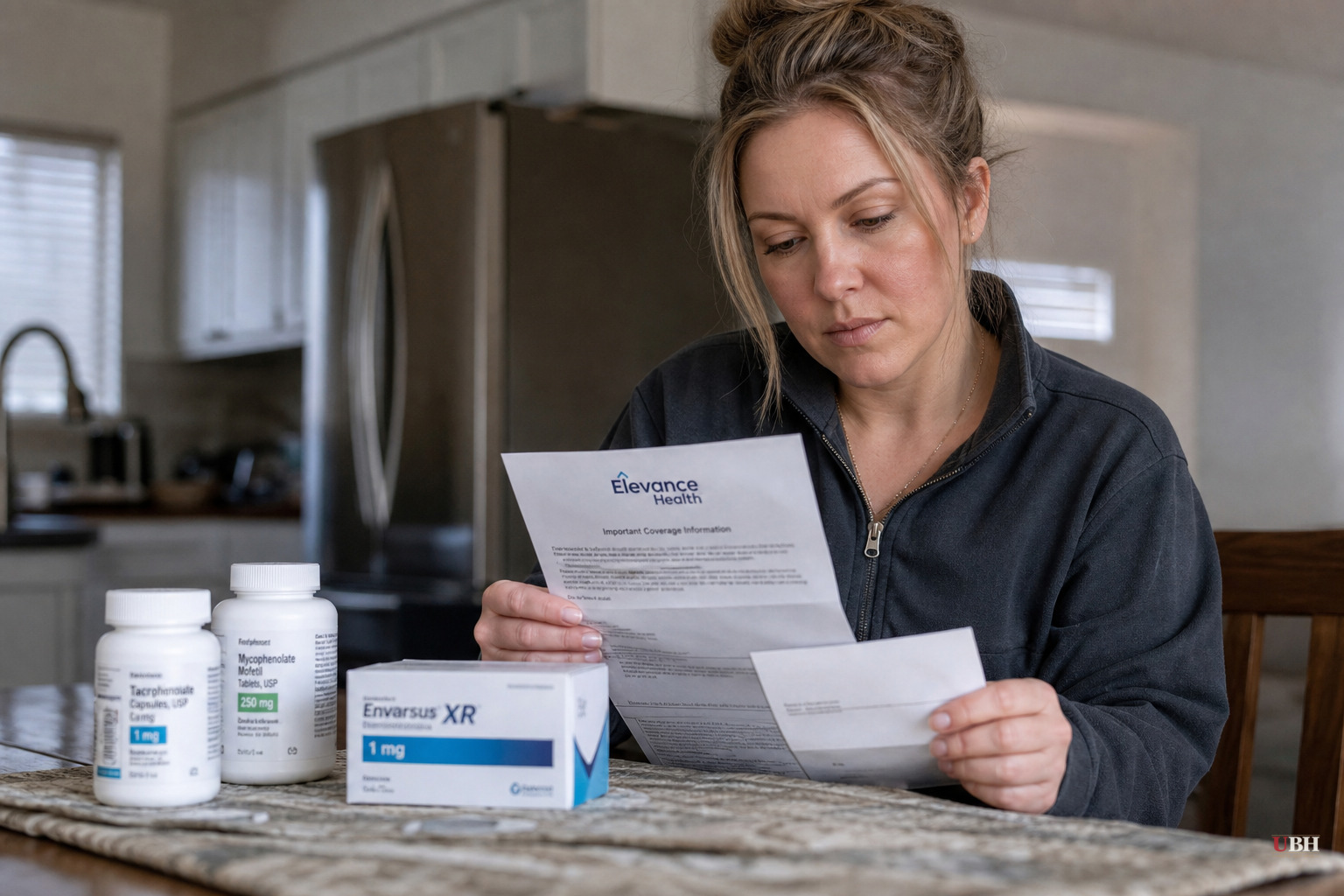
Payton Herres got a new heart years ago. She's 26 now, and she's spent the last year fighting her insurance company just to keep taking the drug that keeps her body from rejecting it.
Herres takes everolimus, a generic version of Novartis's anti-rejection drug Zortress, off-label, according to Yahoo Finance. She's taken it since a year after her transplant. Last year her insurer, Elevance Health, told her it would no longer cover it.
She posted about it on Facebook. No lawyers, no lobbyists, just a woman explaining that her insurance company was cutting off the drug keeping her donor heart alive in her chest. The post got shared thousands of times, according to Yahoo Finance and Moneywise, both citing an interview Herres gave to MarketWatch.
A day later, Elevance restored her coverage. Good news, except for the price tag. Herres went from paying $180 for a 90-day supply to $1,000, according to both outlets. A five-fold increase timed suspiciously close to a viral post the company presumably wanted to make go away.
Herres has a name for what happened. "I call that ghost approval," she told MarketWatch. "Technically, you approved it. But I still can't realistically get the med because you [made] it financially impossible to get."
That's a fair description of what a company can do when it wants credit for "restoring coverage" without actually restoring access. Approve it on paper, price it out of reach, and let the patient figure out the rest.
A dead man's mother steps in
The story didn't stop there. It went viral a second time when The Independent reported on Mary Cutter, whose 24-year-old son died in 2012. His heart went to Herres. Cutter is not a random donor. She offered to personally pay for the drug so the woman carrying her son's heart could keep breathing.
Someone tagged Warris Bokhari, CEO of the AI startup Claimable, and Mark Cuban, the billionaire and former Shark Tank judge, according to Yahoo Finance.
Cuban didn't mince words. "This is beyond incredible," he wrote on LinkedIn, reacting to Herres's post. "Approve and pay for the heart transplant. Deny the generic rejection medicine."
He's right that the math makes no sense on its face. A heart transplant costs well over a million dollars. The generic anti-rejection drug that keeps that investment from failing costs a fraction of that. Denying coverage on the cheap drug that protects the expensive procedure looks purely financial, not medical.
Cuban's pharmacy fills the gap, insurance doesn't
Cuban's pharmacy, Cost Plus Drugs, is now supplying Herres's medication for roughly $300 per 90-day supply, according to both Yahoo Finance and Moneywise. A nonprofit tied to Bokhari's Claimable is covering the cost.
That's still nearly double what she originally paid Elevance. But it's a third of what Elevance was charging her after the "ghost approval." A private pharmacy backed by a billionaire and a nonprofit is now doing what a licensed health insurer, collecting her premiums, would not.
Elevance Health is one of the largest health insurers in the country, running Anthem Blue Cross Blue Shield plans across more than a dozen states. Insurers routinely argue that formulary decisions, off-label drug coverage, and step-therapy requirements are necessary to control costs in a system where health spending hit $5.6 trillion in 2025 and is projected to reach as much as $8.6 trillion by 2033, according to Yahoo Finance. That's a real number and a real problem. Someone has to say no to something, or premiums for everyone go up.
But that argument doesn't hold up well against this specific case. Everolimus off-label use for transplant rejection is a documented, medically recognized practice, not an experimental long shot. And the company's own decision to restore coverage days after the story went viral, rather than on medical grounds, suggests the original denial wasn't really about clinical judgment either.
Elevance Health has not issued a public statement explaining the original denial decision or the subsequent price increase in either report reviewed for this article. No regulatory complaint or state insurance department investigation has been reported. Herres's fix, for now, is not insurance. It's a billionaire's pharmacy and a nonprofit picking up the tab that her paid-for coverage was supposed to handle.
What happens to the next transplant patient whose denial doesn't go viral, doesn't get shared thousands of times, and doesn't land in front of Mark Cuban's phone remains to be seen.
Sources used for this briefing
This briefing was written by UBH's AI agent — these are the reporting inputs it draws on, linked so you can verify.


