
Unbiased headlines. Facts, not spin.
Unbiased Headlines is an independently owned news organization. We bring you the facts, not opinions, written fresh from 110+ named sources. Sources linked so you can verify it yourself.
 finance
Major Story (7/10)
Indonesia's Rupiah Nears Record Low and Bond Yields Jump After MSCI Rout; Prabowo Set to Meet Financial Chiefs
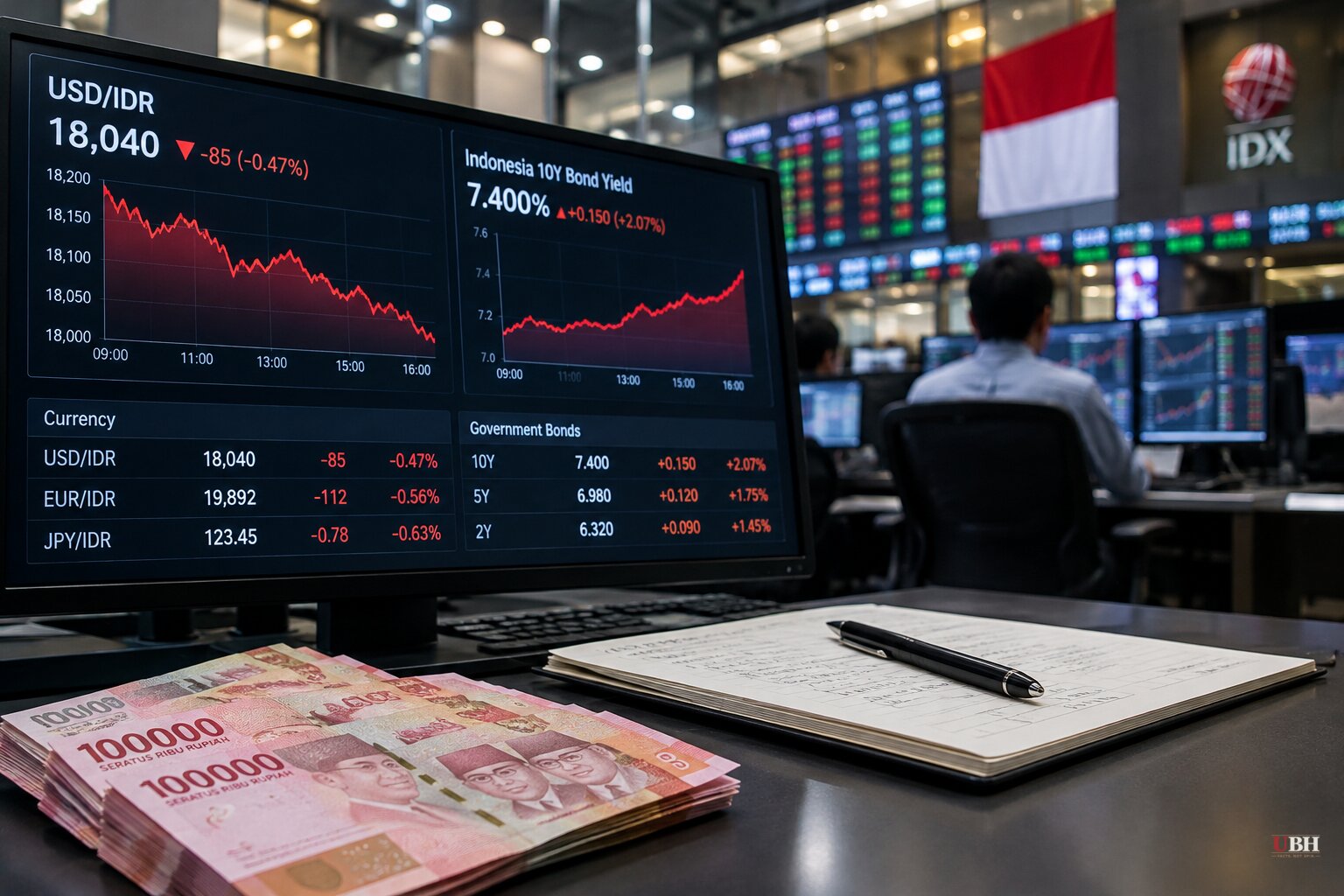
Since MSCI proposed moving Indonesia from emerging-market to standalone status on Friday, Oct. 16, the damage has spread beyond equities. Currency and bond markets are now taking hits, and the president is expected to get involved.
The rupiah weakened to 18,040 per dollar on Monday, according to traders. That is close to the record low of 18,190 set in June.
Indonesian government bonds also slid. The 10-year yield rose to 7.4%, up from 7.169% on Friday.
Prabowo calls in the financial team
President Prabowo Subianto is expected to meet top financial officials this afternoon to discuss the "current economic condition," according to two government sources with knowledge of the matter. The meeting is expected to include sovereign wealth fund Danantara and the Financial System Stability Committee. That body is made up of the finance minister, the Bank Indonesia governor, and the heads of the Financial Services Authority (OJK) and the Indonesia Deposit Insurance Corp.
The Indonesia Stock Exchange and OJK are also due to meet MSCI executives today. Sources who attended a Sunday briefing told Bloomberg the aim is to find out why MSCI put standalone status on the table and opened a consultation ahead of a review that had been expected in November.
Jakarta's benchmark fell more than 5% to a six-year low on Monday, after the 11.6% plunge on Friday. LSEG records going back to 1990 show the two-day drop of about 16% is the steepest in the Jakarta Composite's history, heavier than the 1998 Asian financial crisis. Friday alone erased roughly $65 billion in market capitalization.
The exchange has cut its daily down limit to 7% from 15%, effective through Dec. 31. It said the change is meant to give investors a chance to digest information.
Two accounts of what went wrong
The exchange says it was caught off guard. "The MSCI announcement was unexpected to us, causing a market panic," it said in a statement. Chief executive Jeffrey Hendrik said the exchange, OJK and most MSCI participants had not expected the move. He said market participants, including global investors, agreed Indonesia met the criteria to keep its status.
MSCI sees it differently. The index provider said feedback from market participants showed Indonesia had not made enough progress on investability, citing opaque shareholding structures and suspected coordinated trading. It also pointed to a lack of evidence of meaningful enforcement. In its view, even a drop to frontier status "would not adequately reflect" the depth of the problems.
MSCI said it expects to proceed with the reclassification unless there is clear evidence of material improvement in market governance. The final decision is due by the end of June.
Goldman Sachs strategists framed the task plainly: "The burden of proof has shifted: avoiding reclassification will require clear evidence that the announced reforms have been consistently implemented and materially improved market functioning."
Enforcement under the microscope
On Friday, OJK announced sanctions over alleged trading manipulation in shares of three companies. The fines total 2.1 trillion rupiah, or about $116.4 million.
Angus Mackintosh, an ASEAN specialist at Aletheia Capital in Singapore, called the fines "a positive move." He said Indonesia still needs "concerted action to stamp the authority of the OJK and take direct action against certain well-known players who have been involved in market abuse."
How big could the outflows be?
Goldman Sachs estimates a full MSCI removal could trigger $5.6 billion in passive outflows. Active funds benchmarked to the indexes hold more than $8 billion. Goldman wrote that any selling by those funds would be discretionary, not forced by the benchmark.
S&P Global Ratings sovereign analyst Rain Lin said the warning is likely to cause additional capital outflows. She does not expect them to be large enough to materially raise financing costs. "More concerning is the potential damage to investor confidence," she said, along with the risk that weaker sentiment spreads to government bond markets and foreign direct investment.
The shock lands on a government already under pressure. Moody's and Fitch have both cut their outlooks on Indonesia's sovereign rating to negative this year.
Central bank decision this week
Bank Indonesia is due to announce a policy decision this week. It is widely expected to hold rates. Some analysts have raised the possibility of a hike to stem the sell-off.
The open question is what Jakarta can show MSCI before June. Neither the exchange nor OJK has disclosed what it will present in today's meeting, and MSCI has not commented publicly on the talks.
Sources used for this briefing
6 links from 6 independent newsrooms (syndicated copies of the same report count once)
These are the sources it draws on, linked so you can verify.


