
Unbiased headlines. Facts, not spin.
Unbiased Headlines is an independently owned news organization. We bring you the facts, not opinions, written fresh from 110+ named sources. Sources linked so you can verify it yourself.
 finance
Major Story (7/10)
Event date: October 17, 2026 ·
Pimco CIO Calls 6% 10-Year Yield 'Certainly Possible' as Treasury Yield Sits at 5.09% After Hot CPI
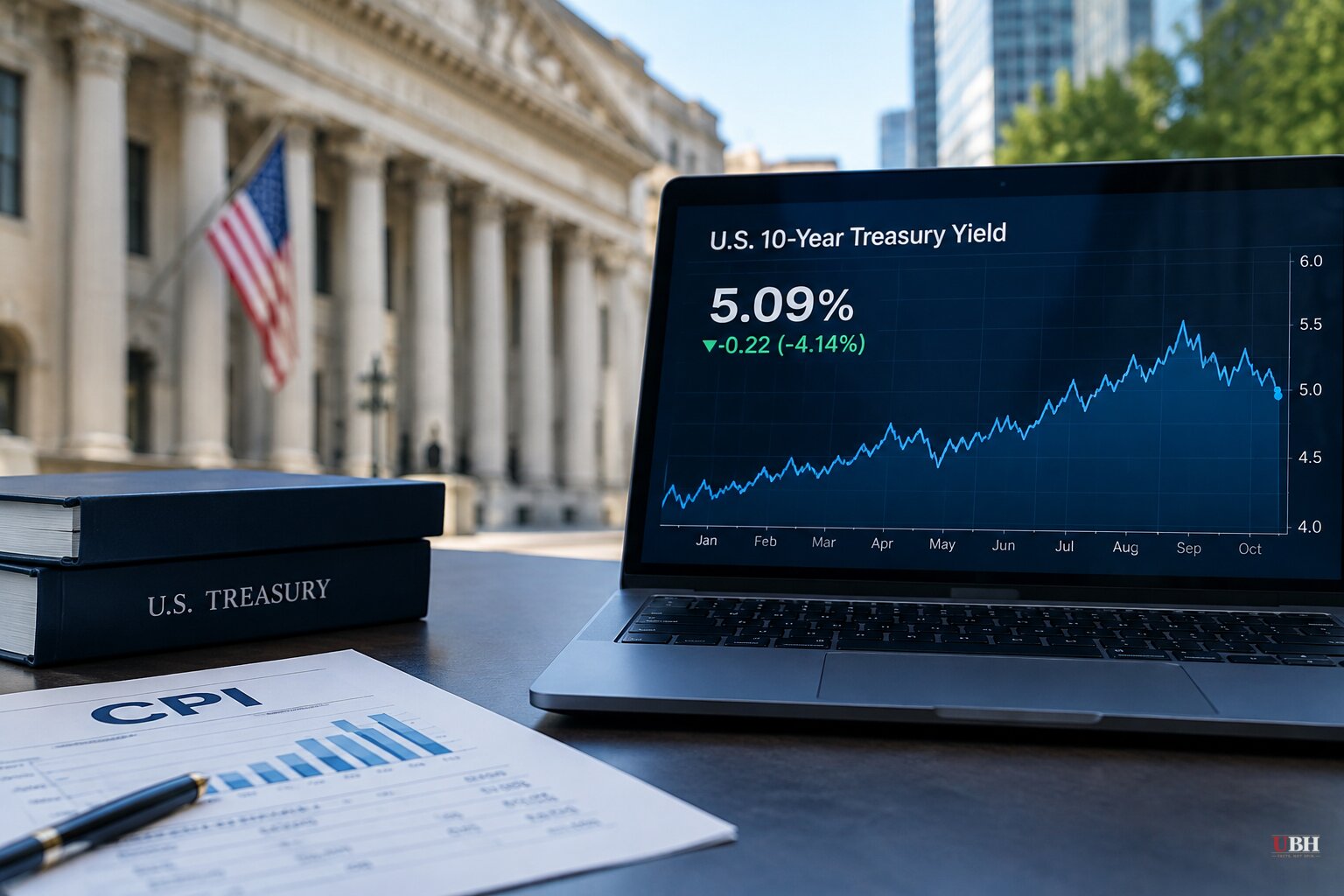
Since the 10-year Treasury closed at 5.31% on Oct. 5, its highest close since May 2002, the bond market has become the main stress gauge for everything else. Pimco chief investment officer Dan Ivascyn added fuel on Oct. 9 when he told the Financial Times that a 10-year yield of 6% is "certainly possible."
He did not call it a forecast. The 10-year ended last week at 5.09%.
What Ivascyn actually said
Ivascyn tied the possibility to market mechanics as much as to economics. "It is certainly possible, even from a short-term trading perspective, given that some of the activity we've seen in the last couple of weeks is tied to some negative technicals, some stop-out activity from the platform hedge funds and other levered investors," he said.
He also set a warning line. If the 10-year reaches 5.5% or higher, "you're going to see some decent weakness in risk markets, both credit and equity."
He flagged commercial real estate as a pressure point, citing "a lot of still fragile capital structures" and "fundamental weakness." He added that investors would eventually move more money into Treasuries to lock in higher returns, which he called a "limiting factor on how high yields can go from here."
The backdrop he described: high oil prices, inflation, soaring public debt and AI-linked borrowing. Mortgage rates have followed. The 30-year fixed averaged 7.4% as of Oct. 8, up from 6.30% a year earlier. Borrowing costs on the lowest-rated corporate bonds hit 17% this month, the highest since mid-2020.
Inflation re-accelerated
September CPI rose to 3.7% from 3.4% in August, slightly above forecast, according to the Bureau of Labor Statistics figures cited in reporting on the release. Energy was up 20.4% over the year. Gasoline rose 34.2% year on year and 9.1% in September alone. Core CPI, which strips out food and energy, was 2.6% on the same figures.
The Fed raised rates in September for the first time since 2023. Markets now price a 74.3% chance of another hike in December. Fed Chair Kevin Warsh has argued that a surge in spending, including AI capital expenditure, is fueling inflation.
Brent crude jumped 3.7% on Friday to $109.86. No deal has been reached with Iran.
Yields fell anyway
Oddly, the 10-year fell from 5.24% a week earlier to 5.09% on Friday, even after the hot CPI print and a hot producer-price report. Stocks sold off while bonds caught a safety bid.
The S&P 500 dropped 1.09% Friday to 7,659.44, down 1.95% on the week, its worst since June and about 2% below the Oct. 6 record close of 7,818.93. The Nasdaq fell 4.48% on the week. The semiconductor ETF SMH lost 10.5%. Lam Research fell 17.2%, Micron 14.6% and Intel 14.2%.
Goldman Sachs prime brokerage data show hedge funds net sold global AI stocks for five straight sessions, erasing all net buying since early 2025. Goldman put hedge fund AI allocation at 26.1%, down from 31.7% in June, and said gross leverage remains near five-year highs.
The case against 6%
Analyst Lance Roberts of Real Investment Advice argues the 6% scenario is a positioning story, not a fundamentals story. His point: a forecast that depends on forced selling by levered funds reverses once that selling washes out. He says rates have already returned to normal and that 6% would overshoot fair value by roughly 70 basis points.
Jim Bianco of Bianco Research told Bloomberg he is turning bullish on bonds after being bearish since 2020, calling the selloff a "value play." Bloomberg's math, as relayed in trade coverage: a buyer at current levels would need the yield to hit 6% before price losses cancelled out the income. A 100-basis-point rise would cost under 2%.
Treasury auctions of 10-year and 30-year debt this month each drew robust demand.
The counterweight to that optimism is Ivascyn's own caution. Pimco's CIO described a path where stop-outs at levered funds, not inflation data alone, can push yields past where fundamentals would put them.
The political layer
The September report is the last CPI release before the midterm elections next month. Asked about it, President Trump said, "we're doing great." On the campaign trail he has said Democratic wins would bring "a 1929-style economic depression," and he has pledged $5,000 payments to Americans if Republicans keep Congress. NPR notes that would be very costly and likely need congressional approval.
GOP strategist Brendan Steinhauser told NPR that voters feel inflation in groceries and bills and "have kind of a short memory." NPR reports polling shows voters blame Trump for prices.
The gasoline and oil numbers trace to the Iran war and the Strait of Hormuz standoff, which NPR describes as unpopular and as having driven up costs.
What to watch
Earnings are the near-term swing factor. FactSet says 84% of companies have beaten estimates, yet the market has rewarded beats by just 0.2% on average versus a normal 0.9%. Magnificent 7 earnings are expected to grow 33.2%, but only 7.5% excluding Nvidia and Meta.
Meta reports Wednesday, Oct. 21. Beyond that, the open issue is whether the 10-year stays near 5.1% or tests Ivascyn's 5.5% warning line with a December hike priced at nearly three-in-four odds.
Sources used for this briefing
7 links from 7 independent newsrooms (syndicated copies of the same report count once)
These are the sources it draws on, linked so you can verify.


