
Unbiased headlines. Facts, not spin.
Unbiased Headlines is an independently owned news organization. We bring you the facts, not opinions, written fresh from 110+ named sources. Sources linked so you can verify it yourself.
 finance
Major Story (7/10)
Event date: October 16, 2026 ·
Jakarta Stocks Fall Another 5% to Lowest Since 2020 After MSCI Proposes Standalone Status for Indonesia
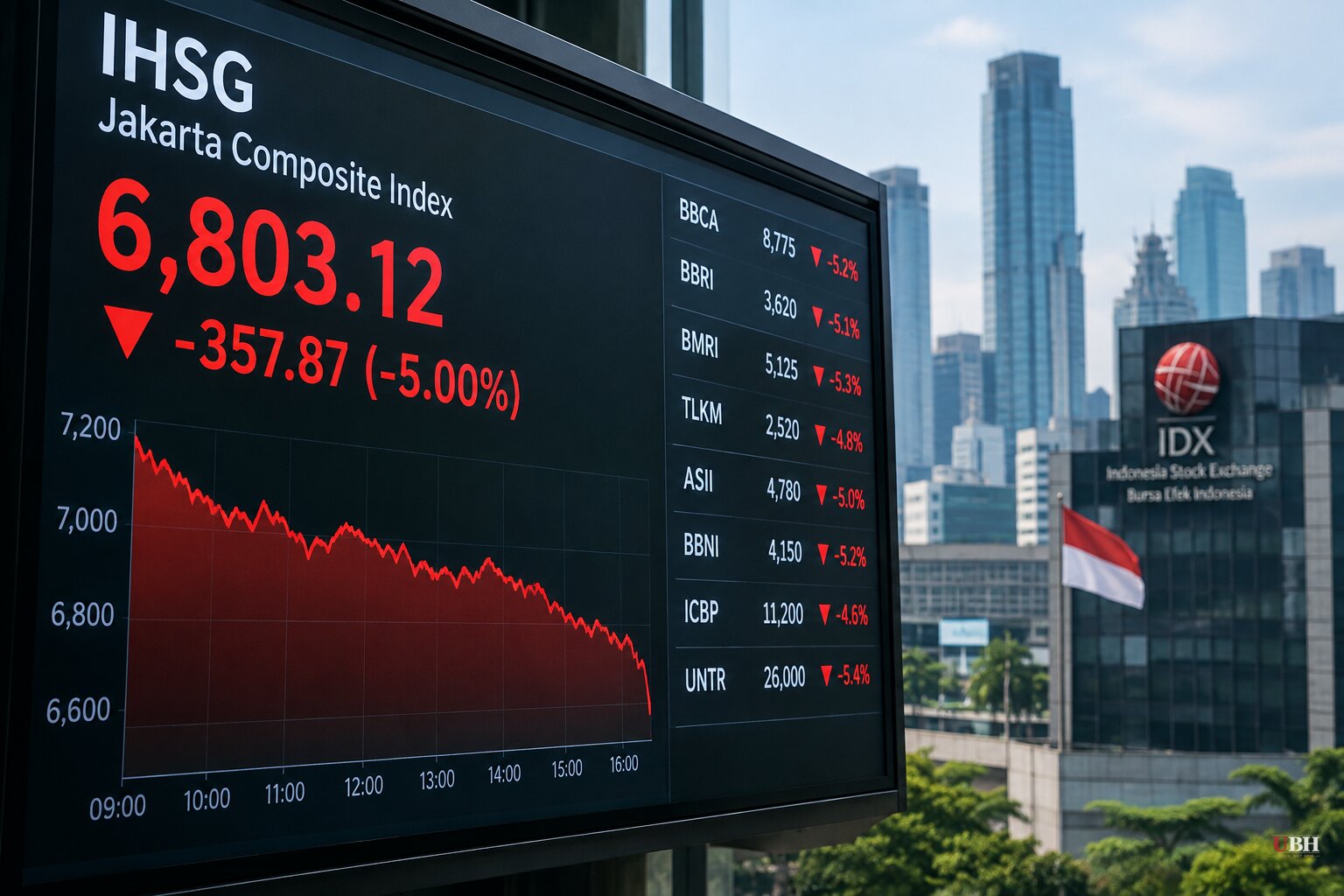
Since MSCI froze Indonesia's index status in January and threatened a downgrade to "frontier" market, the Jakarta market has been the world's worst performer. This week it got much worse.
On Friday, Oct. 16, MSCI said it wants to go further than frontier and reclassify Indonesia as a "standalone" market. The Jakarta Composite Index dropped roughly 11% that day, depending on the tally, its steepest one-day fall since January 1998. An 8% opening plunge triggered a 30-minute trading halt, and the index kept sliding after trading resumed.
In Monday trading in Jakarta (Oct. 19 local time), the index fell as much as 5.4%. It reached about 4,915 in early trade, its lowest level since October 2020. The 10-year government bond yield jumped 12 basis points to a four-month high, and the rupiah weakened further after closing Friday at 18,070 per dollar.
What MSCI said
MSCI's statement was blunt. "Significant concerns remain around market dysfunction," it said. "Accordingly, MSCI considers Indonesia's continued classification as an emerging market no longer appropriate."
The index provider said reforms announced by Indonesian authorities have not made enough progress on opaque share ownership and suspected coordinated trading. It said even a drop to frontier status would not reflect the severity of the problems.
Standalone status would remove Indonesian shares from the indexes that billions of dollars in passive funds track. It would also remove them from the benchmarks active managers are measured against. Argentina is the most recent market to receive that classification.
MSCI is taking comments until April 30, 2027, and says it will announce a decision by June 30, 2027. It will proceed unless it sees clear evidence of significant improvement.
The money at risk
Goldman Sachs estimates a full removal could trigger about $5.6 billion in passive outflows, equal to 18 days of average trading volume in the relevant stocks. Another $2.7 billion could be at risk if FTSE Russell follows with its own action, which Goldman treats as a separate scenario.
UBS put passive outflows near $4 billion, with active investors potentially adding $15 billion more. Goldman noted active funds benchmarked to MSCI and FTSE indexes hold more than $8 billion in Indonesian equities, but any selling by them would be discretionary.
The damage is already large. Goldman's data show the MSCI Indonesia Index down 47% this year as of Friday. Foreign investors have withdrawn a net $5.1 billion by Goldman's count, or $4.7 billion by the count cited by Reuters. Goldman says the value of foreign holdings has nearly halved, to about $130 billion from $250 billion in January.
The bank kept its underweight rating. Forward earnings multiples have fallen to 7.3 times, the lowest since the global financial crisis, but Goldman warned that is still above historical troughs and the market may not have bottomed. It also expects Bank Indonesia to raise rates by 25 basis points in both the fourth quarter of 2026 and the first quarter of 2027.
Jakarta pushes back
Indonesian officials were caught off guard. Senior economic minister Airlangga Hartarto said there is "a big question mark" over why MSCI did not raise standalone status at a meeting in Bangkok earlier in the week. Indonesia Stock Exchange CEO Jeffrey Hendrik said he would ask MSCI to explain the basis for its announcement.
Angus Mackintosh, an ASEAN specialist at Aletheia Capital in Singapore, argued the move does not reflect the health of most listed companies or the economy. "Grouping Indonesia with Lebanon, Palestine, and Argentina does not make sense," he said. He also called it "a wake-up call."
The exchange has taken its own steps. On Monday it cut its lower auto-rejection limit to 7% from 15%, effective through year-end. It said this would give investors time to "evaluate and digest available information." The move followed a weekend meeting between the financial regulator and market participants.
On Friday, the Financial Services Authority (OJK) announced fines totaling 2.1 trillion rupiah (US$116.4 million). They target parties linked to alleged trading manipulation in shares of three firms. Mackintosh called the fines "a positive move" but said the OJK needs to "take direct action against certain well-known players who have been involved in market abuse."
Indonesia has also announced clearer disclosure of major shareholders and a plan to require at least 15% of a company's shares to be available for public trading.
Political backdrop
The MSCI move adds pressure on President Prabowo Subianto's government. Moody's and Fitch have both cut their outlooks on Indonesia's sovereign rating to negative this year, citing reduced policymaking credibility.
Goldman strategists said the standard has shifted. "The burden of proof has shifted: avoiding reclassification will require clear evidence that the announced reforms have been consistently implemented and materially improved market functioning."
That leaves Jakarta with roughly six months to produce enforcement results MSCI can see, such as more cases like the three-firm fines. Whether regulators can do that before the April 30, 2027 comment deadline will decide whether the June 30 ruling confirms standalone status.
Sources used for this briefing
8 links from 8 independent newsrooms (syndicated copies of the same report count once)
These are the sources it draws on, linked so you can verify.


