
Unbiased headlines. Facts, not spin.
Unbiased Headlines is an independently owned news organization. We bring you the facts, not opinions, written fresh from 110+ named sources. Sources linked so you can verify it yourself.
 finance
Major Story (7/10)
Event date: September 19, 2026 ·
Dutch Central Bank Moved Gold From New York and Canada to London, Following France's Full Exit From the New York Fed
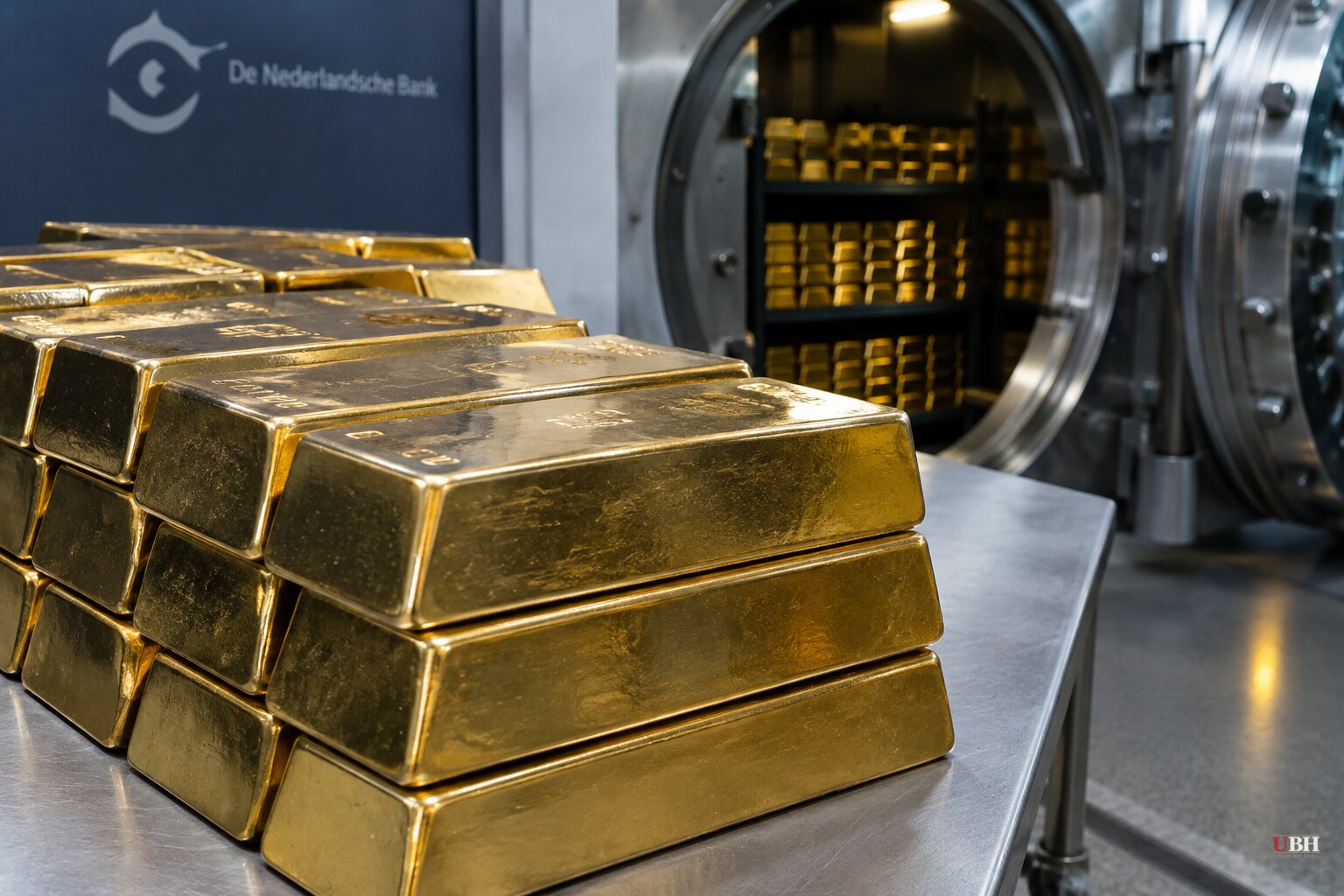
Since France finished removing all of its gold from the New York Fed in January 2026, another European central bank has followed. The Dutch central bank, De Nederlandsche Bank (DNB), announced last month that it moved more than 78 tons of gold held in New York and seven tons held in Canada to London.
The bank cited "increasing geopolitical unrest" and the need to improve its "crisis preparedness."
Why London, not Amsterdam
The destination matters. The gold did not go home. It went to the Bank of England.
DNB Governor Olaf Sleijpen pointed to London's status as the world's largest trading hub for bullion. Gold stored there is more accessible, he said.
"We expect that we will never need to use them, but we do need to strengthen our resilience and preparedness," Sleijpen said.
Krishan Gopaul, a senior analyst at the World Gold Council, wrote in a blog post last month that the French and Dutch operations show the answer "does not necessarily lie in domestic storage alone." Central banks, he said, are "increasingly optimizing across three considerations: custody risk, physical accessibility and market liquidity."
The New York Fed's shrinking vault
The New York Fed has long been custodian of gold for the U.S. government, foreign governments, other central banks and official international organizations. Much of it arrived during and after World War II, when countries wanted their reserves kept somewhere safe.
The stockpile peaked in the early 1970s. It began sliding after the U.S. took the dollar off the gold standard and now stands at about half its peak.
France removed all of its gold from the New York Fed between July 2025 and January 2026. The Dutch move adds to a list that is much older than the current tension.
Not a new habit
The World Gold Council's figures show central banks have been shuffling bullion for decades:
- Germany moved 930 tons from London to Frankfurt in 2000, then 674 tons from New York and Paris to Frankfurt between 2013 and 2017.
- The Netherlands shifted 122.5 tons from New York to Amsterdam in 2014.
- Austria repatriated 90 tons from London between 2015 and 2018.
- Venezuela repatriated 160 tons in 2011 and 2012.
- India has accelerated its relocations since 2023.
Gopaul said gold movements have come in waves and began well before relocation became a geopolitical issue. The current wave, he said, is more complex than a simple pull-back to home soil.
Political pressure in Berlin and Rome
Germany and Italy hold the world's second- and third-largest gold reserves. Lawmakers in both countries have demanded that more of that gold be taken out of the U.S., citing President Donald Trump's hostility toward Europe, including his threats to seize Greenland.
Germany's central bank has pushed back. It dismissed fears that its gold is vulnerable in New York. Its argument is that the U.S. would harm itself if it threatened the confidence of financial markets.
That is the central bank's position, and it is a judgment about U.S. incentives, not a guarantee. The lawmakers' position is the opposite: that political risk now outweighs the convenience of the old arrangement.
Gopaul framed the concerns in terms of jurisdiction, access during a crisis and exposure to overseas financial infrastructure. He also noted that relocation does not imply central banks are getting ready to sell gold.
Three facts are established. France has taken out all of its New York gold. The Dutch central bank has moved more than 78 tons from New York and seven tons from Canada to London. The New York Fed's overall holdings are about half what they were at the 1970s peak.
The Dutch bank gave its own reason, and it was precautionary. Sleijpen said he expects the gold will never need to be used.
Whether Berlin or Rome follows is the open question. Lawmakers in both countries are pressing for it. Germany's central bank says its gold is not at risk.
Sources used for this briefing
5 links from 4 independent newsrooms (syndicated copies of the same report count once)
These are the sources it draws on, linked so you can verify.


