
Unbiased headlines. Facts, not spin.
Unbiased Headlines is an independently owned news organization. We bring you the facts, not opinions, written fresh from 110+ named sources. Sources linked so you can verify it yourself.
 finance
Major Story (7/10)
finance
Major Story (7/10)
Indonesia Announces $117 Million in Market-Manipulation Fines Hours After MSCI Warning; Jakarta Index Falls Nearly 12%
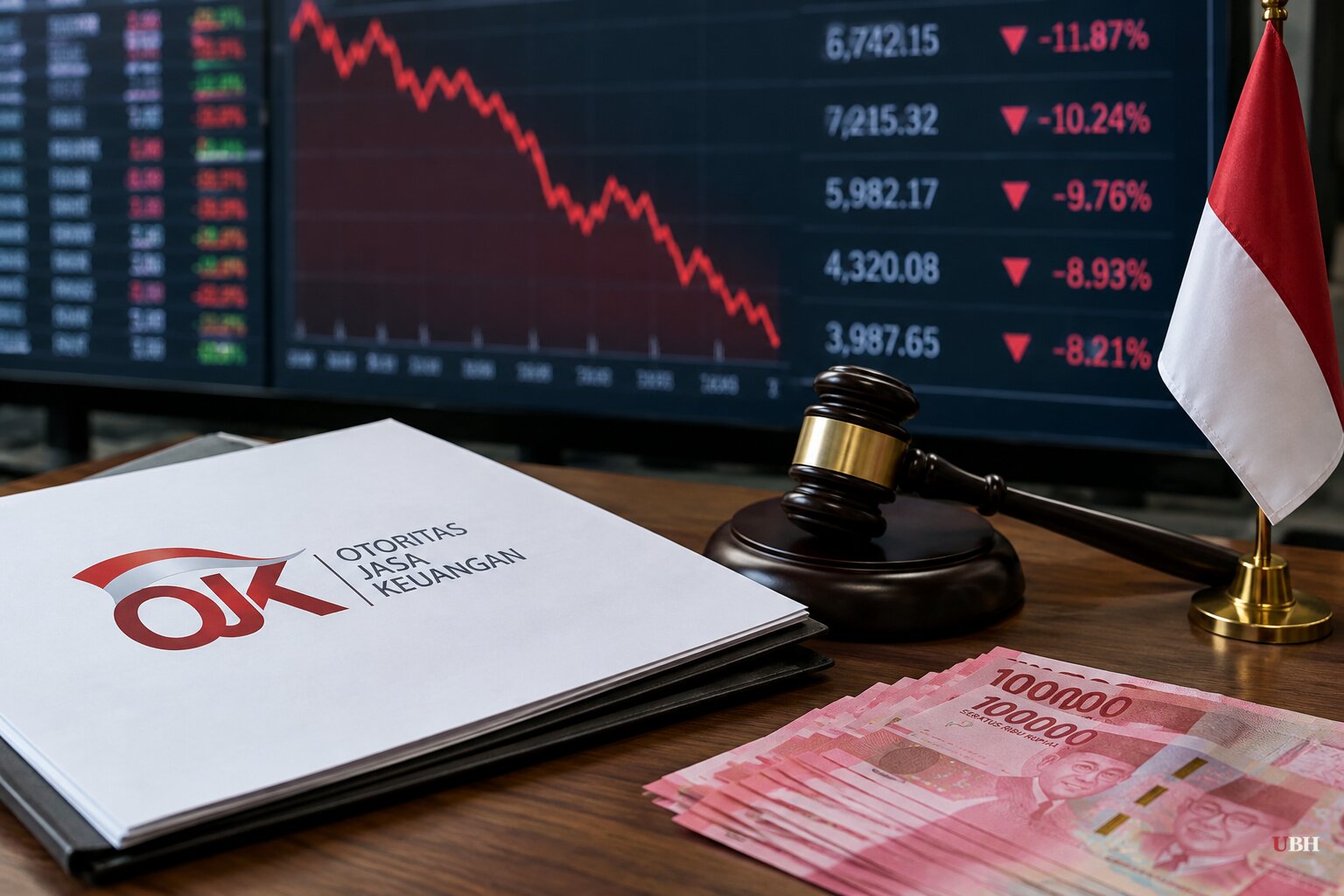
Since MSCI floated moving Indonesia to standalone status on Thursday, Oct. 15, and the Jakarta benchmark crashed on Friday, Oct. 16, Indonesian regulators have produced their first concrete enforcement answer: about $117 million in fines.
The Financial Services Authority, known as OJK, said Friday it found evidence of stock-trading manipulation involving three companies. The announcement came hours after MSCI said it was considering the downgrade.
One of the three is coal miner PT Dian Swastatika Sentosa. OJK said it found planned and structured trading in the company's shares through several brokerages. Those are the regulator's findings. The company's response has not been made public in the details released so far.
The enforcement gap MSCI pointed to
Enforcement is the exact weak spot MSCI named. In its statement, the index provider said: "Sufficient progress has not been observed consistently across the Indonesian equity market." It added that "significant concerns remain around market dysfunction, including continued suspected coordinated trading behavior and lack of evidence of meaningful enforcement."
The fines are a direct, dollar-denominated response to that charge. OJK has not said they were timed to the MSCI announcement, and the sequence alone does not establish that they were.
MSCI's concerns also cover transparency and ownership structures. A set of fines against three companies does not address those on its own.
How the market took it
The Jakarta Composite Index fell nearly 12% on Friday, its largest one-day drop in 28 years. It opened 8% lower, which triggered a 30-minute trading halt. It touched its lowest level since November 2020.
The index is down about 40% in 2026, the worst showing in the region. The big three state-linked and private lenders were hit hardest. Bank Central Asia, Bank Rakyat Indonesia and Bank Mandiri each fell nearly 15%.
The damage was local. The broader MSCI Asia Pacific index rose 1.1% on the same day as investors bought beaten-down technology shares.
The rupiah weakened to 18,070 per dollar, its lowest since late July and close to its record low of 18,190. It later pared losses to trade around 18,000.
Foreign investors have already been leaving. Data from the Indonesia Stock Exchange show $4.7 billion in net equity sales this year. Bloomberg data put foreign withdrawals at roughly $4.9 billion.
What standalone status would mean
Standalone is a step below the frontier-market category MSCI warned about in January. That earlier warning set off a market rout of nearly $80 billion. MSCI now says a frontier reclassification would not properly recognize the depth of the problems, given how investors responded.
Standalone status would put Indonesia in a group with Argentina, Lebanon, Ukraine and Zimbabwe. It would be the only Asia-Pacific country in the category. It would also be the largest economy in the group, at more than twice the size of Argentina.
Indonesian stocks would drop out of the main MSCI indexes tracked by global funds. Passive funds that follow those benchmarks would be forced to sell.
MSCI said it will keep its existing freeze on certain index changes involving Indonesian securities, including additions and upward migrations between index segments.
Jakarta's response
OJK said it is "carefully reviewing and paying serious attention to MSCI's assessments." It said it and self-regulatory organizations, including the stock exchange, will keep engaging index providers and institutional investors. The goal is to share progress on capital-market reforms and gather feedback.
The exchange said it has taken steps to improve transparency and market integrity. Chief executive Jeffrey Hendrik has asked MSCI for further clarification.
The backdrop is grim. Moody's and Fitch have both cut Indonesia's credit-rating outlook to negative, citing concerns over the credibility of policymaking.
What comes next
MSCI's consultation is open until April 30, 2027. The final decision is due by June 30, 2027, and MSCI may issue an interim update on investor responses before then.
It remains to be seen whether MSCI treats the $117 million in penalties, and any that follow, as the "meaningful enforcement" it said was missing. Indonesia has roughly six months to build that record.
Sources used for this briefing
7 links from 7 independent newsrooms (syndicated copies of the same report count once)
These are the sources it draws on, linked so you can verify.


