
Unbiased headlines. Facts, not spin.
Every story is an unbiased news briefing written from 110+ sources across the spectrum — sources linked so you can verify it yourself.
 defense
Notable (6/10)
August 1, 2026 at 02:44 AM
defense
Notable (6/10)
August 1, 2026 at 02:44 AM
India's Rapid Action Force Identifies Officers Who Fired Pellet Guns at Delhi Protesters
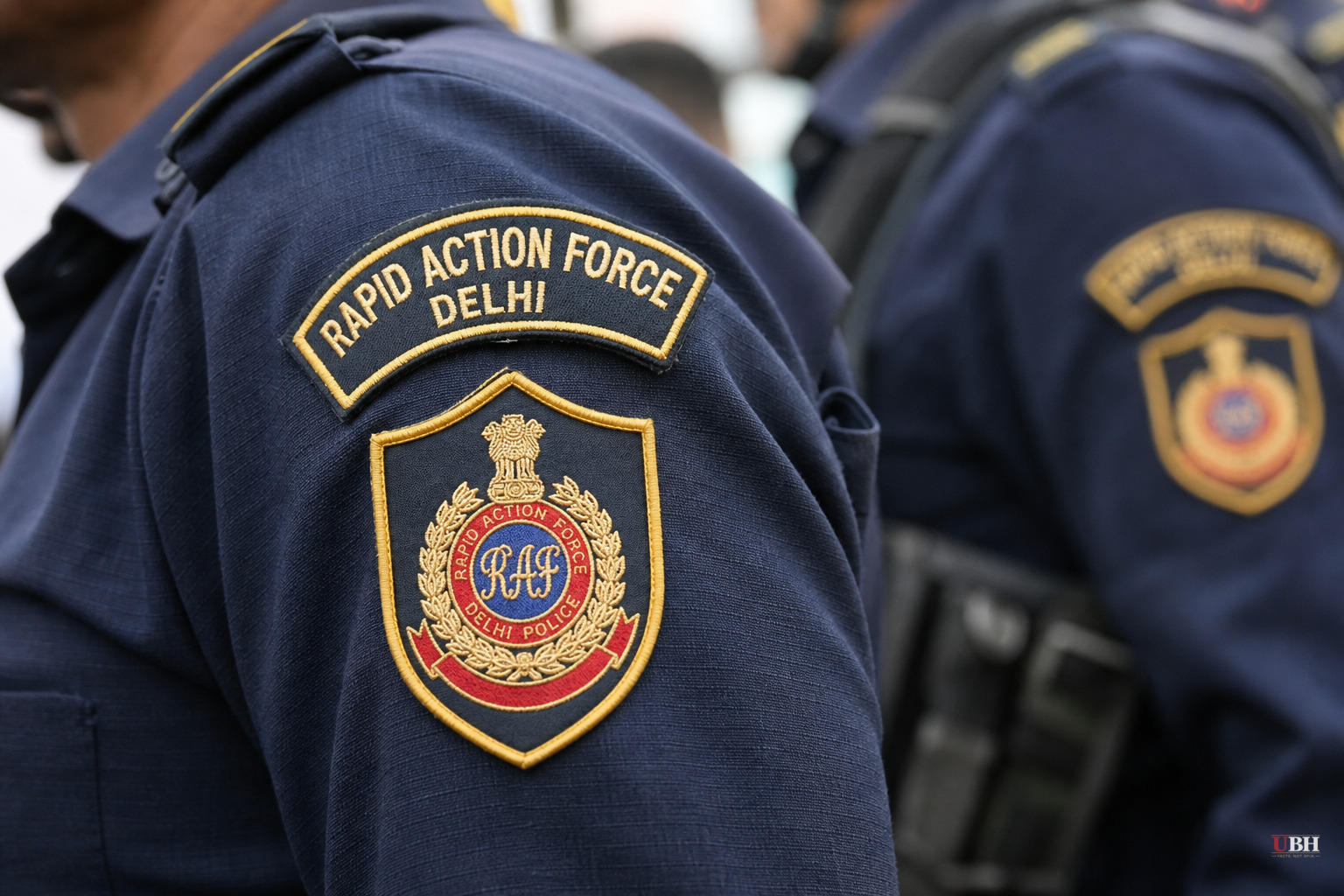
India's Rapid Action Force has identified the officers who fired pellet guns at student protesters during a July 20 crackdown in New Delhi, according to a report by The Federal citing NDTV sources. The RAF's internal probe is now examining where the pellets were fired from and the circumstances behind the decision to use them.
Delhi Police initially called reports of pellet gun use "completely false and misleading" in a statement posted on X, according to Middle East Eye. Days later, the RAF admitted to "excessive use of force" following its own internal investigation, per the same report.
The protest itself involved tens of thousands of people trying to march on Parliament. Organized under the banner of the satirical "Cockroach Janta Party," the demonstration demanded educational reforms and the resignation of Education Minister Dharmendra Pradhan, according to the BBC. The name stems from Chief Justice Surya Kant reportedly calling unemployed Indian youth "cockroaches" and "parasites," per Middle East Eye.
The protests trace back to anger over the National Eligibility cum Entrance Test, an exam system Middle East Eye reports has been marked by corruption, leaked papers, and more than 20 student suicides linked to the fallout. Activist Sonam Wangchuck's 26-day hunger strike helped turn a niche grievance into a mass movement that culminated in the July 20 march.
Delhi Police say 60 protesters and 118 of their own personnel were injured that day, according to the BBC. CJP disputes that number, claiming the real injury count among protesters is much higher.
What the Forensics Show
The BBC had two independent ballistics experts review photos and videos of injured protesters. Philip Boyce, a UK-based forensic ballistics scientist, said the wounds are "definitely from a pellet gun," identifying the weapon as a 12-gauge pump-action shotgun. He noted the injuries occurred at a distance of at least 50 feet, but said pellet wounds "can actually still be devastating and potentially life-threatening even from 100 feet."
NR Jenzen-Jones, director of Armament Research Services in the UK, told the BBC that video from the protests shows "police using shotguns for crowd control" and that the injuries are "strongly consistent with the use of birdshot." He also pointed out that Indian law enforcement has a documented history of loading shotguns with birdshot for crowd control, a practice distinct from standard less-lethal ammunition.
A senior official at Safdarjung Hospital confirmed pellet wounds on a fourth victim, and hospital medical records showed injuries "consistent with pellets striking" a journalist who was examined by three separate hospital departments after the crackdown, according to Middle East Eye.
India Today broke down why these guns cause the damage they do. The outlet cited research putting the threshold for skin penetration at roughly 24 to 53 joules per square centimeter. A dense metal pellet concentrates its energy onto a tiny area of skin, easily clearing that threshold at crowd-control range, while a sponge round spreads the same energy over a much wider surface and stays below it. India Today's reporting makes the point plainly: this is a penetrating weapon carrying a less-lethal label, not a less-lethal weapon that occasionally malfunctions.
The Kashmir Precedent
Middle East Eye's reporting adds important context the BBC's piece doesn't dwell on: pellet guns have a long, ugly track record in Indian-administered Kashmir, where the UN Human Rights Office in 2018 called them "one of the most dangerous weapons used against protesters." If confirmed as used in Delhi, this marks the first known instance of the tactic being deployed against protesters in the Indian capital, according to Middle East Eye.
A crowd-control method developed and normalized in a conflict zone under military-style policing is now allegedly showing up against student demonstrators in the national capital. Human Rights Watch said Delhi police and the RAF also used electric shock batons, tear gas, and stones, and cut internet access to restrict communication during the crackdown, per Middle East Eye.
The Institutional Response
Delhi Police's initial denial isn't automatically bad faith. Crowd-control operations are chaotic, and distinguishing pellet wounds from other shrapnel or debris injuries in real time is genuinely hard without forensic review. The RAF's own admission of "excessive force" after an internal probe suggests the institution corrected course once evidence mounted, rather than stonewalling indefinitely.
The sequence—deny first, investigate later, confirm after outside forensic scrutiny—is not a good look for an agency that's supposed to have use-of-force protocols in place before pulling triggers on a crowd.
What Happens Next
Pradhan resigned as education minister on July 26, days after the crackdown, though CJP said protests would continue until other demands, including compensation for NEET-related suicides and accountability for the July 20 violence, are met, according to Middle East Eye. The RAF's internal investigation is ongoing as of this reporting, with no announced disciplinary action or charges against the identified personnel. Whether that probe results in prosecutions, or simply an internal reprimand, remains the open question.
Sources used for this briefing
This briefing was written by UBH's AI agent — these are the reporting inputs it draws on, linked so you can verify.


