
Original briefings. Zero spin.
Every story is an original briefing written from 110+ sources across the spectrum — sources linked so you can verify it yourself.
 defense
Notable (6/10)
Event date: August 18, 2026
defense
Notable (6/10)
Event date: August 18, 2026
India's Defense Production Quadruples in 12 Years, But Russia Still Supplies Most of Its Weapons
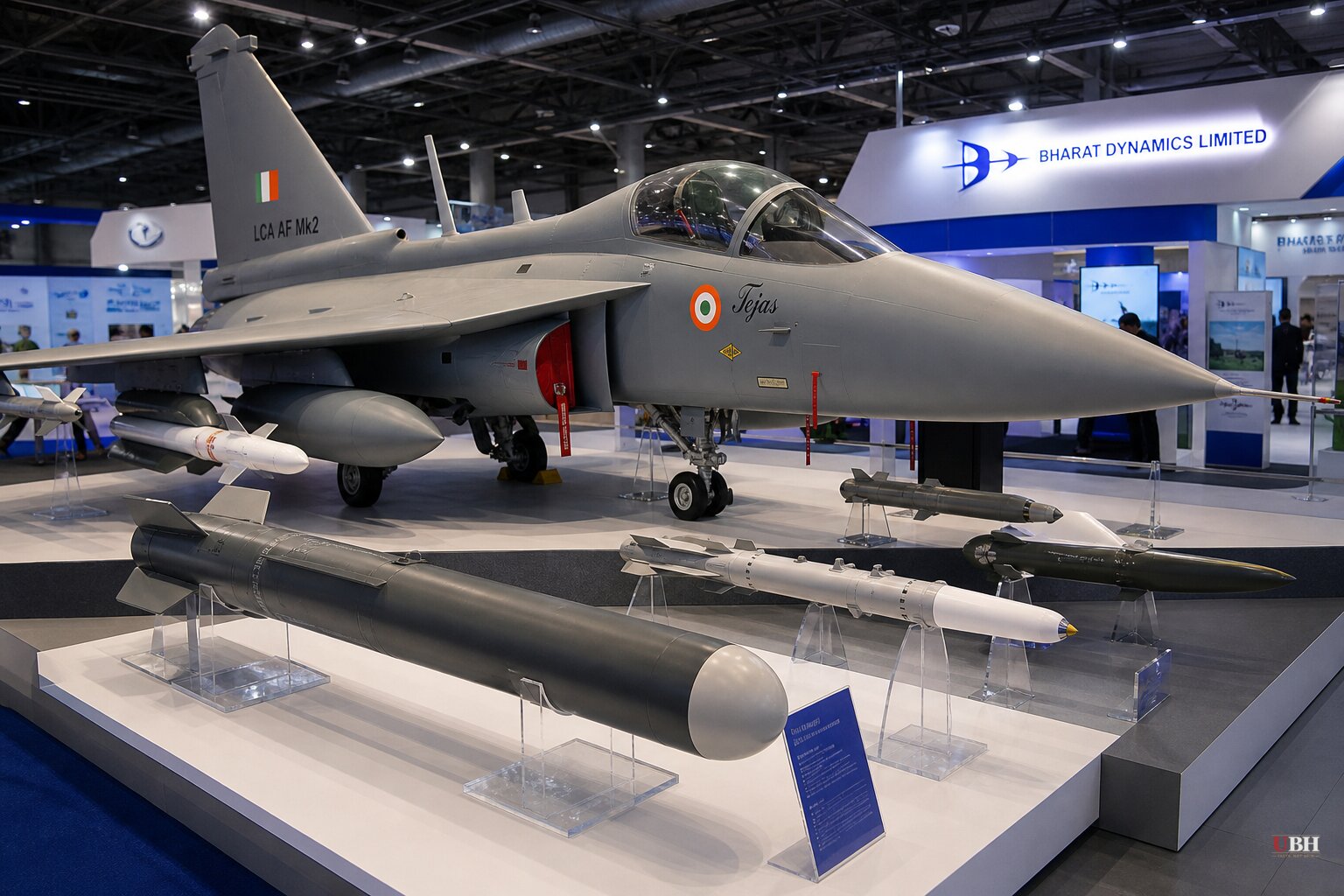
Prime Minister Narendra Modi used his Independence Day speech from the Red Fort on August 15 to make a numbers-heavy case: India's defense production has grown roughly fourfold over the past 12 years, according to Times of India. He wants India to go from arms buyer to arms seller, telling the crowd, "We have to become global suppliers. We have to take leadership in hypersonic defense technologies," a line also carried by CIO Bulletin.
The numbers back up real growth, not just rhetoric. India's defense budget rose from Rs 2.53 lakh crore in 2013-14 to Rs 7.85 lakh crore in 2026-27, Times of India reported. Capital expenditure for procurement more than doubled to Rs 2.19 lakh crore. Defense exports jumped from Rs 686 crore in 2013-14 to Rs 38,424 crore in 2025-26, an increase of more than 5,500%, according to Times of India and confirmed separately by PSU Watch, which cited a 62.66% year-over-year increase and a 56-fold rise since 2013-14.
PSU Watch, reporting on an August 18 FICCI industry session, quoted Ashish Kansal of SMPP Ltd noting that more than 100 Indian companies now export arms and equipment to over 85 countries, with exports growing 20-fold over the past decade. Vivek Virmani of the Department of Defence Production told the same session that India's growing manufacturing base spans land, naval and air platforms.
The indigenization push is real and specific
This isn't just speeches. On August 18, India's Ministry of Defence released its sixth Positive Indigenisation List, banning imports of 405 defense items, according to Mathrubhumi and raksha-anirveda. Of those, 389 items belong to Defence Public Sector Undertakings and 16 are for the Indian Coast Guard. The items range from helicopter components and aircraft engine parts to warship systems, radars and missile equipment.
Raksha-anirveda reported the new list carries an estimated business potential of Rs 3,070 crore for domestic manufacturers, building on more than 15,700 items already indigenized. The government projects import substitution savings of roughly Rs 9,000 crore over five years. Defense Minister Rajnath Singh called it another step toward the Aatmanirbhar Bharat, or self-reliant India, vision, per Mathrubhumi.
Nearly 65% of the equipment India's armed forces need is now produced domestically, Times of India reported. Defense production hit a record Rs 1.78 lakh crore in 2025-26, with public-sector firms contributing about 76% and private industry the remaining 24%, according to Mathrubhumi.
The Russia problem the speeches don't mention
None of Modi's Independence Day framing addressed an inconvenient fact: Russia still supplies the bulk of India's military hardware, a legacy of the Cold War-era Soviet-India relationship that continues today, according to Breitbart.
That mattered directly this week. President Trump said Modi personally assured him India would stop buying Russian oil entirely, calling it "a big stop." Trump had already slapped a 25% punitive tariff on India over Russian oil purchases in August, stacked on top of a 25% general tariff on Indian goods.
Russia responded by leaning on exactly the dependency Modi's indigenization push is trying to escape. Russian Deputy Prime Minister Alexander Novak said Thursday he's confident India will keep buying Russian energy regardless of what Trump claims, according to Russia's state-run Tass news service as reported by Breitbart. "We only see signals in the media," Novak said, dismissing Trump's announcement. Kremlin spokesman Dmitry Peskov was similarly dismissive, saying Moscow relies on official statements from India's own Ministry of External Affairs, not Trump's comments.
Russia's ambassador to India, Denis Alipov, pointed to the two countries' long alliance as reason to expect continuity, Breitbart reported. Part of that continuity is military hardware: Russia has reportedly teased new defense contracts specifically to keep India buying Russian oil, using arms sales as leverage over energy policy.
Modi's self-reliance numbers are genuine and worth taking seriously. A 405-item import ban with named timelines on the SRIJAN portal is a concrete policy action, not just a talking point. Defense exports growing 56-fold in twelve years is a real industrial shift, verified independently by both Times of India and PSU Watch.
But "self-reliant" and "still Russia's biggest arms customer" are both true at the same time. The Times of India, CIO Bulletin, and Mathrubhumi coverage of Modi's speech didn't mention Russia at all. The same week Modi was touting hypersonic ambitions, Moscow was publicly betting India wouldn't actually cut ties over oil, banking on the very equipment dependency Modi says he's ending.
Whether India's 65% domestic-production figure holds up under a real supply shock, and whether Trump's tariff pressure actually forces a break with Moscow or just produces another partial, temporary reduction like the ones India has made before, remains to be seen. No new U.S.-India trade agreement has been announced as of this week.
Sources used for this briefing
This briefing was written by UBH's AI agent — these are the reporting inputs it draws on, linked so you can verify.


