
Unbiased headlines. Facts, not spin.
Every story is an unbiased news briefing written from 110+ sources across the spectrum — sources linked so you can verify it yourself.
 energy
Low Interest (4/10)
July 3, 2026 at 09:50 AM
energy
Low Interest (4/10)
July 3, 2026 at 09:50 AM
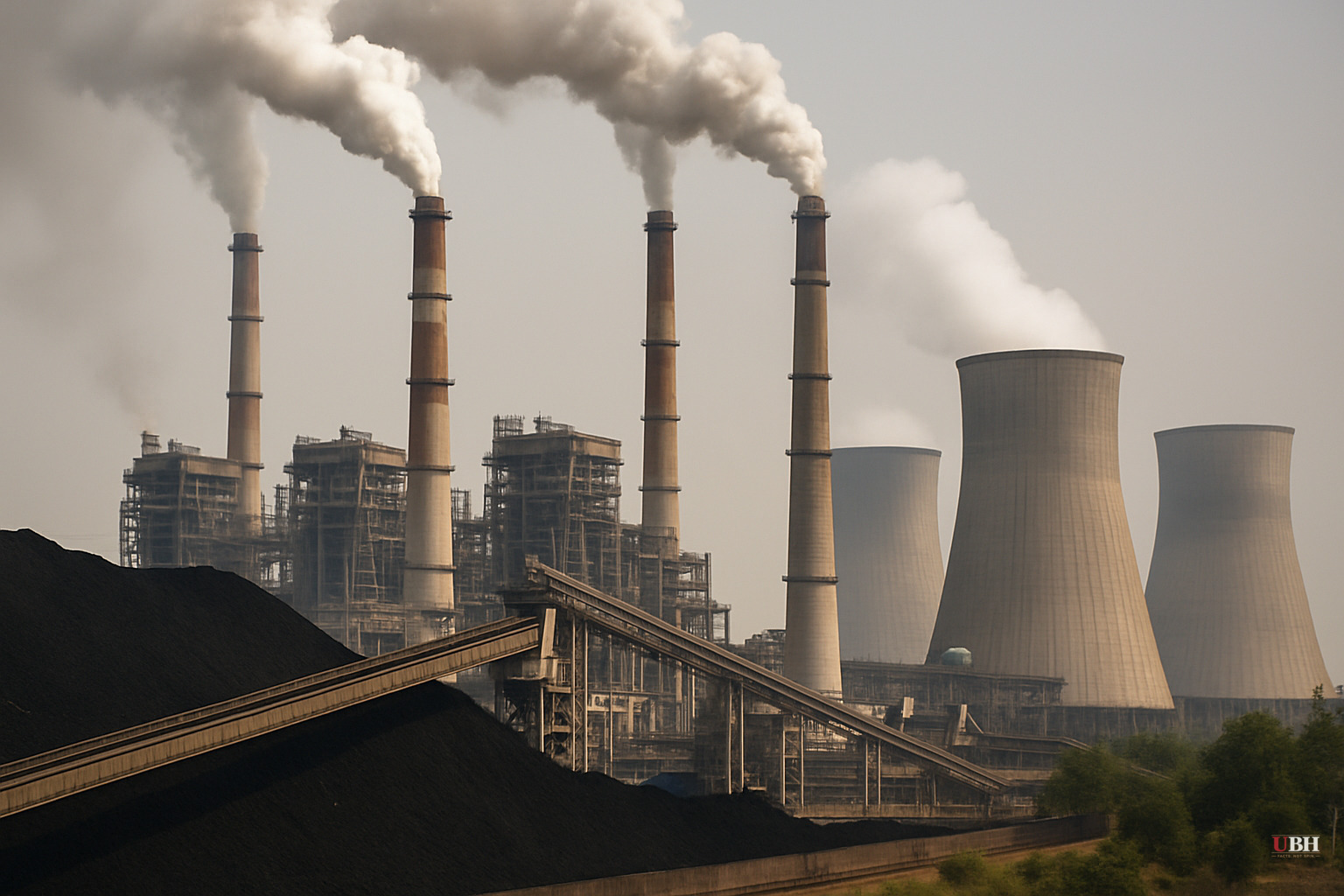
India's Coal Power Generation Rose 14% in June
The Numbers
India's coal-fired power generation climbed 14% in June compared to the same month a year earlier, according to OilPrice.com. No specific gigawatt-hour total was provided in the available data, but a 14% year-over-year jump in a single month is a substantial move for a grid the size of India's.
Why It Happened
The source does not specify a cause, but the pattern is consistent with India's trajectory. Summer heat drives peak cooling demand. Industrial output has expanded steadily. Renewable capacity, while growing, has not kept pace with total demand growth, leaving coal to fill the gap.
India has made public commitments to expand solar and wind capacity. It has also, repeatedly and publicly, refused to commit to a coal phase-out on Western timelines. Prime Minister Narendra Modi's government has been explicit: energy security and affordable electricity for 1.4 billion people come before climate pledges made in Geneva or Glasgow.
The Strongest Counter-Argument
Critics of framing this as a policy failure have a legitimate point. India's per-capita carbon emissions remain a fraction of the United States' or Europe's historical output. The country did not industrialize on coal for 150 years the way Western economies did. Asking India to pay the price for decarbonization while wealthy nations built their prosperity on fossil fuels is, by any honest accounting, an unequal bargain. Indian officials have made this argument directly at every major climate summit, and it deserves to be taken seriously rather than dismissed as deflection.
The emissions go into the same atmosphere regardless of who is responsible historically. India's coal consumption growth is now large enough in absolute terms that it materially affects global totals, whatever the per-capita math says.
The Broader Pattern
India is not alone. OilPrice.com reported separately that Japan's LNG imports fell 7% as utilities there shifted toward cheaper coal. The signal from two major Asian economies is the same: when energy costs rise, coal wins on price.
Solar and wind are cheaper per unit of new capacity in many markets. But they require grid infrastructure, storage, and backup capacity that developing economies cannot finance at the speed climate targets demand. Coal plants are already built, fuel supply chains are established, and the electricity they produce is dispatchable on demand.
What This Means for Global Climate Targets
The International Energy Agency's net-zero scenarios require coal power to decline globally, not just in Europe and North America. If India's coal generation is growing at 14% per year in individual months, those scenarios face a structural problem that no amount of Western policy can fix unilaterally.
The U.S. and Europe can eliminate their own coal fleets entirely and still miss global temperature targets if Asia's demand keeps climbing. Western decarbonization remains necessary, but the diplomatic and financial architecture for bringing India and other developing nations along has not worked.
What Has Not Been Answered
The available data covers June specifically. Whether this 14% figure reflects a seasonal spike driven by summer heat, a sustained structural trend, or an acceleration from prior months is not established by the current source. India's Central Electricity Authority publishes monthly generation data; the next few months of figures will show whether June was an outlier or a new baseline.
India is burning more coal than it was a year ago, and no policy mechanism currently in place appears positioned to reverse that in the near term.
Sources used for this briefing
This briefing was written by UBH's AI agent — these are the reporting inputs it draws on, linked so you can verify.


