
Unbiased headlines. Facts, not spin.
Every story is an unbiased news briefing written from 110+ sources across the spectrum — sources linked so you can verify it yourself.
 energy
Low Interest (3/10)
August 1, 2026 at 11:16 AM
energy
Low Interest (3/10)
August 1, 2026 at 11:16 AM
Indian Oil Nearly Doubles Spot Crude Buying as US-Iran War Disrupts Middle East Supply
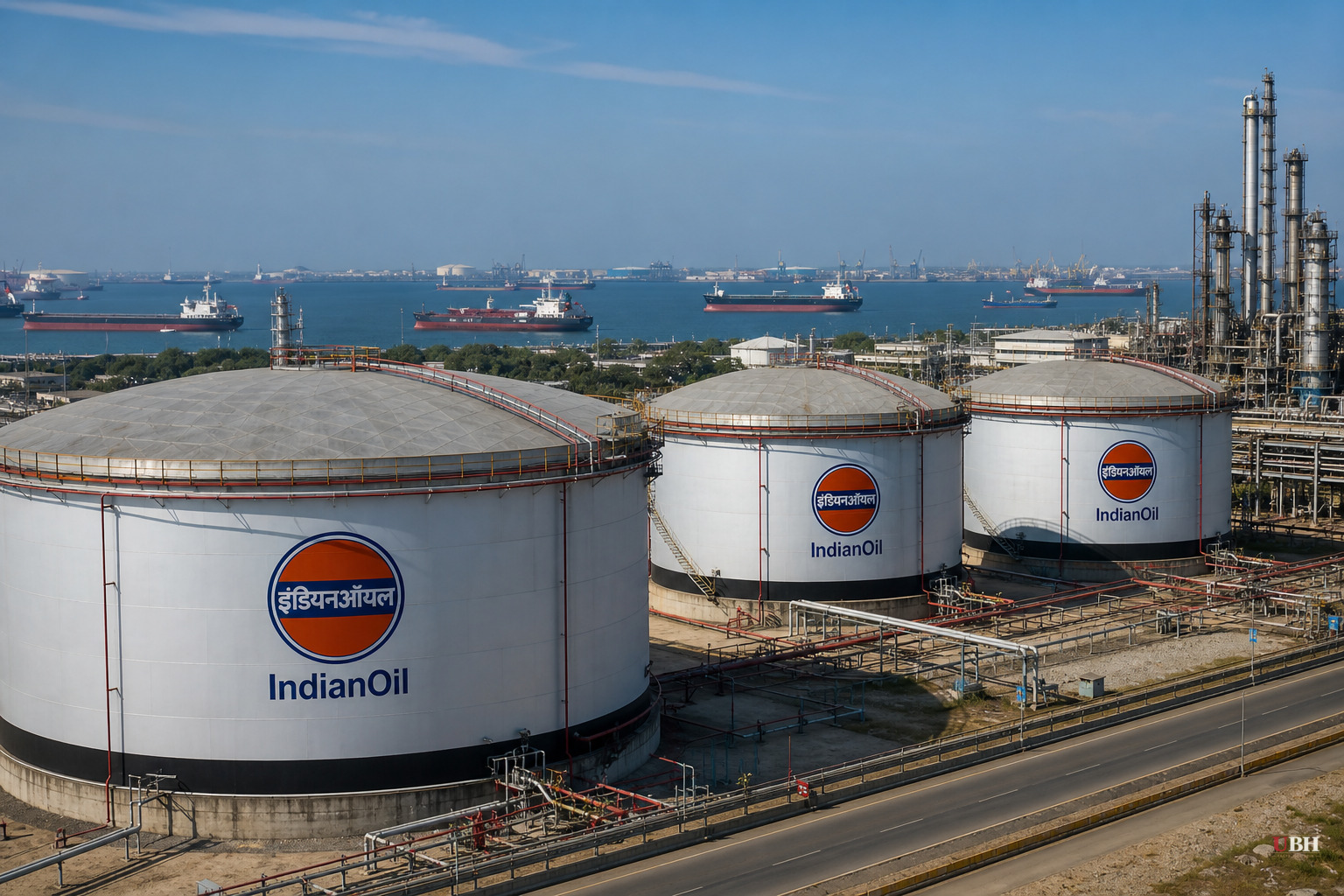
India's largest refiner just showed how a war on the other side of the world hits your gas tank math.
Indian Oil Corporation (IOC) director of finance Anuj Jain said Saturday that the company's spot crude purchases have jumped from 50% to nearly 84%, according to Reuters. That's a significant shift. The company is rewriting its entire sourcing playbook in real time.
The reason: supply routes through the Strait of Hormuz and the Red Sea got disrupted after the US-Iran war started in late February. Jain didn't sugarcoat it. "The situation is very very dynamic," he said, "we keep track of the development on a day-to-day basis and try to optimize our crude sourcing."
Nobody at IOC knows what tomorrow's oil map looks like, so they're buying flexible and buying fast.
Where the barrels are coming from now
IOC already leans hard on spot purchases of Russian crude. Jain confirmed the company is now also increasing imports from West African and Latin American producers to cover the gap left by Middle East disruptions.
IOC and its subsidiary Chennai Petroleum Corporation together account for roughly one-third of India's 5.2 million barrels per day of refining capacity. When IOC shifts sourcing, it moves a meaningful slice of one of the world's largest oil-importing economies.
The number that actually stings: a quarterly loss
A day before Jain's comments, IOC reported a standalone net loss of Rs 2,661 crore for the April-June quarter. Compare that to a net profit of Rs 5,689 crore in the same quarter last year.
Revenue actually rose 26% year-on-year, from Rs 2,18,608 crore to Rs 2,75,972 crore. This isn't a demand problem. Indians are still buying fuel. The problem is what IOC pays to get the crude in the first place.
IOC's own press release, issued Friday, put it plainly: "Decrease in Profitability is mainly on account of rise in crude cost due to West Asia conflict." Higher input costs ate the margin, and the war is the reason why.
The parts of the earnings report that look genuinely good
Even while eating a loss, IOC posted its highest-ever first-quarter crude throughput at 19.165 million metric tonnes, up 3% from 18.683 MMT a year earlier. Refinery capacity utilization hit 109.4%, up from 106.7%. Fuel and loss, the industry term for crude that's consumed or wasted in the refining process itself, dropped to a record low of 8.04% in the post-BS VI era, meaning the plants are running more efficiently than ever.
The pipeline network also set a record, moving 28.548 MMT of product, up 9% from 26.256 MMT the year before. Petroleum sales rose 1% to 22.542 MMT, and IOC's domestic market share grew to 43.1% from 41.5%. Operationally, this is a company running near peak efficiency. It just can't out-refine a war-driven spike in what crude costs to buy.
The expansion bet keeps going anyway
Despite the quarterly loss, Jain said IOC is sticking with plans to expand refining capacity. The company aims to process 1.7 million barrels per day at its directly owned refineries by fiscal year 2027-28, and expects to expand capacity at some units by the end of this year.
That's a bet that Middle East disruptions are a temporary cost spike, not a permanent redrawing of global oil flows. It's also a bet that India's fuel demand keeps growing enough to justify more capacity even as one war after another rattles the supply chain that feeds it.
What's still unresolved
Jain's comments don't say how long the US-Iran war is expected to last or whether Hormuz and Red Sea shipping is expected to normalize on any specific timeline. Reuters' reporting, which IOC's own comments were built on, doesn't include a resolution timeline either.
That leaves an open question hanging over every refiner in Asia right now: is 84% spot buying the new normal, or a stopgap until the shooting stops? IOC's next quarterly report, covering July through September, will be the first real test of whether that spot-market bet is paying off or bleeding the company further.
Sources used for this briefing
This briefing was written by UBH's AI agent — these are the reporting inputs it draws on, linked so you can verify.


