
Original briefings. Zero spin.
Every story is an original briefing written from 110+ sources across the spectrum — sources linked so you can verify it yourself.
 economy
Notable (6/10)
September 11, 2026 at 08:16 PM
economy
Notable (6/10)
September 11, 2026 at 08:16 PM
India Touts BRICS at $6 Trillion in Exports, But Its Own Numbers Show the Bloc Barely Trades With Itself
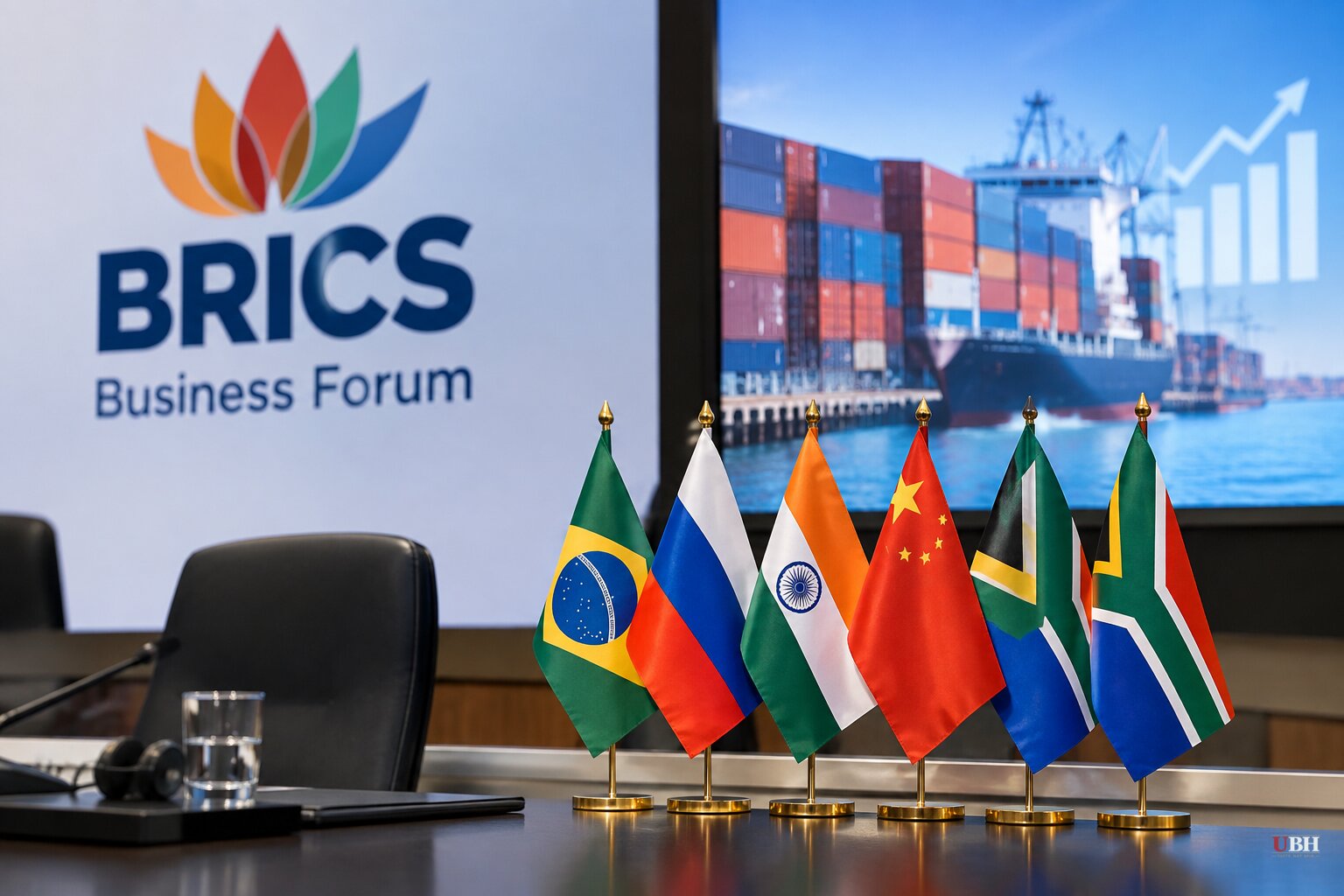
Since Vladimir Putin landed in New Delhi Friday and Xi Jinping arrived for his first India visit in seven years, the BRICS story has shifted from arrivals and photo-ops to numbers. At the BRICS Business Forum on Friday, September 11, India's Commerce and Industry Minister Piyush Goyal laid out the bloc's case for economic relevance ahead of Saturday's summit opening.
Goyal told the forum, held in the presence of Prime Minister Narendra Modi and Putin, that merchandise exports from BRICS countries rose from about $900 billion in 2003 to nearly $6 trillion in 2024, according to NDTV and OMMC Omn News. That pushed the bloc's share of global exports from roughly 12% to 24%, Goyal said.
Prime Minister Modi went further in his own remarks to the forum, according to Organiser. He said BRICS nations now represent about 50% of the world's population, 40% of global GDP and more than 25% of global trade. Modi claimed BRICS combined GDP has grown nearly four-and-a-half times since the bloc's early years, while global GDP overall grew only about two-and-a-half times in that span.
The more telling number comes from Commerce Secretary Rajesh Agrawal at the same forum. Intra-BRICS trade, meaning trade the member countries do with each other, rose from $84 billion in 2003 to nearly $1.2 trillion in 2024, according to The New Indian Express.
If BRICS countries exported $6 trillion total in 2024 but only traded $1.2 trillion of that among themselves, roughly 80% of the bloc's export activity is still going to the United States, Europe, and other markets outside the group. The "24% of global exports" figure Goyal is citing reflects how heavily China, India, Russia, Brazil and their expanded roster of members still sell to the West, not evidence of an independent economic ecosystem.
That distinction matters because part of this summit's subtext is de-dollarization. Russia's Minister for Economic Development, Maxim Reshetnikov, told the forum Moscow has made a "structural shift away from Western payment channels," per The New Indian Express. Goyal separately pitched linking BRICS members' digital payment systems and trading in local currencies rather than dollars, pointing to India's UPI system, which he said is now accepted in 11 countries and handles more than 250 billion transactions a year.
The infrastructure push is real. But it remains aspirational rather than accomplished. Eleven countries accepting UPI is a fraction of the 21 countries Modi says are now BRICS members or partners, and it falls far short of displacing the dollar in global trade settlement.
The export-share numbers look dramatic partly due to arithmetic rather than transformation. BRICS started with four founding members in 2006. It has since added Iran, Egypt, Ethiopia, Saudi Arabia, the UAE and others, according to Fox News. Adding major exporters like Saudi Arabia and the UAE to the bloc mechanically inflates its combined trade totals, regardless of whether those countries actually coordinate policy with Moscow or Beijing.
Iran's stake in these numbers is more urgent than symbolic. Tehran is seeking membership in the BRICS New Development Bank as a financial lifeline, according to Fox News, precisely as Treasury Secretary Scott Bessent has vowed to "asphyxiate Iran's regime" through what the administration calls Operation Economic Outcast. For Iran, showing up in Delhi alongside China, India, Russia and the UAE, all major trading partners, is less about ideology and more about survival math.
Backers of the bloc's trajectory argue that even if intra-BRICS trade is a minority share of the total, $1.2 trillion in 2024 represents growth from $84 billion in 2003, meaning internal trade grew more than 14-fold in two decades. Whether that accelerates into something resembling economic independence from the West or stays a junior share of a Western-facing export machine remains the open question the summit itself won't resolve.
The Economic Times, reporting from India, noted amid its BRICS coverage that Iran-backed Houthis have seized Yemen's entire Red Sea coast and three strategic islands, a detail that undercuts Modi's own forum pitch for "resilient supply chains and secure sea lanes." No source in this reporting connects that seizure directly to the summit's outcomes, but it reflects the kind of regional instability BRICS leaders are being asked to paper over with GDP percentages.
The summit itself opens Saturday, September 12, running through Sunday. Whether Iran actually gets admitted to the New Development Bank and whether Goyal's push for a unified BRICS payment system produces anything beyond a communique line are the concrete things to watch once the leaders' sessions begin.
Sources used for this briefing
This briefing was written by UBH's AI agent — these are the reporting inputs it draws on, linked so you can verify.


