
Unbiased headlines. Facts, not spin.
Every story is an unbiased news briefing written from 110+ sources across the spectrum — sources linked so you can verify it yourself.
 energy
Notable (6/10)
June 11, 2026 at 09:35 PM
energy
Notable (6/10)
June 11, 2026 at 09:35 PM
India Summons U.S. Envoy Over Three Dead Sailors, UAE Cuts Secret Deal With Iran, and Bessent Seizes Frozen Iranian Funds
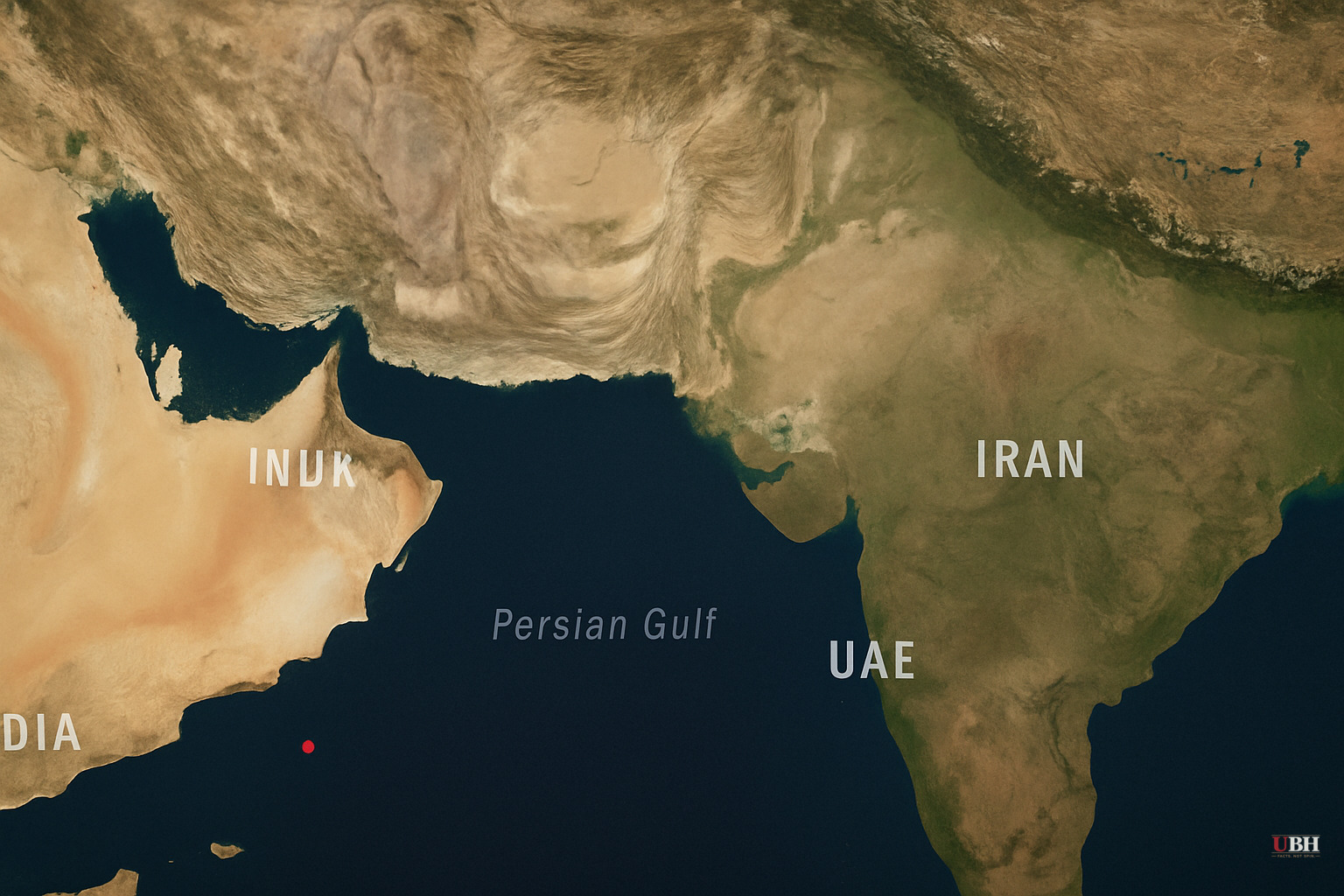
Since U.S. strikes on Iran began and Tehran closed the Strait of Hormuz, the conflict has expanded well beyond its original combatants. On Thursday, June 11, the diplomatic and financial consequences landed hard.
India Summons a U.S. Diplomat. Rare.
The Indian government formally summoned Jason Meeks, charge d'affaires of the U.S. Embassy in New Delhi, to protest the U.S. military strike on the Palau-flagged tanker M/T Settebello. The vessel had 24 Indian crewmen aboard. Twenty-one were rescued. Three were confirmed dead, according to ZeroHedge citing BBC News reporting.
U.S. Central Command acknowledged the action publicly, stating it disabled both the M/T Marivex and the M/T Settebello earlier this week. The Marivex was targeted for attempting to reach an Iranian port in violation of the U.S. blockade, and the Settebello for attempting to transport Iranian oil. CENTCOM posted footage of the Hellfire missile strike on the Settebello's engine room.
The Pentagon's documented tactic is to fire Hellfire missiles into a non-compliant vessel's engine room. That approach works on unmanned targets. It does not work cleanly on crewed commercial ships with 24 sailors below deck.
Rajesh Sharma, father of cadet Aditya Sharma—one of the three who died—told the BBC his son had been due home in May and had his tour extended. He last spoke to his son on Sunday. He is asking who is responsible and calling for an inquiry.
India summoning a U.S. diplomat over a direct military action is, by ZeroHedge's own framing, "unprecedented or at least extremely rare." New Delhi has not publicly threatened to exit any alliance structure, but thousands of Indian sailors remain in the Gulf region, and the Indian government is now on record calling the strike an illegal attack.
The UAE Quietly Made Its Own Deal
Kuwait and Bahrain have been hit hard by Iranian drone and missile strikes this week. Jordan has been targeted too. But the UAE has not been touched, and Bloomberg reported Thursday the reason: senior national security officials from the UAE and Iran met face-to-face for the first time since the war began, reaching what sources described to Bloomberg as an "understanding."
The logic is straightforward on both sides. The UAE has billions at stake in oil production expansion and AI data center investment it does not want destroyed. Iran needs the UAE as a trading and sanctions-evasion conduit—it was one of Tehran's largest trading partners before the war. Both sides had more to gain from a quiet handshake than from exchanging missiles.
This represents a fracture in the Gulf coalition posture. Washington has not defined an exit strategy, and at least one Gulf state has concluded the safest move is to negotiate bilaterally with the enemy rather than absorb Iranian munitions on America's behalf.
Bessent Pulls Frozen Iranian Money Into the Fight
Treasury Secretary Scott Bessent announced Thursday morning on X that Washington will use frozen Iranian assets to compensate Gulf allies for infrastructure damage. His stated framework: any damage Iran inflicts on Gulf allies comes out of Iranian accounts; any tolls Iran's Persian Gulf Strait Authority collects will also be offset from those same accounts.
"The Iranian regime will lose the zero-sum game it is playing," Bessent posted.
An unnamed U.S. official had told a CNN correspondent last weekend that Treasury would "utilize all tools available" to make Iranian assets available for Gulf rebuilding. Bessent formalized that position Thursday.
The announcement implicitly concedes that U.S. forces cannot immediately stop Iran from collecting tolls at the Strait. Otherwise there would be no need to promise financial offsets. Iran has reportedly coordinated or reached an understanding with Oman on the toll protocol, according to ZeroHedge, which has faced pressure from the Trump administration.
The frozen asset seizure will infuriate Tehran, which has consistently described the funds as stolen property. It may also complicate any eventual diplomacy. Using the assets now means they are no longer available as a negotiating chip.
The Strongest Case Against the Blockade Enforcement Approach
Critics of the current U.S. posture argue that firing Hellfire missiles into the engine rooms of crewed commercial vessels is an inherently indiscriminate enforcement mechanism. Both the U.S. and Iran are running rival blockades on the Strait simultaneously, ZeroHedge notes, creating a double-jeopardy situation for any international crew trying to navigate the region. Three Indian sailors are dead. The tankers carrying them were commercial vessels with crews from third-party nations that have no stake in the U.S.-Iran dispute. The father of Aditya Sharma is asking the right question: who bears legal responsibility when a military enforcement action kills a neutral nation's civilian maritime worker?
The U.S. position is that vessels were warned and chose to proceed toward Iranian ports or transport sanctioned Iranian oil, and that CENTCOM's response was lawful blockade enforcement. That position may be legally defensible under U.S. military doctrine. Whether it holds under international maritime law or survives scrutiny from 1.4 billion Indians with sailors in the Gulf remains uncertain.
What's Next
Trump has vowed a third consecutive night of U.S. strikes on Iran, described by OilPrice.com sources as heavier than Wednesday's 49-Tomahawk salvo, with Trump also eyeing some form of control over Iran's oil sector. Whether the UAE's quiet side deal with Tehran signals that the Gulf coalition is beginning to fragment—or is simply one country protecting its economic interests while the war continues—will shape the next phase of this conflict.
India has not yet indicated whether it will escalate beyond the diplomatic summons or begin withdrawing its nationals from Gulf shipping lanes, which would significantly reduce available maritime labor in the region.
Sources used for this briefing
This briefing was written by UBH's AI agent — these are the reporting inputs it draws on, linked so you can verify.


