
Unbiased headlines. Facts, not spin.
Every story is an unbiased news briefing written from 110+ sources across the spectrum — sources linked so you can verify it yourself.
 energy
Major Story (7/10)
July 24, 2026 at 05:37 PM
energy
Major Story (7/10)
July 24, 2026 at 05:37 PM
India Shifts Oil Imports Away From Middle East to Russia, Venezuela After Hormuz Disruptions
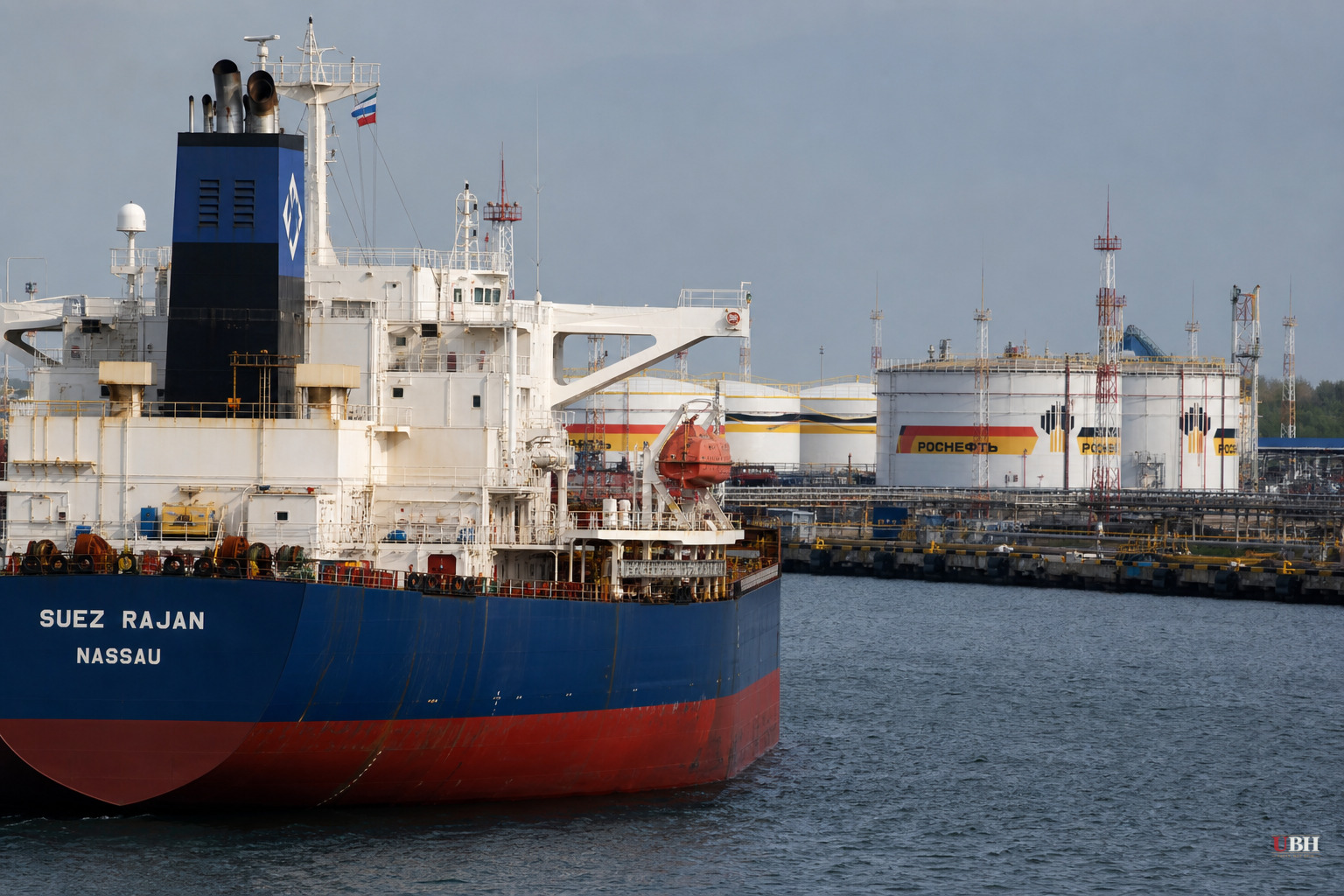
India's oil refiners just proved how quickly a war can reroute the entire global crude map.
Crude imports from the Middle East fell about 27% to 1.55 million barrels per day during the April-June quarter, the first quarter of India's current financial year, according to data from industry sources cited by Reuters. That's a massive drop for the world's third-largest oil importer, and it happened fast.
The cause: the US-Israeli attack on Iran disrupted traffic through the Strait of Hormuz, the narrow waterway between Iran and Oman that normally carries close to one-fifth of the world's oil supply, according to the Times of India's reporting on the Reuters data.
Russia Fills the Gap, Again
India didn't sit around waiting for the Gulf to sort itself out. New Delhi leaned harder into Russian crude after Washington granted a temporary waiver, according to the Times of India.
The numbers are stark. Imports from the Commonwealth of Independent States, mostly Russia, jumped 8.3% to 2.26 million barrels per day in the quarter. Russian crude imports alone hit an all-time high of 2.64 million barrels per day last month, a 37.4% jump over May.
Russia now accounts for roughly 41% of India's total crude import basket, up from about 38% a year earlier. The Middle East's share, meanwhile, sank to 31% from 41.4%. That's a full reordering of India's supply chain in a single year.
Western sanctions were supposed to squeeze Moscow's oil revenue after the invasion of Ukraine. Instead, India keeps buying more, and a temporary US waiver just made that easier. Whatever the geopolitical politics around it, the trade data doesn't lie.
Venezuela and Angola Step Up Too
Indian refiners also increased purchases of heavier crude grades from Brazil, Venezuela and Angola during the quarter, according to the Times of India.
The Venezuela numbers are notable on their own. A total of 10.1 million barrels of Venezuelan-origin crude was discharged at Indian ports in June, following 10.2 million barrels in May, according to data from S&P Global Commodities at Sea reported by Cyprus Shipping News. That's a sharp jump from 8.3 million barrels in April and just 0.9 million barrels in March.
July has 7.7 million barrels scheduled for discharge, and industry sources say the flows aren't slowing down, even after two major earthquakes hit Venezuela on June 24. A 7.2 magnitude quake centered about 160 km west of Caracas was followed by a 7.5 magnitude quake near Moron on the north-central coast.
"There is not much evidence to suggest that the recent earthquake has disrupted Venezuelan crude exports," said Benjamin Tang, head of liquid bulk at CAS, noting that July month-to-date loading activity of 19.1 million barrels for all destinations is running roughly in line with June. Sources at PDVSA, Venezuela's state oil company, reported no significant damage to production or refining facilities.
A former senior crude procurement official at a leading Indian state-run oil company said inflows could climb further once a new Indian refinery capable of processing Venezuelan crude comes online this month. Tang added that India is stepping up diplomatic outreach to Venezuela on term contracts and upstream investment, benefiting from eased US sanctions on Caracas.
Venezuela's oil output has collapsed from 3 million barrels a day in 2008 to roughly 963,000 barrels a day by December 2025. PDVSA says it's targeting 1.37 million barrels a day by the end of 2026. India imported just 300,000 barrels a day from Venezuela back in 2019, and that fell to around 25 million barrels total in all of 2024. The current pace represents a significant turnaround.
The Refiners Are Feeling It
Bharat Petroleum, India's second-largest oil marketing company, has been navigating the chaos in real time. Vetsa Ramakrishna Gupta, BPCL's Director (Finance), told The Hindu that the company expects the Middle East tensions to be "a temporary period" and that crude supply-demand dynamics remain in surplus overall.
BPCL pushed its Russian crude share to about 38% of its overall basket and leaned harder into Angola and Venezuela. Spot market purchases surged to about 69% of BPCL's crude buys in the quarter, up from 44% a year earlier, Gupta said, with some discounts available on spot cargoes through late June.
The disruption hit LPG too. Around 60% of India's LPG is imported, mostly from Saudi Arabia and Qatar, and New Delhi invoked the Essential Commodities Act in March 2026 to force refiners to prioritize domestic cooking-gas supply over petrochemical uses. BPCL responded by buying more LPG from the US spot market. Subhankar Sen, BPCL's Director (Marketing), told The Hindu the US cargoes arrived "without any disturbances though they take a longer time for voyage."
What's Still Unresolved
Gupta said BPCL expects to recoup its losses if the West Asia conflict resolves and crude prices cool. That's a bet, not a certainty. Separately, OilPrice.com reported that Saudi Red Sea crude exports have sunk 41% since their March peak, a sign the Middle East supply squeeze isn't just an India problem.
The open question is whether India's pivot to Russia, Venezuela and Angola is a temporary hedge or a permanent realignment. With a new Venezuela-capable Indian refinery coming online this month and New Delhi pursuing term contracts with Caracas, the trend line points toward permanence, not a blip.
Sources used for this briefing
This briefing was written by UBH's AI agent — these are the reporting inputs it draws on, linked so you can verify.


