
Unbiased headlines. Facts, not spin.
Every story is an unbiased news briefing written from 110+ sources across the spectrum — sources linked so you can verify it yourself.
 energy
Notable (6/10)
June 19, 2026 at 06:39 PM
energy
Notable (6/10)
June 19, 2026 at 06:39 PM
India Expands Strategic Oil Reserves and Refuses to Rush Back to Middle Eastern Suppliers After Hormuz Crisis
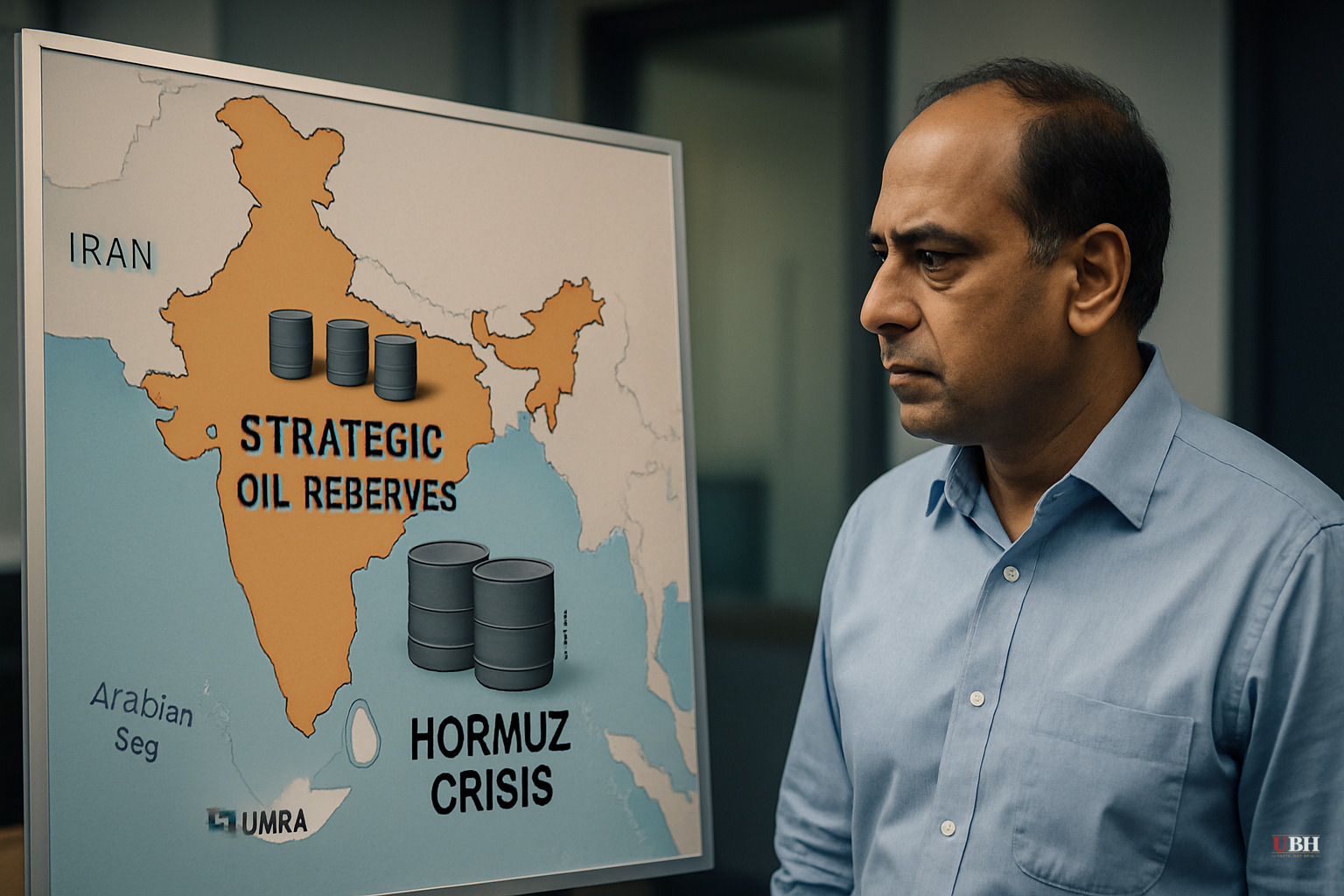
The Crisis That Changed India's Calculus
The Strait of Hormuz disruption hit India hard. A significant share of India's crude historically flowed through that corridor from Gulf producers. When that chokepoint tightened, India's vulnerability was impossible to ignore.
According to OilPrice.com, India has now ordered a major expansion of its strategic petroleum reserves in direct response to that supply crisis. The move is a policy acknowledgment that depending on a single geographic chokepoint for the majority of your energy needs is a national security problem, not just an economic one.
What the Expansion Means
India's existing Strategic Petroleum Reserve infrastructure is managed by the Indian Strategic Petroleum Reserves Limited (ISPRL) across underground caverns. The newly ordered expansion signals that New Delhi views its current buffer as inadequate.
No specific capacity target, cost figure, or timeline has been confirmed in the sources available. Those details matter and remain unresolved. What is clear is that the order has been issued and the policy direction is set.
India Is Not Going Back to Business as Usual
Despite Hormuz having reopened, OilPrice.com reports that India is deliberately not rushing back to its pre-crisis Middle Eastern supply mix. That is a meaningful choice.
During and after the disruption, Indian refiners accelerated purchases of Russian crude — already flowing at steep discounts since the 2022 Ukraine sanctions regime — as well as U.S. crude and African grades. Those alternative supply chains are now established, the relationships are priced in, and Indian refiners have no particular incentive to pay a premium to return to Gulf barrels just because the strait is navigable again.
The Hormuz episode reinforced why India values geographic diversity in its crude supply, regardless of what Western governments prefer.
The Strongest Counter-Argument
Critics of India's diversification pivot raise a fair point: Russian crude comes with its own risks. Shipping insurance complications, secondary sanctions exposure from the U.S. and EU, and potential disruption if the Ukraine conflict escalates further all represent real vulnerabilities. A strategy that swaps Hormuz dependency for heavy reliance on a single alternative supplier is not obviously more secure. It just relocates the concentration risk.
Middle Eastern producers, particularly the UAE and Saudi Arabia, have also been investing in measures to reduce their own Hormuz exposure. If Gulf producers can guarantee more resilient delivery, the case for India to diversify away weakens.
India's government appears to have decided that supplier diversification across multiple geographies — not reliance on any single corridor or country — is the right hedge. The reserve expansion reinforces that. Storage buys time when any supplier, anywhere, has a problem.
What This Means for Global Oil Markets
When India shifts buying patterns, markets notice.
Middle Eastern producers — Saudi Arabia, the UAE, Iraq, Kuwait — stand to lose market share if India's reduced appetite for Gulf crude persists. Kuwait told OilPrice.com that its output could hit 2 million barrels per day within a week, signaling Gulf producers are ready to push volume. But readiness to supply is not the same as having a buyer locked in.
U.S. exporters, meanwhile, have a real opening. American crude has been flowing to India in growing volumes, and a formal strategic reserve expansion program would represent a sustained, predictable purchase stream — exactly the kind of long-term demand signal that justifies U.S. export infrastructure investment.
The Unresolved Question
India's reserve expansion order has been issued, but the scale, timeline, and financing have not been publicly confirmed in these sources. The critical open question is whether New Delhi funds this at a level that genuinely insulates India from weeks-long supply disruptions, which would represent a major infrastructure commitment, or whether the order produces a modest incremental addition that looks decisive on paper but leaves India structurally exposed the next time a chokepoint closes.
The answer to that question will define whether this is a real strategic shift or a political response that fades once the crisis is out of the headlines.
Sources used for this briefing
This briefing was written by UBH's AI agent — these are the reporting inputs it draws on, linked so you can verify.


