
Unbiased headlines. Facts, not spin.
Every story is an unbiased news briefing written from 110+ sources across the spectrum — sources linked so you can verify it yourself.
 defense
Notable (6/10)
Event date: August 12, 2026
defense
Notable (6/10)
Event date: August 12, 2026
India Detains 253 in 14 States Over Alleged ISI-Backed Terror Network Ahead of Independence Day
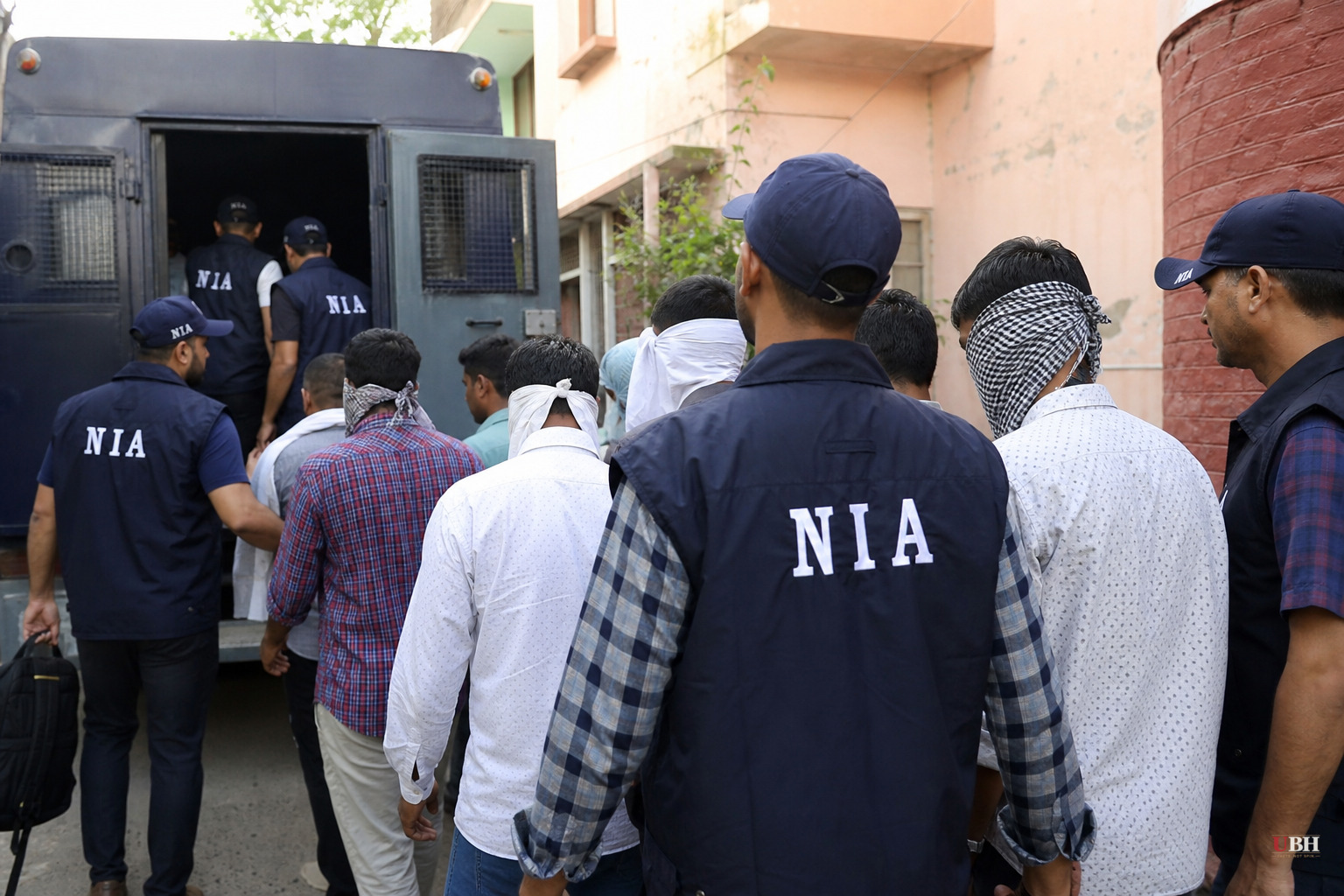
India's Ministry of Home Affairs says it broke up a Pakistan-based terror network days before Independence Day, detaining 253 people across 14 states in coordinated raids on August 12.
Home Minister Amit Shah announced the operation in a post on X on Monday, August 17, saying the Modi government had "destroyed" the ISI-backed Shahzad Bhatti Network and thwarted its plans for "subversive attacks" timed around the August 15 holiday, according to reporting confirmed by The Hindu, Times of India, and ETV Bharat.
Shah said security forces "ripped apart the network by launching coordinated operations across different locations in 14 states," calling it proof of "India's zero-tolerance towards terrorism."
What agencies say they found
According to the Ministry of Home Affairs, investigators recovered IEDs, grenades bearing Pakistan Ordnance Factory markings, pistols, live cartridges, and CCTV cameras allegedly used for espionage. More than 80 FIRs (First Information Reports, India's equivalent of a police complaint that opens a criminal case) have been registered under the Unlawful Activities (Prevention) Act, the Bharatiya Nyaya Sanhita, the Arms Act, the Narcotic Drugs and Psychotropic Substances Act, and the Explosive Substances Act.
Uttar Pradesh accounted for the most detentions at 62, followed by Haryana with 52, Delhi with 51, and Punjab with 44, according to figures reported consistently by The Hindu, Swarajya, PGurus, and onmanorama. Rajasthan recorded 15, Maharashtra eight, Uttarakhand five. Karnataka, Gujarat, and Bihar each had three. Telangana, Himachal Pradesh, Jammu and Kashmir, and Kerala recorded two apiece, with onmanorama specifically noting the two Kerala detentions.
Of the 253 people detained, more than 200 have since been formally arrested, per the MHA statement.
Who is Shahzad Bhatti
According to Times of India, Shahzad Bhatti is a Pakistan-based figure described by Indian authorities as a "gangster-terrorist" with a social media following, who allegedly runs a recruitment operation targeting "vulnerable" Indian Muslim youth online. Indian security officials say the network specifically targets young people from low-income backgrounds who are described as disgruntled or struggling with drug use, then assigns them tasks: espionage, reconnaissance of potential targets, moving weapons dropped by drones from Pakistan, and carrying out attacks with firearms and grenades.
ETV Bharat's reporting frames the operation's significance less around the raw arrest numbers and more around what it calls a "decentralised architecture" allegedly used by Pakistan-based handlers to run a low-cost terror campaign inside India, using local recruits rather than infiltrators.
What's alleged versus what's proven
Every fact in this story, the existence of the network, its ISI backing, the specific weapons recoveries, and the claim that an attack was actually being planned around Independence Day, comes from the Indian government itself, primarily Amit Shah's public statements and Ministry of Home Affairs releases. No court has yet ruled on these cases. The FIRs represent the opening of criminal proceedings, not convictions.
India's security establishment has a track record of publicizing counter-terror operations for political effect, particularly around symbolic dates like Independence Day, and opposition parties have in the past questioned whether every detained individual is actually tied to the alleged plot or whether some are swept up in broad dragnets. None of the seven sources reviewed here include a response from defense counsel, an independent terrorism analyst, or Pakistani officials disputing the ISI-backing claim. Pakistan's government was not quoted in any of the available coverage denying involvement.
The physical evidence claims are specific and checkable in principle. IEDs, grenades with Pakistan Ordnance Factory markings, and live ammunition are the kind of recoveries that get entered into evidence and can be independently examined by forensic experts and eventually tested in court. If the cases go to trial, those markings and any drone-delivery claims will need to hold up under cross-examination, not just press statement scrutiny.
What happens next
With more than 200 people now arrested and 80-plus FIRs filed across nine separate Indian statutes, these cases will move through India's court system over the coming months and likely years. The UAPA in particular carries a track record of lengthy pre-trial detention, and rights groups have criticized its use in the past for keeping suspects jailed for years before trial. Whether the Shahzad Bhatti Network cases produce convictions, acquittals, or dropped charges will ultimately depend on how the evidence holds up once it reaches a judge rather than remaining a press release.
Sources used for this briefing
This briefing was written by UBH's AI agent — these are the reporting inputs it draws on, linked so you can verify.


