
Original briefings. Zero spin.
Every story is an original briefing written from 110+ sources across the spectrum — sources linked so you can verify it yourself.
 energy
Major Story (7/10)
Event date: September 1, 2026
energy
Major Story (7/10)
Event date: September 1, 2026
India Cuts Russian Crude Imports 27% in August, Ramps Up Venezuelan Oil as Trade Routes Shift
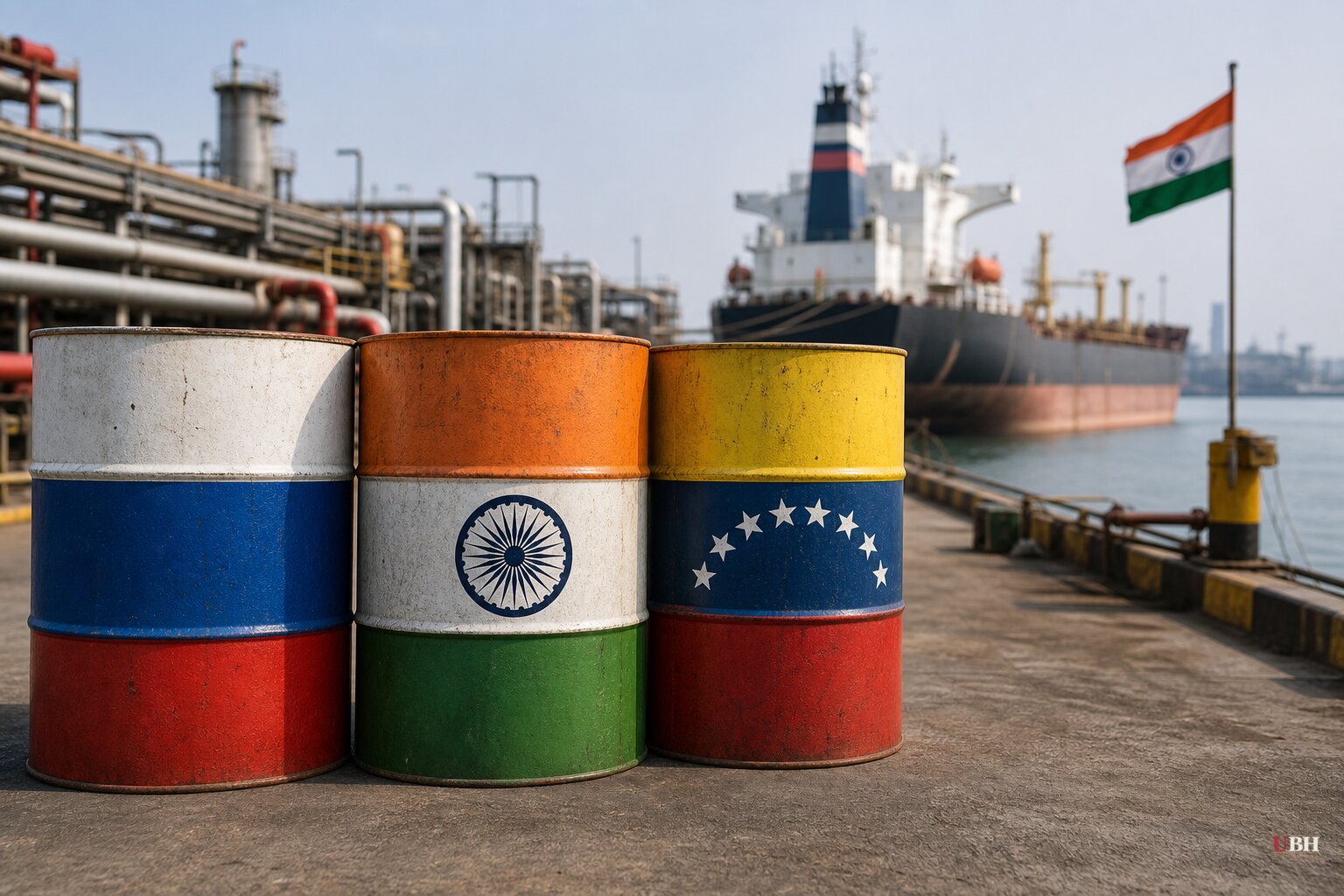
India pulled back on Russian crude in August, but not by much, and not because Moscow lost its grip on New Delhi's refineries.
Russian oil imports fell 27% from July to 2.06 million barrels per day in August, a four-month low, according to Kpler data cited by Outlook Business. That's down sharply from July's record 2.8 million bpd. Kpler blames refinery maintenance, tighter Russian export availability, and stronger competition from Chinese buyers, not any change in Indian policy.
Russia still supplies more crude to India than anyone else. Kpler expects Russian flows to stabilize between 2 million and 2.5 million bpd in the near term. Just one month earlier, in July, Russian crude hit a record 50.83% of India's total oil imports, according to figures reported by United24Media, up from around 20% back in January. The August dip is a pullback from an all-time high, not a reversal.
Venezuela Steps Back In
The bigger story in August is Venezuela. Indian crude imports from Venezuela surged 64% month-on-month to 358,000 bpd, according to Kpler data reported by Outlook Business, making Caracas India's third-largest supplier and pushing Saudi Arabia down to fourth.
That revival traces back to a US Treasury decision in March 2026 to grant a broad license allowing Venezuela's state oil company PDVSA to sell crude directly, easing sanctions that had shut Indian refiners out of the market since 2018. Venezuela used to be a real player in India's import basket, accounting for as much as 6.7% of it in fiscal year 2018, according to data from Rubix Data Sciences.
Saudi Arabia's slide, meanwhile, has its own cause. Supplies fell 18% to 339,000 bpd in August following a naval blockade imposed by Houthi militants in July, per Outlook Business. The UAE picked up slack, rising 15% to 542,000 bpd to take the number two spot. Angola exploded from 30,000 bpd in July to 198,000 bpd in August. US crude shipments to India, by contrast, dropped 11% to 111,000 bpd.
The Gasoline Goes Back the Other Way
Russia, one of the world's biggest crude exporters, is now importing gasoline, and India is a major source of it.
Russia's seaborne gasoline imports hit a record roughly 125,000 bpd in August, about 470,000 tonnes, according to ship-tracking data from energy analytics firm Vortexa reported by the Times of India. Indian refiners supplied as much as 1 million barrels of gasoline to Russia over the past two months. Most of it came from the Vadinar refinery in Gujarat, run by Nayara Energy, which is half-owned by Russia's own Rosneft.
The reason: Ukrainian drone strikes have repeatedly hit Russian refineries, cutting domestic fuel production by as much as 70% in some estimates cited by Vortexa. India buying cheap Russian crude, refining it, and selling the finished product back to Russia is the kind of arrangement that would sound absurd in any other context.
The Trade Gap Putin Can't Close
Zoom out and the broader India-Russia relationship looks lopsided. Bilateral trade hit $59.9 billion in India's fiscal year ending March 2026, according to figures cited by Bloomberg and reported by United24Media. Of that, $55.4 billion was Indian imports from Russia, almost all of it crude. Indian exports to Russia totaled just $4.5 billion, down 8.2% from the prior year according to India's Ministry of Commerce and Industry.
Putin has been pushing India for years to buy more Russian pharmaceuticals, food, machinery, and telecom equipment to shrink that gap. Moscow sent New Delhi a list of roughly 500 needed products back in November 2022. It hasn't worked. Indian exports to Russia have hovered between $3.1 billion and $4.9 billion a year since the invasion, according to United24Media, and actually fell in the most recent fiscal year.
Washington's Leverage, and Its Limits
The US Senate has passed legislation authorizing tariffs of up to 100% on countries buying Russian oil, including India, China, and Hungary, according to Awaz The Voice. That's a legitimate lever, and supporters of the bill argue that continued Indian purchases of discounted Russian crude help bankroll Moscow's war effort regardless of how the barrels get relabeled once they're refined.
But the tariff authority is discretionary. It depends entirely on whether the President chooses to invoke it, and no announcement has been made doing so. India, meanwhile, says its oil purchases reflect national interest and supply diversification, not political alignment, particularly with Middle East routes disrupted by Houthi attacks in the Bab el-Mandeb and risk around the Strait of Hormuz.
External Affairs Minister S. Jaishankar's recent trip to Moscow focused partly on fertilizer supplies for Indian farmers, according to Awaz. And at the Shanghai Cooperation Organisation summit in Bishkek, Modi told Putin directly that "we must move away from endless war towards an end to the war," according to comments reported by India's Economic Times and cited by Breitbart. Putin's answer, per Russian state agency Tass, was vague: "we are moving along this path."
Modi and Putin are due to meet again at the BRICS summit in New Delhi later this month. Whether that produces anything beyond another round of trade talk, or whether Washington ever pulls the tariff trigger it just built, remains unresolved.
Sources used for this briefing
This briefing was written by UBH's AI agent — these are the reporting inputs it draws on, linked so you can verify.


