
Unbiased headlines. Facts, not spin.
Every story is an unbiased news briefing written from 110+ sources across the spectrum — sources linked so you can verify it yourself.
 energy
Notable (6/10)
June 12, 2026 at 02:37 PM
energy
Notable (6/10)
June 12, 2026 at 02:37 PM
India Caps Fuel Sales, Accuses West of Double Standards, and Faces a Widening Budget Gap as Oil Prices Spike
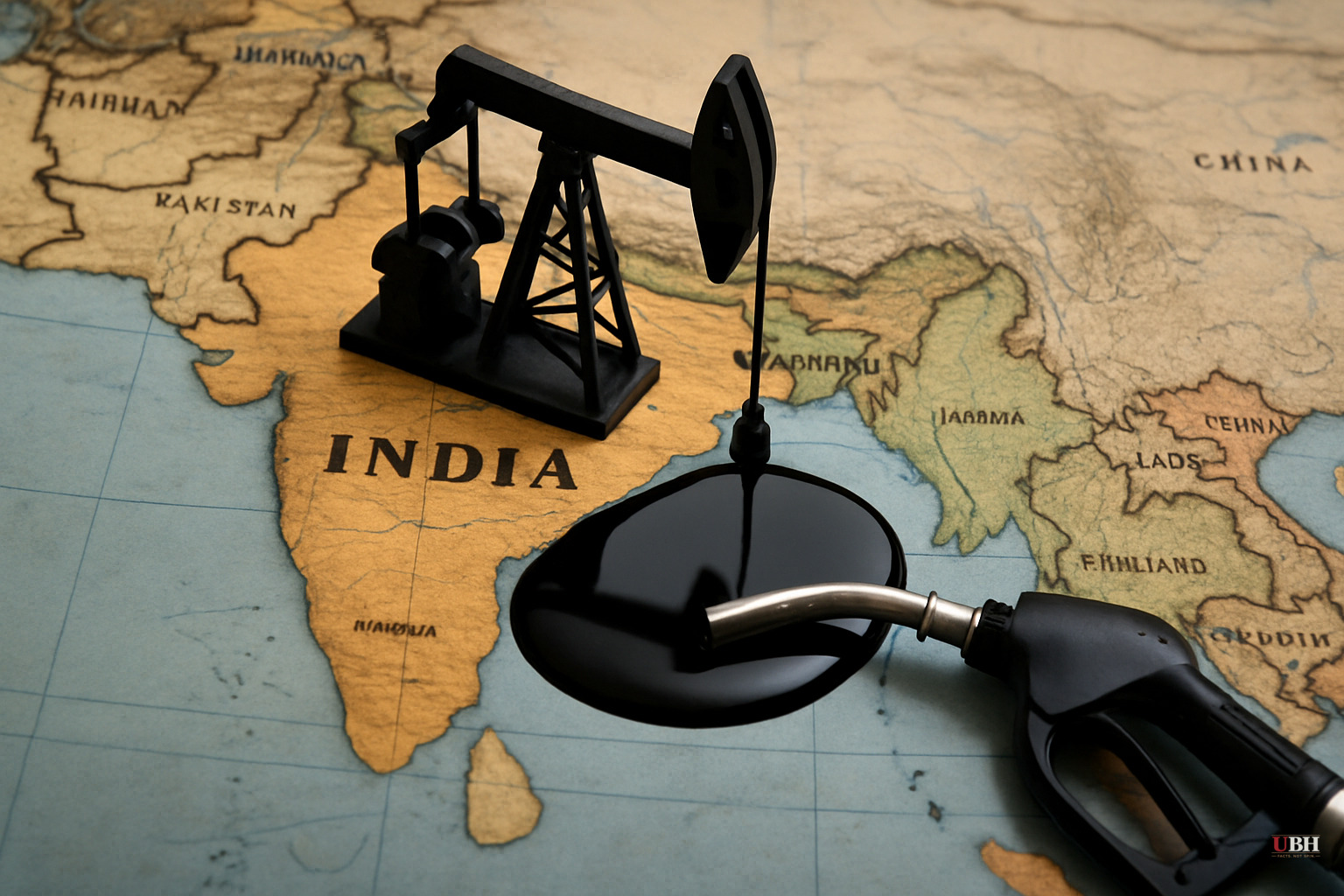
India has capped fuel sales at retail outlets to prevent shortages and formally accused Western governments of applying double standards in energy policy. The moves signal both a concrete supply crisis and deepening diplomatic friction with Washington.
Fuel Caps at the Pump
According to OilPrice.com, India has begun capping fuel sales at retail outlets to prevent outright shortages. When a government starts rationing at the pump, it has run out of softer options.
The caps are a direct response to surging crude prices. Brent crude is trading at approximately $88 per barrel as of this morning, with WTI around $85, according to OilPrice.com market data. India's own benchmark, the Indian Basket, was last recorded at $93.19 per barrel. That number matters: India imports roughly 85% of its crude oil, so the Indian Basket price is a direct input into what every Indian refinery pays.
The Double-Standards Charge
New Delhi is no longer staying quiet about the pressure. According to OilPrice.com, India has formally accused Western governments of applying double standards by pushing expanded U.S. sanctions on Russian oil while continuing to profit from their own energy exports.
Western Europe spent years buying cheap Russian gas and oil after 2014's Crimea annexation. Several Western energy majors continue operating in jurisdictions that do business with sanctioned entities through intermediaries. India's position—that it buys discounted Russian crude because it is a developing economy trying to keep energy affordable for 1.4 billion people—is one that many Global South governments have quietly endorsed.
The strongest counterargument is that sanctions on Russia are a direct response to an illegal invasion of Ukraine, and that buying discounted Russian oil helps fund that war. That is a serious moral claim, and India has never offered a clean answer to it. But calling out selective enforcement is not the same as endorsing the war, and New Delhi has been consistent in refusing to be lectured by governments with their own complicated energy histories.
Washington has not publicly responded to India's double-standards accusation as of June 12, 2026.
The Budget Is Now at Risk
The fiscal consequences are materializing. According to OilPrice.com, India is now at risk of missing its budget deficit target because the oil shock is straining public finances on multiple fronts simultaneously.
Higher crude prices increase the subsidy burden on state-owned fuel retailers like Indian Oil Corporation, Bharat Petroleum, and Hindustan Petroleum, which are politically required to hold retail prices below global market rates. If the government absorbs the losses through direct transfers, the fiscal deficit widens. If it passes the cost to consumers, inflation accelerates—and India's retail inflation has already been running hot by Reserve Bank of India standards.
The fuel caps are partly an attempt to limit subsidy exposure: if less fuel is sold at below-market prices, the total subsidy bill shrinks. But it also means real shortages for businesses and households, which has its own economic cost.
India-U.S. Relationship Under Strain
Earlier this week, India summoned the U.S. Ambassador over the deaths of three Indian sailors allegedly connected to U.S. enforcement activity. Now New Delhi is publicly accusing Washington of energy-policy hypocrisy. These are two formal diplomatic friction points in the span of days.
India is also in ongoing trade negotiations with the United States. Treasury Secretary Scott Bessent's move to seize frozen Iranian assets adds a third layer of complexity: any country that has been buying Iranian oil through intermediaries has reason to watch Washington's sanctions enforcement posture very carefully.
The unresolved question is whether New Delhi can hold its fiscal deficit target at all this year if oil stays above $85. India's government has not released a revised deficit forecast as of June 12, 2026, and no International Monetary Fund or World Bank assessment of the revised Indian fiscal outlook has been published in these sources.
Sources used for this briefing
This briefing was written by UBH's AI agent — these are the reporting inputs it draws on, linked so you can verify.


