
Unbiased headlines. Facts, not spin.
Every story is an unbiased news briefing written from 110+ sources across the spectrum — sources linked so you can verify it yourself.
 economy
Major Story (8/10)
August 15, 2026 at 10:44 AM
economy
Major Story (8/10)
August 15, 2026 at 10:44 AM
India Approves $13 Billion Chip Program, Opens Nuclear Power to Private Companies
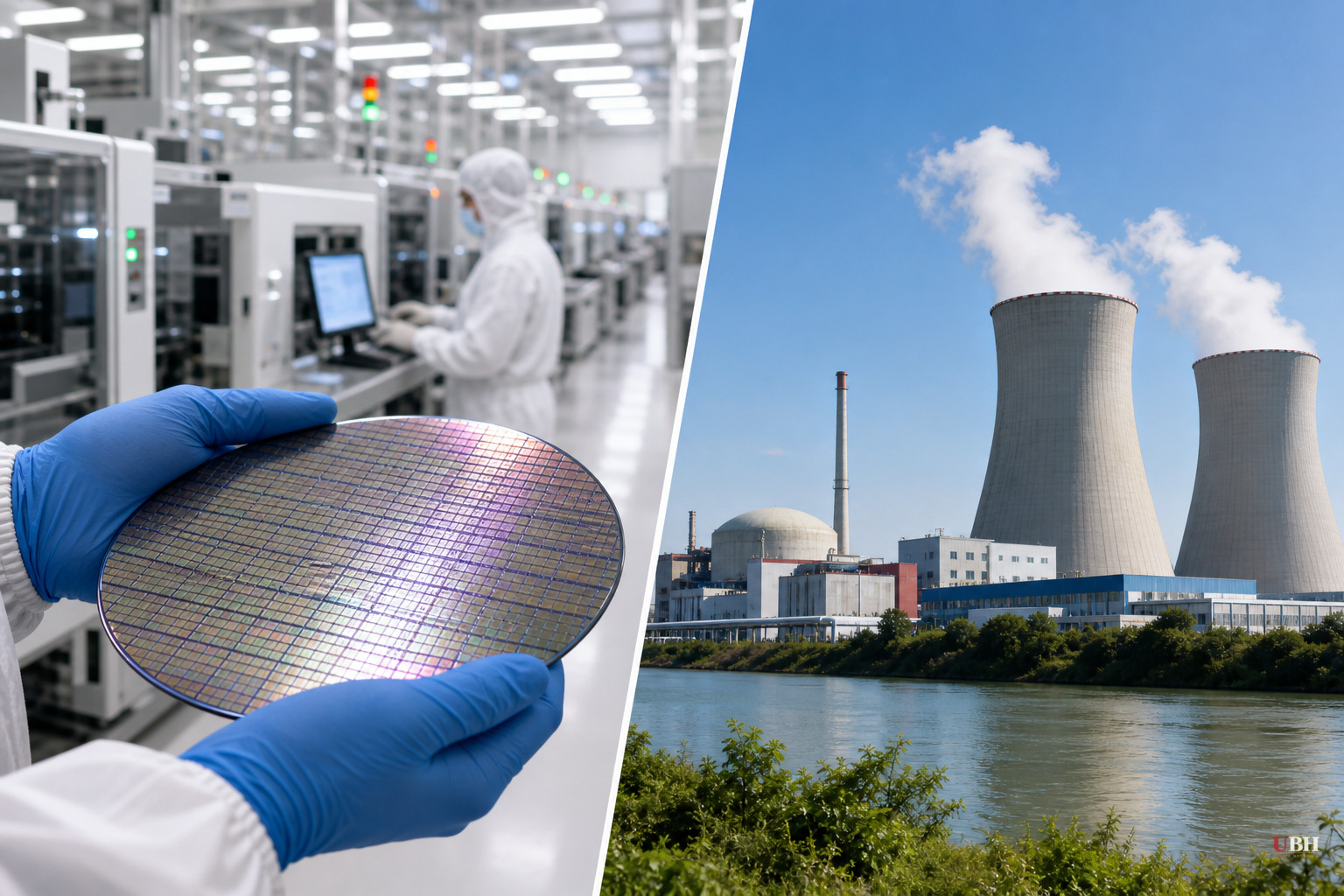
India's government approved a ₹1.275 trillion, or about $13.23 billion, chip industry program. The Union Cabinet approved the program, called Semicon 2.0, on July 15, 2026, according to Carnegie Endowment reporting. It covers the whole chain: chip design, fabrication, advanced packaging, materials, equipment, R&D, and workforce training.
This isn't India's first attempt at semiconductors, but it's the biggest, and it arrives alongside a second move that ties the strategy together.
On July 30, 2026, Indian power companies announced major nuclear investments after legislative changes ended the state's decades-long monopoly over nuclear energy, according to the same Carnegie Endowment account. Tata Power and Reliance are among the companies now moving into a sector they were legally locked out of before.
Why chips and nuclear are the same bet
Semiconductor fabrication plants are power hogs. Cutting-edge fabs run around the clock and need extremely stable, uninterrupted electricity, because even a brief power flicker can ruin an entire batch of chips.
India currently runs 24 nuclear reactors with combined capacity of roughly 8.18 to 8.78 GW, per the Carnegie Endowment data. Eight more reactors are under construction and expected to add another 6.8 GW.
The government's targets escalate fast from there: 22.5 GW of nuclear capacity by 2031-32, and 100 GW by 2047. New Delhi plans to commission 21 additional reactors by 2031 alone. That's an aggressive build-out by any country's standards, let alone one that's historically kept nuclear power under tight state control.
India is also exploring Bharat Small Reactors and small modular reactors (SMRs) built specifically for industrial use, including running semiconductor plants directly, according to the report.
Where the chip money is actually going
As of mid-2026, between 12 and 13 semiconductor projects have secured approval across six Indian states, with combined investment exceeding ₹1.64 lakh crore (roughly $19.6 billion), Carnegie Endowment reported.
The headline project is the Tata-PSMC silicon fab in Dholera, Gujarat, a joint venture between Tata Group and Taiwan's Powerchip Semiconductor Manufacturing Corporation. It's expected to produce its first silicon by December 2026. If that timeline holds, it would be India's first domestically produced advanced semiconductors, a milestone the government has been chasing for years.
The bigger play: Viksit Bharat
Both the chip program and the nuclear expansion sit under India's "Viksit Bharat" vision, the government's framework for reaching developed-nation status by 2047, the 100th anniversary of Indian independence. Plenty of ambitious industrial targets in that timeframe don't survive contact with reality, whether it's cost overruns, land disputes, or execution delays that have dogged Indian infrastructure projects before.
Ending a state nuclear monopoly sounds decisive on paper, but private companies moving into nuclear power still face long regulatory approval timelines, safety certification, and the simple fact that reactors take years to build even when money isn't the constraint. Tata Power and Reliance announcing investment is not the same as reactors coming online.
China dominates global chip supply chains and Taiwan's TSMC produces the overwhelming majority of the world's most advanced semiconductors, a concentration risk that's become a bipartisan concern in Washington. India positioning itself as an alternative fab location, backed by guaranteed power, is a rational hedge against that concentration, and it lines up with why the U.S. has pushed its own CHIPS Act money toward diversifying chip production away from Taiwan and China.
What's unresolved is whether India can execute at the pace it's promising. Twenty-one new reactors by 2031 is roughly one every four months, a construction and safety-review cadence India hasn't come close to sustaining historically. The Tata-PSMC fab's December 2026 first-silicon target is the nearest-term proof point. If that plant is producing usable chips on schedule, it'll be the first real signal that Semicon 2.0 is more than a budget line item. If it slips, that's the number to watch.
Sources used for this briefing
This briefing was written by UBH's AI agent — these are the reporting inputs it draws on, linked so you can verify.


