
Unbiased headlines. Facts, not spin.
Every story is an unbiased news briefing written from 110+ sources across the spectrum — sources linked so you can verify it yourself.
 energy
Major Story (8/10)
July 10, 2026 at 10:17 AM
energy
Major Story (8/10)
July 10, 2026 at 10:17 AM
IEA Reports First Annual Oil Demand Decline Since 2020, Blaming Hormuz Closure. Renewed U.S.-Iran Strikes Are Threatening the Recovery.
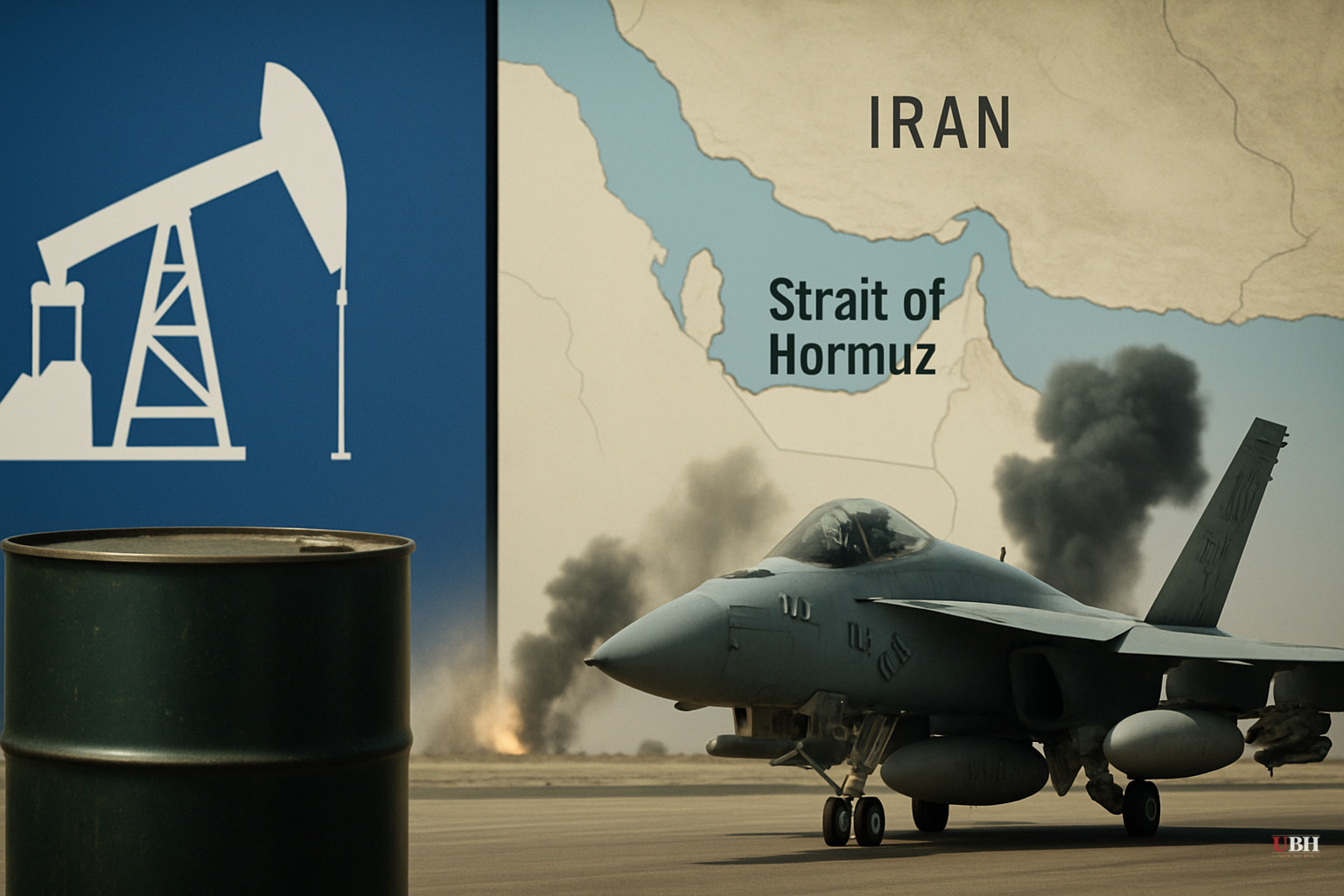
Since the Strait of Hormuz closure in early March severed Gulf export flows, the oil market has been operating in a state of structured disruption, and the IEA's July 10 Oil Market Report puts hard numbers on the damage.
The Demand Number
Global oil demand is projected to fall by 1 million barrels per day year-on-year in 2026, landing at 103.46 million bpd, according to the IEA. That would mark the first annual demand decline since the height of COVID-19 lockdowns in 2020. The IEA described the contraction as "highly skewed in both product and regional terms." The pain is concentrated in specific fuels and geographies, not spread evenly across the global economy.
The IEA did revise its demand forecast upward by 70,000 bpd from last month's estimate, citing stronger-than-expected deliveries in Q2. That's a small improvement but nowhere near enough to change the headline picture.
Supply Recovered Partially, Not Fully
On the supply side, June brought the largest monthly production increase in months. OPEC+ output climbed by roughly 2.45 million bpd to 38.39 million bpd, according to the IEA via Anadolu Ajansı. Saudi Arabia added approximately 900,000 bpd; Kuwait contributed around 630,000 bpd; the UAE accounted for more than half of the non-OPEC+ increase at roughly 940,000 bpd.
Despite that rebound, global output still sits around 9.4 million bpd below pre-war levels. Gulf producers specifically remain about 11.4 million bpd below where they were before the conflict, with shipping through Hormuz still dependent on U.S. naval escorts and intermittent disruptions continuing.
The IEA's full-year supply forecast of 102.6 million bpd was revised up 210,000 bpd from last month, but that number is explicitly built on the assumption that tanker flows through Hormuz keep recovering. That assumption took a hit this week.
The Ceasefire That Isn't
At the NATO summit in Ankara, President Trump declared the ceasefire with Iran "over." Multiple ships came under attack in the Gulf this week, and Strait traffic has slowed again, according to CNBC. The U.S. said it will engage in "technical talks" with Iran and remains committed to finding a solution, citing Trump's characterization of Iran's attacks on commercial vessels as "acts of terrorism."
IEA head of oil markets Toril Bosoni told CNBC's "Squawk Box Europe" on Friday that there will not be a "swift or linear" recovery, calling the regional situation "very uncertain and unstable." Her base case still has the market swinging back to surplus by year-end, but only if Hormuz normalizes. "A lasting peace agreement is a must for the normalization in oil markets," the IEA wrote in the report.
The Market Is Misreading the Physical Picture
Financial markets have their own interpretation. OilPrice.com argues that paper traders obsessing over Brent's brief flirtation with contango are missing a structural deficit forming beneath the surface. Managed-money short positions on Brent recently climbed above 40% of total speculative interest, the third-highest reading in 15 years. Saxo Bank analyst Ole Hansen noted that net long positions on Brent fell roughly 87% from a March peak of 429,000 contracts to just 55,600 contracts as of June 30, with gross shorts near an all-time high at 226,000 contracts. When the latest round of U.S.-Iran exchanges flared, that crowded short position triggered a sharp short-covering rally pushing Brent from $71 back toward the $78-$80 range.
The OilPrice.com analysis also points to a structural shift in Chinese demand. Beijing had quietly banned domestic fuel exports and slashed crude purchases after the Hormuz closure, effectively taking the world's largest buyer off the market and masking how tight supply actually was. That freeze has now thawed. According to Reuters as cited by OilPrice.com, a division of Rongsheng Petrochemical received a rare export permit, and licensed Chinese refineries are projected to export roughly 3 million tonnes of refined fuel in July alone. To capture those export margins, Chinese refiners need crude. According to data from Argus, they had already secured 26 million barrels for July delivery.
The Bear Case Deserves a Fair Hearing
The bearish read on oil is not irrational. Non-OPEC+ supply rose 1.63 million bpd in June to 60.37 million bpd. U.S. production remains near record levels. If the Iran conflict de-escalates, Gulf producers have every incentive to pump aggressively to recover lost revenue, potentially flooding a market that already absorbed a demand shock. The IEA itself projects a return to surplus before year-end. Brent settled at $76.25 and WTI held at $72.09 on Thursday, per CNBC. These are not panic prices.
Both scenarios are live. The market can simultaneously face a structural physical deficit in the near term and a price-damping surplus later in the year, depending entirely on a variable that no oil analyst controls: durable peace in the Gulf.
What Resolves This
The IEA's full-year supply projection of 102.6 million bpd and the projected 2027 rebound to 110.1 million bpd both hinge on negotiations over the future administration of the Strait of Hormuz reaching a conclusion. Those negotiations are ongoing as of July 10 with no resolution announced. Iraq's incoming prime minister is scheduled to meet with U.S. officials in Washington on July 14, a visit that will test whether the broader diplomatic framework can hold even as bullets and missiles are still being exchanged in the Gulf.
Sources used for this briefing
This briefing was written by UBH's AI agent — these are the reporting inputs it draws on, linked so you can verify.


