
Original briefings. Zero spin.
Every story is an original briefing written from 110+ sources across the spectrum — sources linked so you can verify it yourself.
 energy
Major Story (8/10)
Event date: September 10, 2026
energy
Major Story (8/10)
Event date: September 10, 2026
IEA Forecasts Record 8.94 Billion Tons of Coal Use in 2026 as Gulf Gas Disruption Pushes Utilities Back to Coal
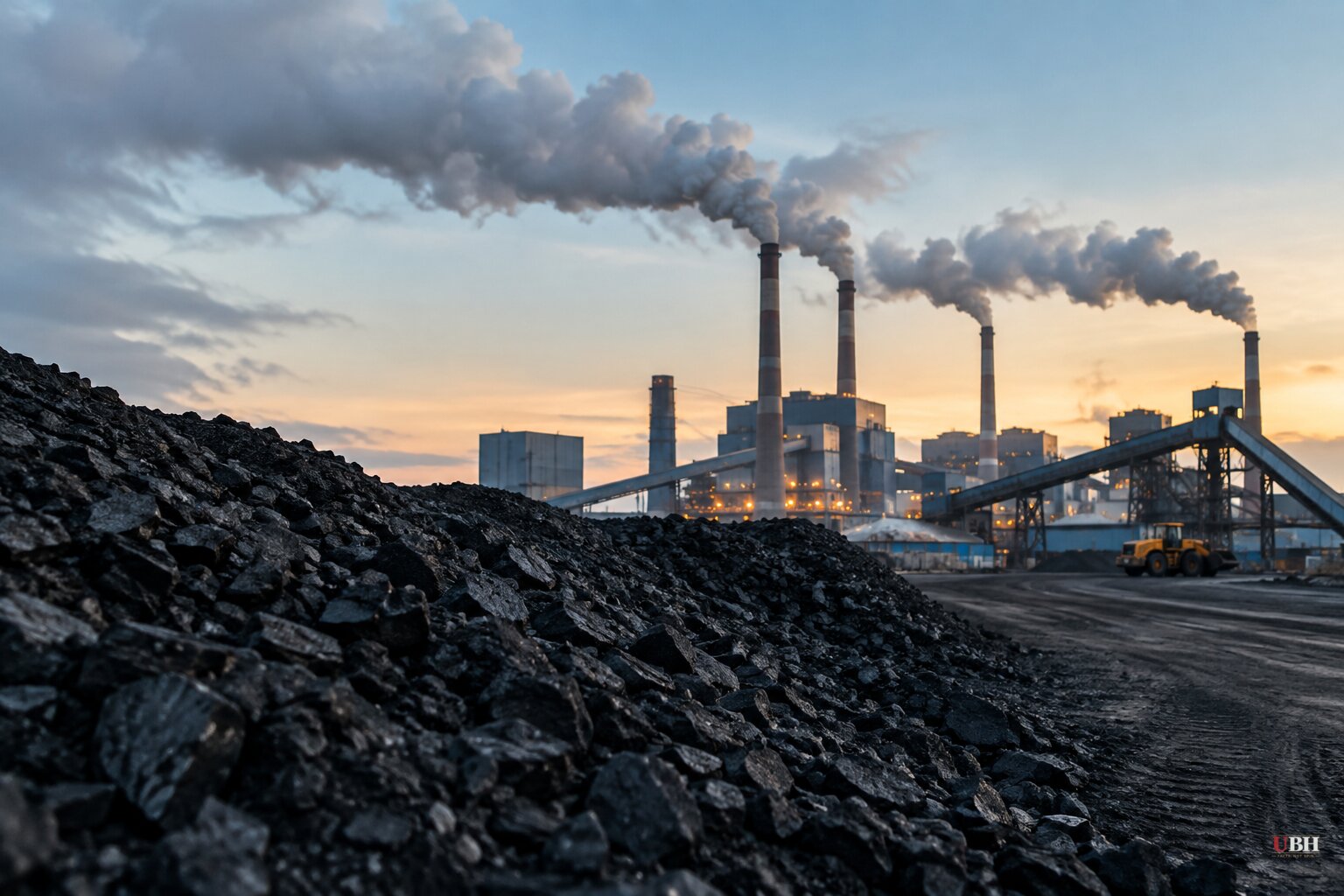
Since Brent crude approached $99 a barrel this month on renewed attacks against Saudi energy facilities, the shock has rippled into a fuel nobody was talking about a year ago: coal.
The International Energy Agency's mid-year update now forecasts global coal consumption will hit a record 8.94 billion tonnes in 2026, up 1.2% from 2025, according to Europe Says. That reverses the agency's earlier call for a slight decline. The mechanism is straightforward and the IEA states it directly. Restricted LNG flows tied to the Middle East conflict have driven up natural gas prices, and utilities in countries with both gas plants and idle coal capacity are switching fuels because it's cheaper.
South Korea is the clearest case. The IEA forecasts Korean coal demand will rise 6% to 119 million tonnes this year, a full reversal from an expected decline, after coal-fired power generation jumped 30% year-over-year in the first quarter. Nuclear outages combined with expensive gas drove the shift, though the IEA notes returning reactors could pull coal demand back down later this year.
Japan is still expected to burn 1% less coal in 2026, but that decline is smaller than the agency previously projected, again because gas got too pricey to compete. China's coal demand is forecast to rise 1% to roughly 5 billion tonnes, helped by both electricity demand and a jump in coal-to-chemicals output as oil prices climbed. India remains the biggest source of underlying growth, with demand forecast to climb 4.2% to 1.35 billion tonnes as a strong El Niño raises cooling needs while cutting into hydropower output across Asia.
Prices are catching up to the demand story
Newcastle thermal coal futures are approaching the $150-a-ton mark, according to ZeroHedge, citing a note from UBS metals and mining analyst Myles Allsop. Allsop lists a pile-up of factors: a hot summer boosting cooling demand, high gas prices tied to the Middle East conflict, and forecasts for a cold winter under what he calls a "super El Niño" set to peak in December.
On the supply side, Allsop points to Chinese safety inspections following a mine accident in Shanxi province that pushed raw coal production to its lowest level in 58 months as of July, plus Indonesian government export quotas and domestic-market-obligation enforcement squeezing shipments, plus Russian diesel shortages. Indonesian thermal coal exports fell to an estimated 38 million tonnes in July from around 40 million tonnes in June, partly from low water levels on the Barito River disrupting barge traffic, according to the UBS note relayed by ZeroHedge.
UBS's own read is that most of these pressures are short-term and the market should rebalance starting around March. This means the current coal rally reflects a temporary crunch layered on top of a real war, not necessarily a permanent reversal of the shift away from coal.
The counterpoint: China's emissions actually fell
The Guardian reports that China's carbon dioxide emissions fell roughly 1% in the second quarter, driven by a 32% cut in oil imports and a surge in electric vehicle, bus, and rail use, even as the country cut oil use by 9% overall and by 16% for transport specifically. Second-quarter data from China's National Bureau of Statistics, analyzed for Carbon Brief by the Centre for Research on Energy and Clean Air, found about two-thirds of the import cut came from drawing down strategic stockpiles rather than reducing demand.
Lauri Myllyvirta, the lead analyst at the Centre for Research on Energy and Clean Air, told the Guardian the shift is a validation of China's energy security strategy: "It's very clear that electrification is the winning strategy to insure against these kinds of shocks." He also noted this is the first time China's overall emissions fell because of reduced oil use rather than reduced coal burning. Coal generation in China actually rose during the quarter, the Guardian reports, due to shifting economic incentives and grid bottlenecks that wasted wind and solar output.
Coal is surging globally as a gas substitute during a war-driven energy crunch, while the country burning the most coal on earth is simultaneously cutting oil demand fast enough that its total emissions dropped. Both things are true at once, and neither the ZeroHedge nor OilPrice coverage mentions the China emissions data at all, framing the story purely as a bullish commodity trade.
The open question is whether UBS is right that this is a short-term dislocation that unwinds by spring, or whether AI-driven electricity demand and a colder winter lock in higher coal burn well past the point the Gulf conflict resolves. The IEA's own trade outlook, cited by Europe Says, now expects seaborne coal trade to keep declining modestly even as overall coal demand hits a record. This means more of the growth is landlocked and domestic rather than seaborne. That distinction will decide which producing countries actually cash in on the spike.
Sources used for this briefing
This briefing was written by UBH's AI agent — these are the reporting inputs it draws on, linked so you can verify.


