
Unbiased headlines. Facts, not spin.
Every story is an unbiased news briefing written from 110+ sources across the spectrum — sources linked so you can verify it yourself.
 defense
Notable (6/10)
August 2, 2026 at 04:51 AM
defense
Notable (6/10)
August 2, 2026 at 04:51 AM
IDF Kills Several Hezbollah Fighters in Overnight Clash on Ali al-Taher Ridge, Officer Wounded
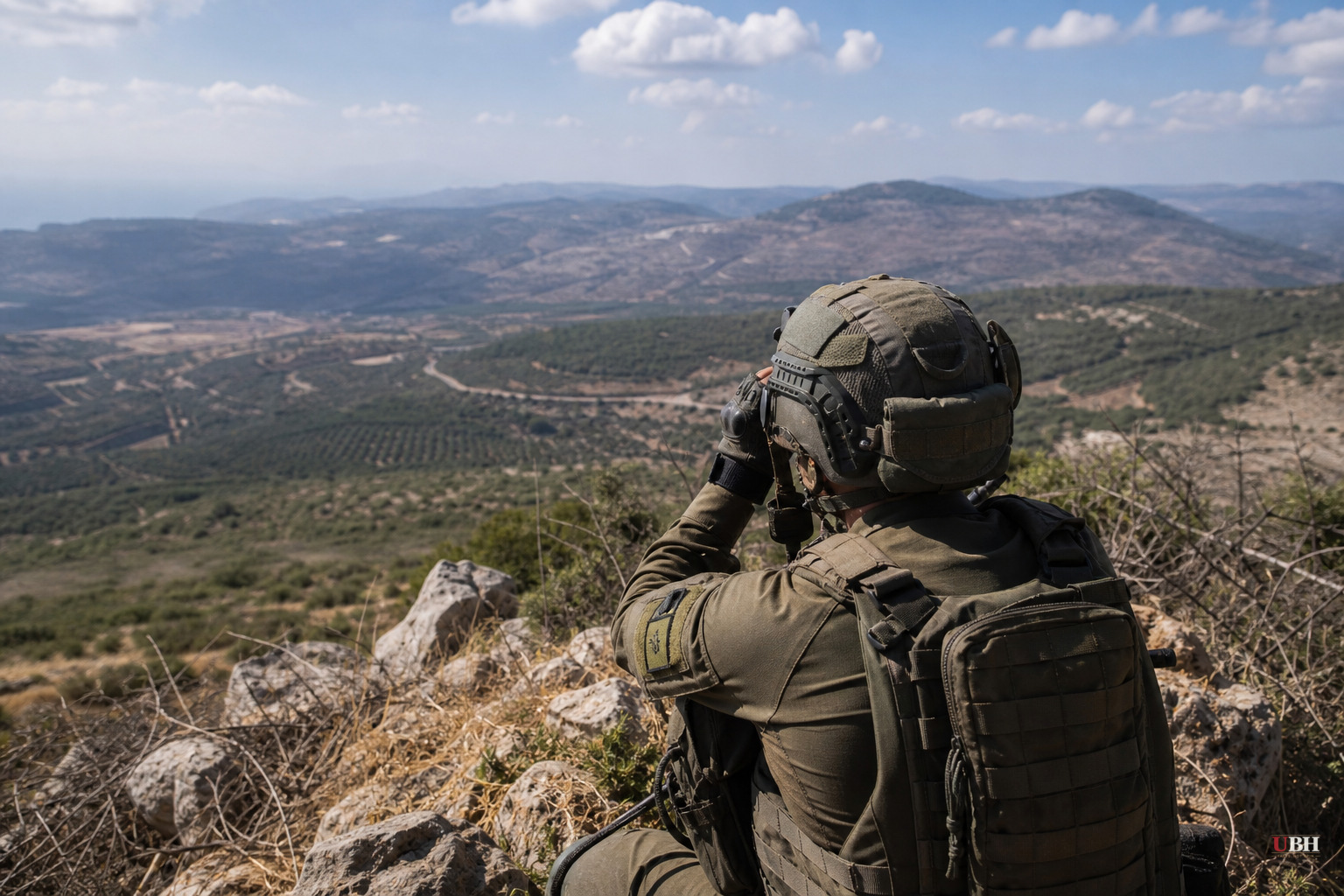
Israeli troops killed several Hezbollah fighters overnight Friday into Saturday, August 1, in the Ali al-Taher Ridge area of southern Lebanon, the Israel Defense Forces said. An IDF combat officer was moderately wounded in the clash and evacuated to a hospital, according to the military. His family was notified.
The IDF said soldiers identified several Hezbollah members who had entered the security zone where Israeli forces operate, roughly six miles north of the Israeli border. Troops attacked and killed them, the military said, describing the action as removing a threat. Hezbollah had not commented on the incident as of Saturday, according to Sweden Herald.
This was the first clash of its kind in more than three weeks, according to Ynet News. The last comparable encounter came on July 7, when a female soldier from the IDF's Oketz canine unit killed a Hezbollah fighter during a confrontation in Bint Jbeil; a reserve soldier was seriously wounded in that incident.
The Beaufort Castle Detonation
The overnight clash followed a much larger Israeli operation days earlier. Overnight Thursday, July 30 into Friday, July 31, the IDF detonated a network of Hezbollah tunnels in the Beaufort Castle area of eastern southern Lebanon, using roughly 700 tons of explosives, according to Ynet News and Christians for Israel International, citing JNS.
The IDF said the tunnel network was built over two decades, funded by Iran, and served as the primary underground command center for Hezbollah's Bader Unit in southern Lebanon. Israeli officials framed the strike as a direct response to a Hezbollah drone attack days earlier that struck an Israeli engineering vehicle on Ali al-Taher Ridge. Prime Minister Benjamin Netanyahu said the operation followed Hezbollah's "blatant violation of the ceasefire agreement," according to Christians for Israel International.
The scale of that detonation drew international pushback. Lebanese President Joseph Aoun called it "an extremely dangerous escalation" and "a direct threat to the process which was launched as part of the framework agreement," according to AFP, as reported by Christians for Israel International. The United Nations separately said it was "deeply concerned" about the escalation, stating the detonations and demolitions were having "a devastating impact on civilian infrastructure, cultural heritage and the collective memory of communities."
A 700-ton explosive demolition in a populated region is not a minor tactical footnote. Residents living near Beaufort Castle have legitimate reason to worry about structural damage, unexploded ordnance, and the broader message it sends about how fragile the ceasefire framework actually is. Lebanon's government, which has staked political capital on the disarmament process, has a real interest in that process not being upended by unilateral Israeli strikes it wasn't consulted on.
Israel's counter-argument is that Hezbollah fired first. The IDF says the group violated the ceasefire on Wednesday, July 29, by launching an explosive drone at an Israeli engineering vehicle, and that the tunnel network functioned as an active Hezbollah command post, not a dormant relic. From Jerusalem's perspective, dismantling infrastructure funded by Iran and built specifically to threaten Israeli forces is enforcement of the ceasefire, not a violation of it.
Diplomacy Continues Alongside the Fighting
Despite the escalation, the broader U.S.-mediated framework between Israel and Lebanon remains in motion. Secretary of State Marco Rubio said Friday, July 31, that the agreement is "unprecedented," noting it marks the first time Israeli and Lebanese officials have spoken at an official level in close to 30 years, according to Christians for Israel International. Rubio said there is "still a lot of work to be done" but called peace "achievable."
A pilot disarmament plan is already underway under that framework. Two weeks before this weekend, the State Department announced the project had begun, with the IDF expected to redeploy from several villages as the Lebanese army moves in to complete Hezbollah's disarmament there, according to Ynet News. The first villages covered are Froun, Srifa and Zawtar al-Gharbiya.
The next round of U.S.-led talks between Israel and Lebanon is scheduled for Rome, August 4-6, according to a State Department official cited by Christians for Israel International. A State Department statement described entering those talks with "significant momentum" following the pilot zone's launch.
The IDF, for its part, signaled no change in posture. "The IDF will continue to act to remove any threat to its forces and will not allow the Hezbollah terrorist organization to harm the citizens of the State of Israel," the military said in its statement on the Ali al-Taher Ridge clash.
Whether the Rome talks can survive the last week's escalation, including the tunnel demolition Aoun called a direct threat to the framework, remains unclear as the week ahead begins. No party has announced a suspension of the talks as of this weekend.
Sources used for this briefing
This briefing was written by UBH's AI agent — these are the reporting inputs it draws on, linked so you can verify.


