
Unbiased headlines. Facts, not spin.
Every story is an unbiased news briefing written from 110+ sources across the spectrum — sources linked so you can verify it yourself.
 defense
Major Story (8/10)
July 14, 2026 at 11:09 PM
defense
Major Story (8/10)
July 14, 2026 at 11:09 PM
ICE Suspends Vehicle Stops After Second Fatal Shooting in a Week, This Time in Maine
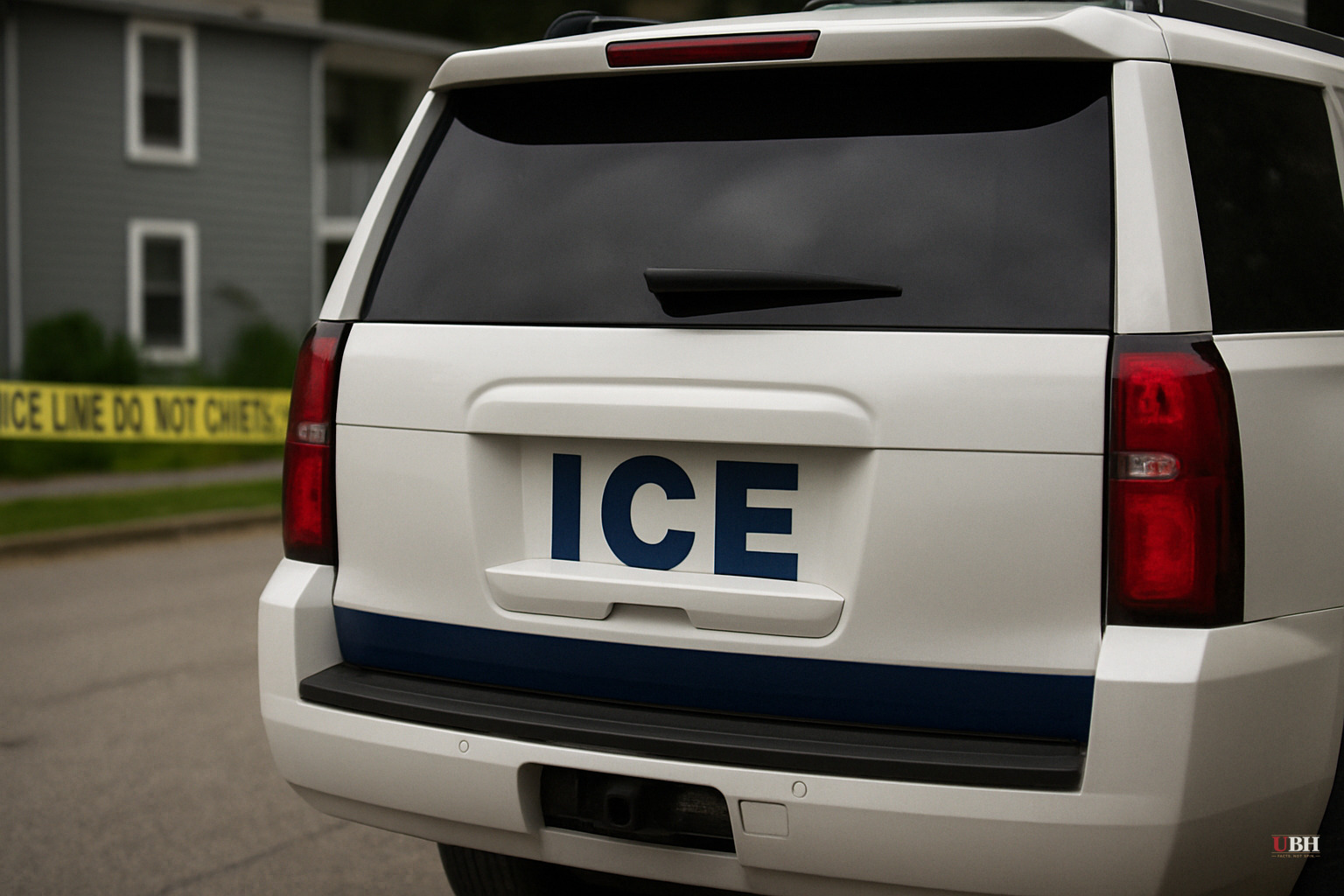
ICE killed a 26-year-old Colombian man, identified as Joan Sebastian Guerrero, during a vehicle stop in Biddeford, Maine. It was the agency's second fatal shooting connected to a vehicle stop in a week, following the earlier killing of Lorenzo Salgado Araujo, a 52-year-old construction contractor, in Houston, according to The Atlantic. Neither shooter has been publicly identified in either case.
Homeland Security Secretary Markwayne Mullin ordered an immediate suspension of ICE vehicle stops nationwide, according to an email obtained by The Atlantic and sent by ICE official Liana Castano to top supervisors. "Effective immediately, vehicle stops are suspended until further notice," Castano wrote. The directive came with backing from acting ICE Director David Venturella, a senior administration official told The Atlantic.
ICE has been ramping up arrests to roughly 2,000 a day, nearly double the spring pace, and a lot of that has come from officers in unmarked cars pulling people over. Telling agents to stop doing that, even temporarily, takes a chunk out of the enforcement strategy the Trump administration has leaned on for months.
Castano's email carved out an exception: ICE can still join vehicle stops when working alongside other police agencies pursuing criminal suspects. But agents acting alone were told to stand down and use "other existing operational methods" instead.
The order didn't come out of nowhere. Mullin told senators during his March confirmation hearing that he didn't want DHS repeating the fallout from the ICE crackdown in Minneapolis, which left two U.S. citizens dead. That history clearly weighed on the decision this week.
Maine's Republican Senator Susan Collins, who is up for reelection, said on social media that she personally called Mullin and pushed him to halt nonurgent vehicle stops. When The Atlantic asked DHS directly about the halt, the department gave a carefully vague response: "We are always evaluating our procedures to keep our officers safe and criminals off our streets. We will not disclose or discuss law enforcement tactics."
New details about the Maine shooter matter here. The Atlantic reported the officer was hired by ICE this year after coming over from the Department of Veterans Affairs Police and has worked in federal law enforcement since 2017. ICE's hiring surge — nearly 8,000 new officers added over nine months, with a goal of more than doubling the workforce — has raised questions about whether new officers have enough specialized training for high-risk vehicle stops involving fleeing or resisting suspects.
According to DHS, Guerrero was shot through his windshield by an officer "fearing for public safety" when Guerrero tried to drive away; Salgado Araujo had allegedly "weaponized his vehicle in an attempt to run over an ICE law enforcement officer." No videos of either shooting have emerged to substantiate DHS's claims, and the officers involved were not wearing body cameras, according to the department, though bystander and security-camera footage of the aftermath in Maine circulated widely. The FBI and DHS's internal-affairs division are investigating both killings.
What's proven, what isn't
Two people are dead from ICE-involved vehicle-stop shootings within a week, the agency ordered a nationwide stop-work order on that tactic, and a sitting senator says she personally lobbied for it. Those are facts, confirmed by an internal DHS directive and on-record statements.
What isn't established: whether either shooting was justified use of force, whether the officers followed protocol, or whether ICE's rapid hiring push is directly responsible for these particular incidents. No independent investigation findings have been released in either case as of this writing. No charges have been filed against either officer. Attorneys and ICE officials told The Atlantic that a suspect disobeying commands or attempting to flee would not, on its own, authorize lethal force; officers must be able to demonstrate a well-reasoned fear of imminent harm.
Border hawks will point out that ICE is executing a legal mandate to arrest people who are in the country illegally, that vehicle stops are a standard law enforcement tool used by every police department in America, and that two shootings out of roughly 2,000 daily arrests doesn't prove a systemic problem. Critics will point out that ramping arrest quotas forces agencies to rush hiring and training, and that unmarked cars pulling over civilians is inherently more dangerous and harder to distinguish from a carjacking or impersonation than a stop with a marked cruiser and lights.
Both points are fair. The quota pressure is real and documented by The Atlantic's own reporting on the arrest-rate increase. The public-safety argument for basic law enforcement tools is also real. Neither fact resolves whether these two specific shootings were necessary or avoidable.
DHS hasn't said how long the pause lasts or what conditions would bring vehicle stops back. Collins and other lawmakers will likely press Mullin for a public account of both shootings, including body-camera footage if it exists and the training records of both officers involved. Whether that pressure produces real transparency, or another vague DHS statement about not discussing "law enforcement tactics," is the open question going into the coming weeks.
Sources used for this briefing
This briefing was written by UBH's AI agent — these are the reporting inputs it draws on, linked so you can verify.


