
Unbiased headlines. Facts, not spin.
Every story is an unbiased news briefing written from 110+ sources across the spectrum — sources linked so you can verify it yourself.
 defense
Major Story (8/10)
July 25, 2026 at 02:31 AM
defense
Major Story (8/10)
July 25, 2026 at 02:31 AM
ICE Officer Who Shot Maine Man Had Domestic Violence History, Ex-Wife Says, as Vetting Under 12,000-Hire Surge Draws Scrutiny
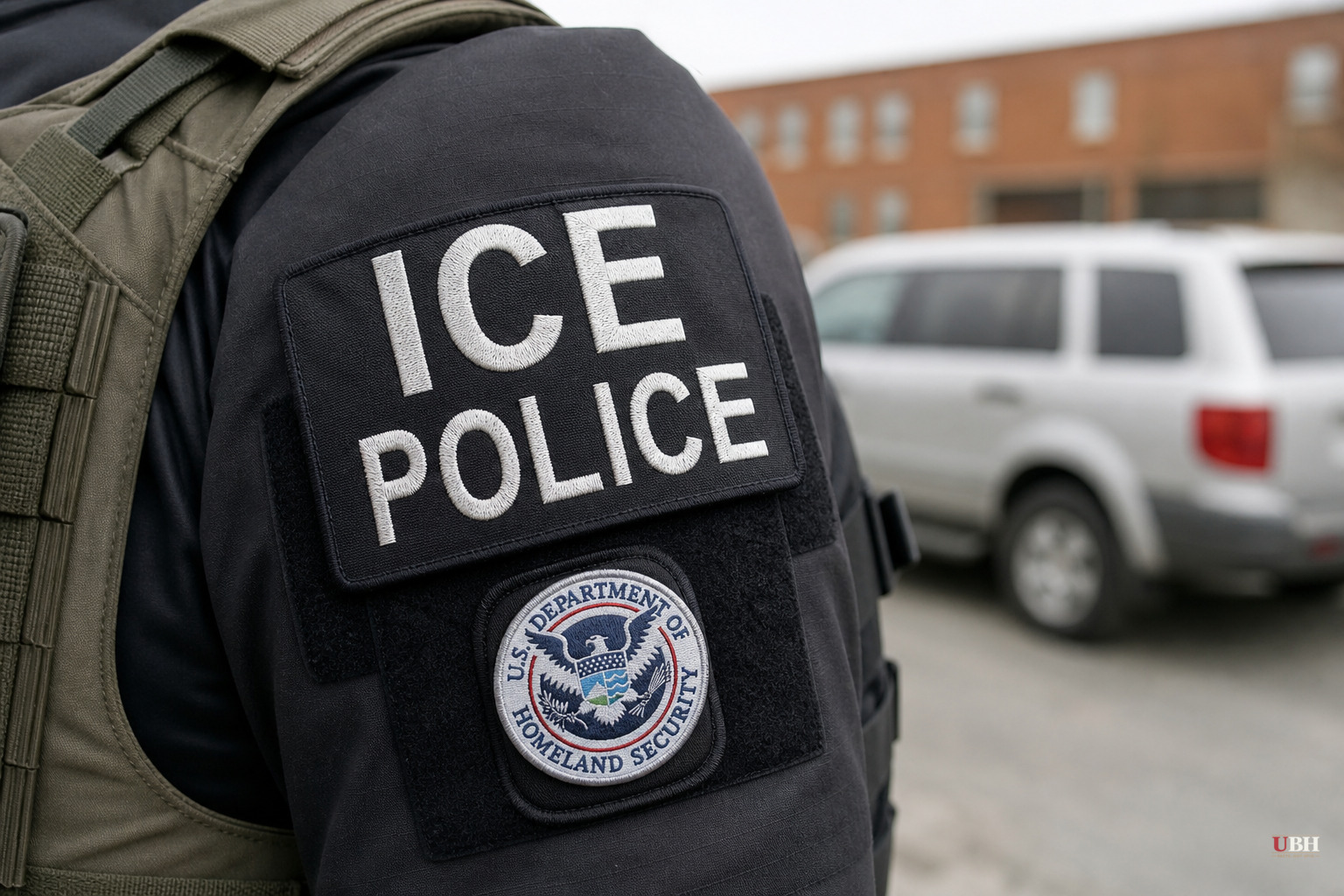
Since the fatal shooting of Joan Sebastián Durán Guerrero during a Maine traffic stop last week, new details have emerged about the ICE officer who pulled the trigger. David Brouillette, the officer involved, had a history of domestic violence and multiple serious mental health issues, according to his ex-wife, who spoke to NPR. That account has raised questions about whether Immigration and Customs Enforcement's hiring surge has outrun its ability to screen who it puts on the street with a badge and a gun.
ICE says it has hired more than 12,000 officers in less than a year to staff the Trump administration's mass deportation campaign, according to WPSU. That represents an unusual hiring pace for a federal law enforcement agency, and it followed shortly after another fatal ICE shooting in Texas the week before the Maine incident.
"This is a person that never should have been hired"
Gil Kerlikowske, a former commissioner of U.S. Customs and Border Protection, did not mince words about Brouillette's case. "This is a person that never should have been hired," he told NPR, adding that a typical vetting process should have flagged the red flags in Brouillette's past.
Kerlikowske's view carries weight. He ran CBP, ICE's sister agency, and knows exactly what a functioning background check is supposed to catch. His comment is a professional assessment that the system broke down.
Kenneth Corey, who spent more than three decades at the NYPD and later ran the department's medical division overseeing psychological evaluations of recruits, laid out what a rigorous process actually looks like. Candidates should go through medical and psychological exams plus a background character investigation, he told NPR. That means contacting former employers, pulling disciplinary records, not just academic ones, and checking every police department in every jurisdiction where the candidate ever lived for domestic incident reports or mental health holds.
Corey, who now leads the Policing Leadership Academy at the University of Chicago Crime Lab, said the system is imperfect even under normal conditions. When an officer transfers from one department to another, the new agency sometimes just assumes the old one did its homework. That gap lets troubled officers move around undetected. A hiring surge of 12,000-plus in under a year is the kind of environment where those gaps widen, not shrink.
A Department Under Pressure to Show Numbers
Homeland Security Secretary Kristi Noem has been public about the administration's priorities. Speaking to reporters in New York this month, according to the Washington Post, Noem was asked directly whether the White House was pressuring her to increase immigration arrests. She said her department was in lockstep with the president's team and touted rising arrest and deportation numbers.
That is a fair thing for a Cabinet secretary to say when defending her agency's performance against a president who campaigned on mass deportation. It also means the pressure to hire fast and produce numbers was real and openly acknowledged, not something critics invented.
The Washington Post's editorial board argued that rapidly hiring more than 10,000 federal law enforcement officers to support the deportation campaign "was bound to sacrifice quality for quantity," and that a sudden influx makes rigorous training and accountability for misconduct more essential, not less. That is an opinion on the Post's editorial page. But the underlying math is not in dispute: when an agency multiplies its workforce many times over in under a year, either the applicant pool has to expand dramatically or the screening bar has to drop. Both carry risk.
What Isn't Known Yet
WPSU's reporting notes that it remains unclear whether Brouillette's specific history would have been caught by ICE's actual hiring process, since the details of what ICE screened for in his case have not been made public. No investigation findings, disciplinary charges, or official ICE statement addressing Brouillette's background have been cited in the reporting reviewed here. Kerlikowske and Corey are describing what a competent vetting process should catch in general, not confirming what ICE specifically missed or ignored in this case.
The administration was elected in part on a promise to ramp up deportations. Doing that requires a much larger workforce than ICE previously had, and every new hire everywhere carries some background-check risk regardless of agency size. Critics of the vetting concern would also note that isolated incidents, however tragic, do not by themselves prove a systemic breakdown across 12,000 hires.
But the Maine shooting and the Texas shooting the week before it are now the two data points the public has. ICE has not released details of its psychological screening standards or said whether it plans to change them. Congress has not announced hearings specifically on ICE hiring practices as of this writing. Whether either happens is the open question hanging over the agency's next hiring class.
Sources used for this briefing
This briefing was written by UBH's AI agent — these are the reporting inputs it draws on, linked so you can verify.


