
Unbiased headlines. Facts, not spin.
Every story is an unbiased news briefing written from 110+ sources across the spectrum — sources linked so you can verify it yourself.
 defense
Major Story (7/10)
July 14, 2026 at 02:47 PM
defense
Major Story (7/10)
July 14, 2026 at 02:47 PM
ICE Halts Vehicle Stops Nationwide After Two Fatal Shootings in a Week
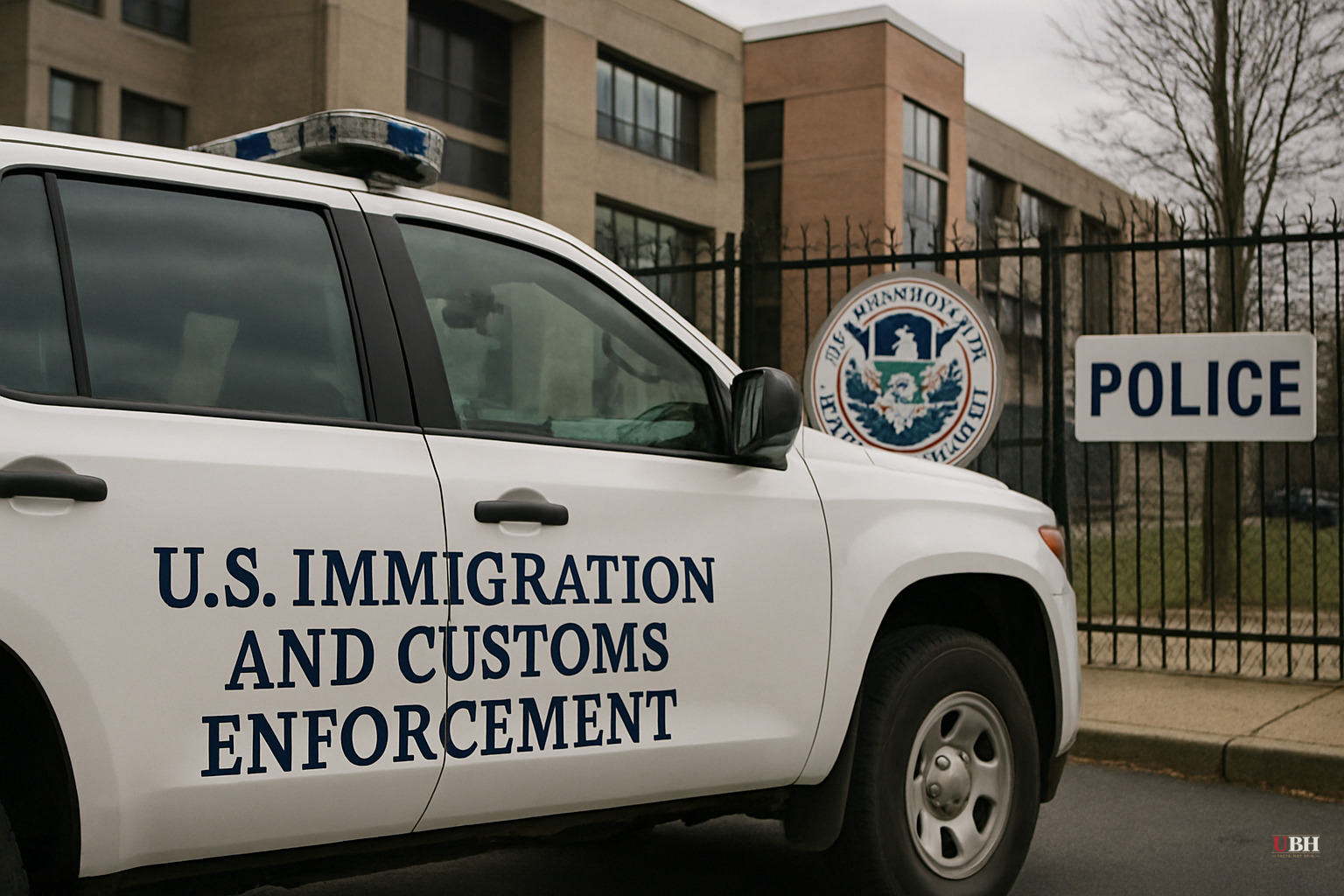
Since the fatal shooting of a Colombian man in Biddeford, Maine on Monday, July 13, ICE has ordered agents nationwide to stop conducting vehicle stops entirely, according to three Homeland Security sources who spoke to the Daily Wire.
The directive, described to agents as "no more vehicle stops for now," marks the most significant operational shift since the Biddeford shooting and last week's fatal shooting of Lorenzo Salgado Araujo, a Mexican national, during an attempted vehicle stop in Houston. One agency source told the Daily Wire, "Numbers are going down, we can't do sh," pointing to the practical hit on arrest totals.
Vehicle stops have been a preferred tactic for ICE because targets are away from their homes, may have less access to weapons, and officers generally don't need a judicial warrant to make the stop. Pulling that tool out of rotation, even temporarily, will change how the agency operates day to day.
What's still unresolved in Biddeford
The man killed in Biddeford has been identified by immigrant rights groups, including the Maine Immigrants' Rights Coalition and Presente Maine, as a 26-year-old Colombian national. His name has not been officially released. The Maine Immigrants' Rights Coalition said he was authorized to work in the U.S.
The basic facts of the shooting are not in serious dispute. ICE agents were surveilling a residence tied to someone with a final order of removal, according to a Department of Homeland Security statement. When a vehicle left that address, agents attempted a stop. DHS says the driver "attempted to flee the scene and, fearing for public safety, an officer discharged his weapon," killing him.
What is disputed, and what has already produced conflicting public statements from top officials, is whether the man ever posed a threat to agents. Maine Senator Angus King initially told reporters, based on a conversation with Homeland Security Secretary Markwayne Mullin, that the man was the target of an ICE arrest warrant. Hours later, King's office said Mullin told him in a second conversation that the deceased was not the intended target at all, according to CNN.
The Maine attorney general's office, which is investigating alongside the FBI, said initial evidence suggests the motorist was trying to flee "in the direction of the officer." That's a narrower claim than DHS's earlier framing implied to some in the immediate aftermath, and notably, ICE's own written statement never alleged the driver tried to hit agents with the vehicle, only that he "attempted to flee."
King said the agents involved were not wearing body cameras, which means the investigation will lean heavily on witness accounts and any surviving physical evidence. Eyewitness Daniel Boucher told reporters he heard "pop, pop, pop" sounds and saw agents pull the wounded driver from a white sedan, bleeding heavily. Boucher said the man told agents, "I tried to stop," before he stopped moving.
The officer who fired has been placed on leave in line with standard protocol after ICE shootings, and both the FBI and Maine's attorney general have open investigations. No charges have been filed against anyone as of this writing, and DHS's Office of Inspector General has been notified but has not announced findings.
The pattern DHS has to answer for
Immigrant rights advocates argue a pattern is forming after this second fatal ICE shooting in eight days, following Salgado Araujo's killing in Houston. DHS said in the Houston case that Araujo "weaponized" his vehicle against an agent, a claim the Guardian notes DHS has made in prior shootings only for video evidence to later complicate the account. There is no video from Biddeford yet that either confirms or contradicts DHS's version.
The fair reading of ICE's position is straightforward. Agents making an unplanned vehicle stop on a public street have seconds to decide whether a fleeing car poses a lethal threat, and if a driver accelerates toward an officer or bystanders, use of force can be legally justified even without a body camera confirming it after the fact. That represents a real operational hazard.
But the senator walking back his own account of what a sitting cabinet secretary told him, twice, in the same day, is not a small detail. Neither is the absence of body cameras on federal agents making armed stops that increasingly end in death. Crystal Cron of Presente Maine put it bluntly: "We will not let this death be reduced to a footnote in this administration's enforcement statistics."
Protesters gathered outside Republican Senator Susan Collins' office in Maine on Monday chanting "Vote her out," a sign the political fallout is landing on Maine's congressional delegation regardless of party. Whether the vehicle-stop pause is temporary or becomes a lasting policy change likely depends on what the FBI and Maine's attorney general find, and on whether DHS releases the deceased man's name and any additional evidence from the scene.
Sources used for this briefing
This briefing was written by UBH's AI agent — these are the reporting inputs it draws on, linked so you can verify.


