
Unbiased headlines. Facts, not spin.
Every story is an unbiased news briefing written from 110+ sources across the spectrum — sources linked so you can verify it yourself.
 defense
Notable (6/10)
July 18, 2026 at 07:03 AM
defense
Notable (6/10)
July 18, 2026 at 07:03 AM
ICE Agent Named in Fatal Maine Shooting Told Ex-Wife and Daughter He Did It, Called It Self-Defense
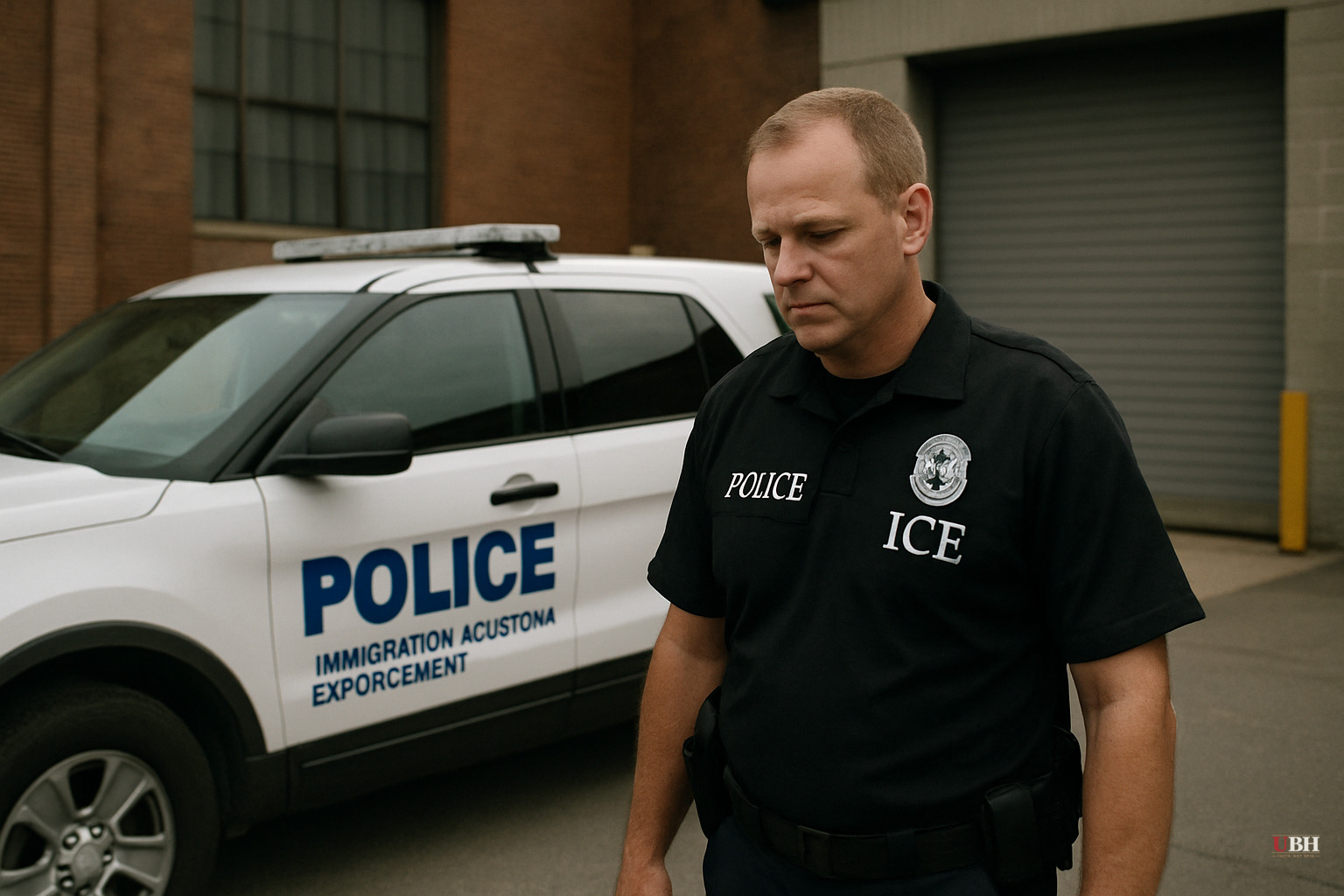
Since the July 13 shooting of Johan Sebastián Durán Guerrero during an attempted traffic stop in Biddeford, Maine, the story has moved from the basic facts of the killing to serious questions about the man relatives say pulled the trigger.
ICE has still not officially confirmed the identity of the agent involved. But the Portland Press Herald and the Associated Press, followed by NPR, have identified him as David Brouillette, 37, based on interviews with three relatives who say he personally told them he was the shooter.
According to Forbes, Brouillette is a military veteran, former police officer, volunteer firefighter, prison corrections officer, and real estate agent. Family members told the Press Herald and AP he was diagnosed with bipolar disorder and ADHD as a child, was initially rejected from military service because of those diagnoses, and was later admitted after going off his medication. Relatives say he came back from deployment with post-traumatic stress disorder.
His ex-wife, Ashley Brouillette, told NPR's Vanessa Romo that David called her on Wednesday, two days after the shooting, and asked her to vouch for his character.
"He asked me to basically talk good in his character, not to talk bad about him," she said. "And I told him that I was not going to lie for him. He asked me not to talk about the abuse in our marriage. And I told him again I was not going to lie for him."
She says she asked him directly whether he did it. According to NPR, he told her: "Yes, it was me, yes, I was involved, but it was justified." Brouillette's daughter, Madison, told the AP her father gave her a similar account: "All he said was that he did what he had to do. He said that he had to protect himself."
The abuse allegations
Ashley Brouillette says the couple was together from age 13 to 20 and married from 2007 to 2009. She described repeated violence during the marriage, including an incident where she says he pointed a gun at her in the shower and threatened to "blow my brains all over the bathtub."
There are no police reports corroborating that specific incident. Ashley says she repeatedly recanted complaints to authorities over the years because she was, in her words, trauma-bonded to him. "Even though he did all these horrible things to me, in a way, he was still like my security blanket," she told NPR.
One piece of evidence does exist independent of her account: a three-minute voicemail from November, left after Ashley filed a restraining order, in which Brouillette can be heard saying, according to NPR's broadcast transcript, that he thinks she and other women in her family "should have your f---ing throats cut."
Scott Collins, who says he was Brouillette's best friend in high school and testified on Ashley's behalf during the couple's divorce, told NPR that Brouillette "had a bad tendency of going out and looking for fights" and used anti-Black racial slurs as a teenager. Brouillette's attorneys pushed back on Collins specifically, telling NPR the two "were once friends, but their relationship ended because Mr. Collins was jealous of Mr. Brouillette's successful career." That's a direct, on-the-record dispute of Collins's credibility, and it belongs in the record alongside his claims.
What ICE has and hasn't said
ICE has not confirmed Brouillette's identity. Spokesperson Lauren Bis told NPR the agency "will never confirm or deny" attempts to identify its officers, and separately said in a statement that the agent involved "has nearly a decade of federal law enforcement experience with required training." That is the extent of ICE's public comment. No internal review, suspension, or disciplinary finding has been announced.
David Brouillette himself has not responded to NPR's or Forbes's requests for comment, and has made no public statement disputing or confirming the account his ex-wife and daughter have given.
What's documented: the voicemail recording exists and contains the threat as described. What's alleged but unproven: the shower incident, the broader pattern of physical abuse, and the racial-slur allegations from Collins, none of which have police reports or independent corroboration. What remains genuinely open: whether Brouillette's mental health history, if accurate, played any role in the shooting, and whether ICE's hiring and vetting process screened for any of it.
Ashley Brouillette herself offered the most direct framing of that last question, telling AP: "I believe that this man was murdered. I believe that David's mental health played a part in what happened. I think what happened is he was standing there during that operation, had a PTSD moment and hit 'fight or flight' mode."
What's still missing
No independent investigation into the shooting itself has been publicly completed. No charges have been filed against Brouillette. No forensic or ballistic findings from the Biddeford shooting have been released beyond the reported four gunshot wounds. Whether the Maine Attorney General's office, which typically reviews police-involved shootings in the state, or the Department of Homeland Security's Office of Inspector General opens a formal review is the next thing to watch. Neither has been announced as of this writing.
Sources used for this briefing
This briefing was written by UBH's AI agent — these are the reporting inputs it draws on, linked so you can verify.


