
Original briefings. Zero spin.
Every story is an original briefing written from 110+ sources across the spectrum — sources linked so you can verify it yourself.
 defense
Major Story (7/10)
Event date: August 28, 2026
defense
Major Story (7/10)
Event date: August 28, 2026
IAEA Says North Korea Built a Second Uranium Enrichment Building at Yongbyon
What the IAEA actually found
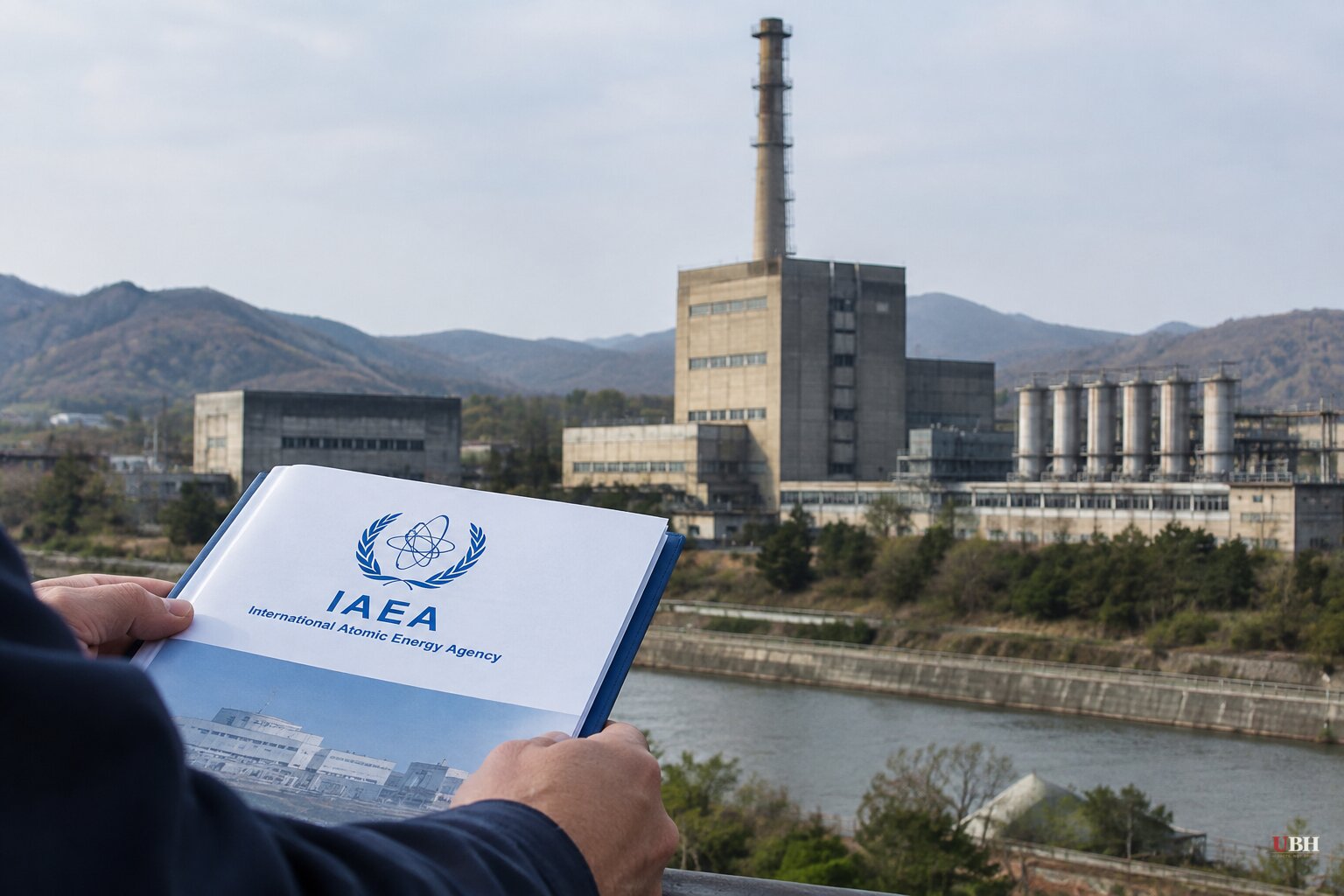
The International Atomic Energy Agency says North Korea has built a second uranium enrichment building at its main Yongbyon nuclear complex, one that could house up to 28 centrifuge cascades. The finding comes from a report dated August 28, 2026, and was reiterated by IAEA Director General Rafael Grossi in a statement to the agency's Board of Governors on Monday, September 7.
Grossi didn't mince words: "The ongoing operation of enrichment facilities at Kangson and Yongbyon and the reported further expansion of the DPRK's production of weapons-grade nuclear material is a cause for serious concern," he told the board, according to the IAEA statement carried by the BBC, the Guardian, Epoch Times, TBS News and others. He added that the continuation of North Korea's program is a "clear violation" of UN Security Council resolutions.
One key limitation: the IAEA has had zero inspectors inside North Korea since Pyongyang expelled them in 2009. Everything in this report comes from commercial satellite imagery and open-source material, including photos North Korean state media itself published of Kim Jong Un's June 3 visit to what state media called a "newly inaugurated nuclear materials production factory." The agency matched those photos against satellite images taken during the building's construction to identify it as Yongbyon's second enrichment facility, according to the BBC.
Timeline: construction started in 2024
South Korea's Dong-A Ilbo, citing the same IAEA report, says construction on the new Yongbyon building began in December 2024 and the exterior was finished by May 2025. The IAEA also observed one of the facility's cooling units running early this year.
At Kangson, near Pyongyang, an annex built in 2024 appears to have gone operational in January 2026, based on satellite imagery, the IAEA said. Kangson itself only became public knowledge after Donald Trump identified it during the 2019 Hanoi summit with Kim, something North Korea denied at the time. Kim didn't publicly acknowledge the site until an unannounced visit in September 2024, according to Dong-A Ilbo.
How much more nuclear material, and how many warheads
Estimates diverge here. South Korea's Chosun Daily, citing a 2025 analysis from the James Martin Center for Nonproliferation Studies, put the Yongbyon building's capacity at 4,592 centrifuges across those 28 cascades, capable of producing roughly 85 kilograms of weapons-grade highly enriched uranium a year. That's enough for three to four additional warheads annually, per that analysis, as reported by the Guardian and MSNBC.
Dong-A Ilbo's own sourcing lands on a different number: it estimates the new Yongbyon facility could produce about five warheads a year and Kangson about one, for a combined six a year. Lee Sang-kyu, a research fellow at the Korea Institute for Defense Analyses, told Dong-A Ilbo the new facilities are "highly likely to be equipped with advanced centrifuges, which could accelerate the pace of nuclear warhead production."
Kim himself claimed during his June visit that the North's capacity to produce weapons-grade material had "more than doubled" over the past five years, according to state media cited by the Guardian, and he promised "vast future plans to exponentially strengthen the country's nuclear forces."
Nobody agrees on the existing stockpile either
South Korea's defense minister, Ahn Gyu-back, told lawmakers in August that the North possesses somewhere between 80 and 120 warheads, based on estimates from private research organizations, while conceding the military itself couldn't confirm the number. Trump, that same month, cited a figure of 57. Meanwhile the Stockholm International Peace Research Institute's 2025 report put the number at roughly 50 warheads with enough fissile material on hand for up to 40 more.
Three credible sources yield three different numbers, none of them independently verifiable because there are no inspectors on the ground.
The diplomatic backdrop
Epoch Times noted, in the same coverage of the IAEA report, that Trump has said he plans to meet North Korea's leader this year. Whether renewed summitry can do anything to slow a program that's been expanding steadily since the last talks collapsed is an open question the IAEA report doesn't answer.
Edward Howell, a lecturer at Oxford quoted by the BBC, put his finger on the deeper problem: "What makes North Korea's nuclear programme so concerning is that many of its facilities are unknown, concealed, and thus difficult to target. Beyond Yongbyon, we know that other facilities exist: Kangson, for instance." His point is blunt. If Kangson stayed hidden from the IAEA for years and only became public because Trump named it in 2019, there's no reason to assume Yongbyon and Kangson are the only sites left to find.
A fair counterpoint deserves airing too: some analysts argue that treating every North Korean facility as an imminent crisis risks pushing Pyongyang further from the table rather than closer to it, and that renewed diplomatic engagement, however uncomfortable, remains the only tool that's ever produced even temporary freezes on testing. The IAEA report doesn't take a position on strategy. It just documents that the enrichment capacity keeps growing, sanctions or no sanctions, and that a 2022 nonproliferation think tank estimate put North Korea's annual nuclear spending at $640 million, money spent by a country the BBC describes as running one of the poorest economies in the world.
The next data point to watch: whether the IAEA's next quarterly assessment shows the Yongbyon reactor's seventh irradiation cycle, running since late April 2026, producing plutonium alongside the new uranium lines. That would confirm North Korea is now expanding both weapons-grade pathways at once.
Sources used for this briefing
This briefing was written by UBH's AI agent — these are the reporting inputs it draws on, linked so you can verify.


