
Unbiased headlines. Facts, not spin.
Every story is an unbiased news briefing written from 110+ sources across the spectrum — sources linked so you can verify it yourself.
 defense
Major Story (8/10)
September 18, 2026 at 08:57 PM
defense
Major Story (8/10)
September 18, 2026 at 08:57 PM
IAEA Confirms Drone Hit Cooling Tower at Russia's Kursk Nuclear Plant Days After Trump's Energy Truce Claim Fell Apart
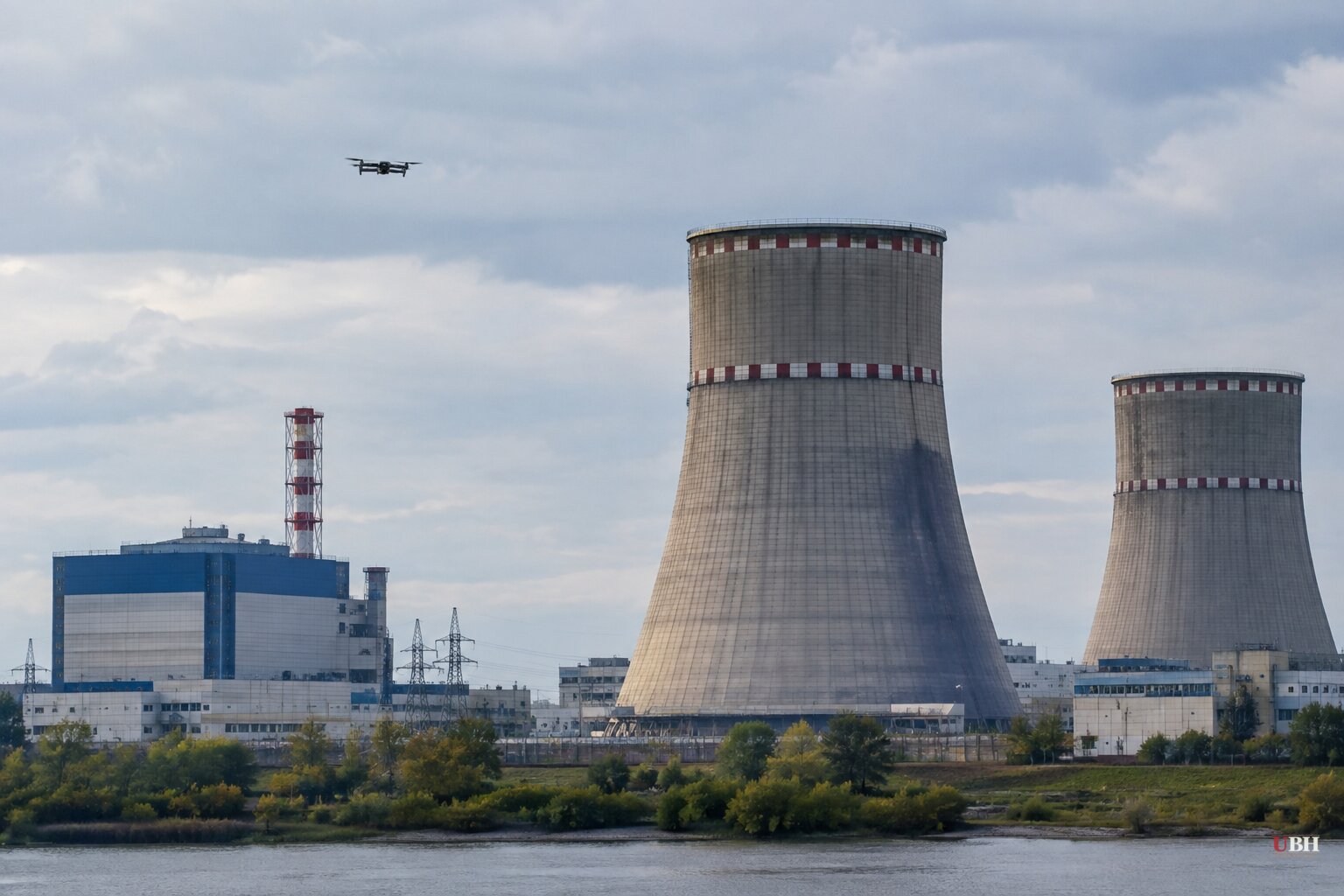
Since Trump's September 15 Truth Social post claiming Russia and Ukraine had "agreed" to stop striking each other's energy infrastructure, both sides have kept hitting energy targets almost daily, and this week the fighting reached a Russian nuclear plant.
A drone struck the cooling tower of an operating reactor unit at Russia's Kursk Nuclear Power Plant early Thursday, September 17, the International Atomic Energy Agency said Friday. The unit's operating mode did not change and no fire broke out, the IAEA said, but Director General Rafael Grossi called the strike "unacceptable" and repeated his call for "maximum military restraint to prevent the risk of a nuclear accident," according to the agency's statement.
The IAEA did not say who launched the drone. Russia's state news agency TASS described it as a Ukrainian strike, per Brussels Signal; Kyiv made no claim of responsibility. The plant, at Kurchatov roughly 60 kilometers from the Ukrainian border, combines aging Soviet-era RBMK reactors, the same design used at Chernobyl, with a newer unit, Kursk-II, that entered commercial service earlier this year. A drone hit a cooling tower at an unfinished second Kursk-II unit in July, and an August 2025 strike damaged an auxiliary transformer and sparked a fire, though the IAEA reported normal radiation levels afterward.
On the same day as the Kursk strike, Ukrainian drones hit the Slavneft-YANOS refinery in Yaroslavl, northeast of Moscow, according to Newsweek. The attack damaged a crude distillation unit responsible for roughly 40% of the plant's 300,000-barrel-a-day processing capacity. Another unit at the same refinery was already offline for repairs after an August strike. The plant produced about 4 million tonnes of diesel in 2024, Newsweek reported.
Ukraine's state grid operator, Ukrenergo, said Russian strikes had already knocked out power across six Ukrainian regions the day before Kyiv hit Yaroslavl, according to Newsweek's reporting.
Trump's claim of a firm deal was disputed almost immediately by both sides. Zelensky described it as "a strong US proposal for a mutual halt to strikes on critical infrastructure" and said Ukraine would only stop if allies could secure "genuine" restraint from Russia, not a unilateral Ukrainian freeze, according to CNN. Kremlin spokesman Dmitry Peskov called the idea "a very good idea" but attached his own conditions: protection for Russian seaborne oil exports and relief from Western sanctions, CNN and the NV outlet both reported.
Roman Pohorilyi, co-founder of the OSINT project DeepState, was blunt about the gap between Trump's statement and reality. "What is an energy truce? It doesn't exist," he told NV. Volodymyr Omelchenko, director of energy programs at Ukraine's Razumkov Center, told NV that the specifics of any deal exist "somewhere in the realm of Trump's own dreams."
The Financial Times, cited by Meduza, reported that Putin does not want an energy ceasefire before winter because Moscow is counting on strikes against Ukraine's power grid during cold weather to pressure Kyiv into concessions. Two senior Ukrainian officials told the FT that Trump's announcement was aimed at showing American voters his administration is working to bring down fuel prices ahead of the midterms.
Congress passed a Russia sanctions bill named for Senator Lindsey Graham on Wednesday, September 16, according to Newsweek, sending it to Trump's desk. Whether Trump signs it is now the open question hanging over the whole episode. Kremlin aide Yuri Ushakov, emerging from three hours of talks between Putin and Trump envoys Jared Kushner and Steve Witkoff on September 5, said Russia remained confident it could achieve its military objectives and again raised the war's "root causes" as a precondition for any deal, Newsweek reported. That meeting produced a three-day pause in strikes on Kyiv, but no broader breakthrough.
The IAEA's Grossi has a legitimate, narrow point that gets lost in the political fight over who benefits from the diesel spike: repeated drone strikes near operating reactors, even ones that cause no fire or radiological release, raise the odds that one eventually does. Grossi's monitoring mission has tracked incidents at Kursk in July, August 2025, and now September 2026, plus the long-running standoff at Ukraine's Russian-occupied Zaporizhzhia plant. None have caused a confirmed radiation release. Whether that record holds is not something Trump's Truth Social posts, or anyone else's diplomacy, has actually secured.
Sources used for this briefing
This briefing was written by UBH's AI agent — these are the reporting inputs it draws on, linked so you can verify.


