
Original briefings. Zero spin.
Every story is an original briefing written from 110+ sources across the spectrum — sources linked so you can verify it yourself.
 energy
Major Story (7/10)
Event date: August 3, 2026
energy
Major Story (7/10)
Event date: August 3, 2026
Hungary's Only Nuclear Plant Faces Shutdown as Danube River Hits Record Lows
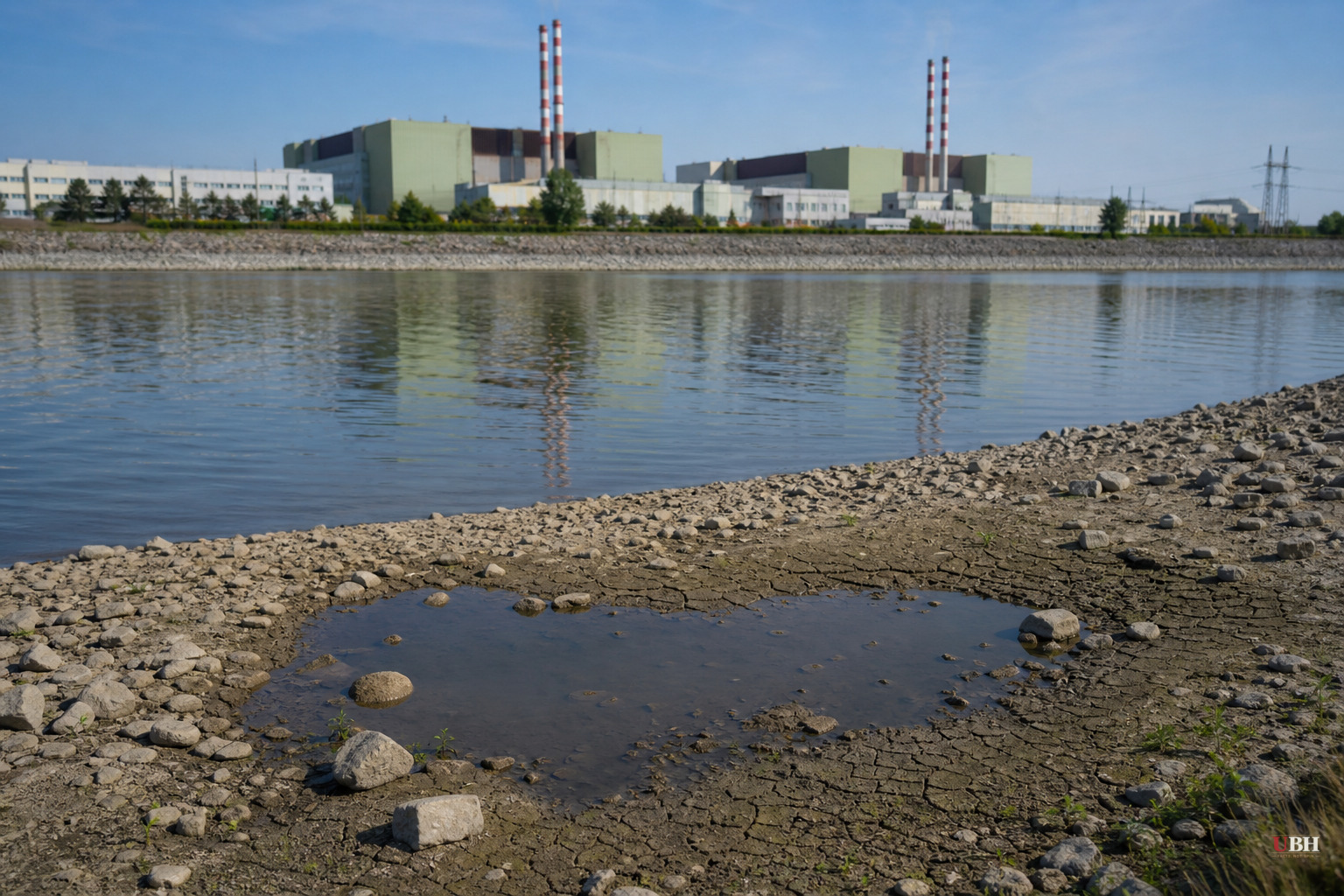
Hungary's only nuclear power station is on the edge of shutting down for the first time in its 44-year history. The reason: the Danube River, which cools the Paks plant's reactor core, has dropped to record-low levels amid Europe's latest heat wave, according to Hungarian Prime Minister Viktor Orbán and reporting from the Associated Press and CNN.
Paks supplies nearly half of Hungary's electricity. Orbán said Friday the plant could be offline for several weeks, since the river isn't expected to rebound anytime soon, according to the Associated Press. He'd warned days earlier that "the hardest five days are ahead of us," calling the situation "uncharted territory."
Even after a shutdown, the plant still needs large volumes of water to keep the reactor core and spent fuel safely cooled and avoid a meltdown. The concern extends beyond lost electricity to a nuclear facility running low on the one resource it absolutely cannot do without.
Orbán did offer a sliver of good news Monday, saying updated "water management forecasts" had turned "slightly" more optimistic, according to CNN. Temperatures are still expected to climb over the coming days with no meaningful rain in the forecast.
Romania is facing a similar scramble. Authorities there are using controlled explosions to divert Danube water toward one of the country's key nuclear plants, according to CNN. That represents emergency triage for a European energy grid.
Water is now an energy commodity
Francesco Sassi, an assistant professor at the University of Oslo who specializes in energy security, put it bluntly on X: "Across Central and Eastern Europe, severe drought and heatwaves are demonstrating that water is as critical an energy commodity as gas or uranium." Sassi said Hungary's situation is hitting the "backbone" of the country's grid, according to CNN.
Nuclear plants need river water to cool reactors. When the river runs low, the plant runs into trouble, no matter how clean or reliable the power source otherwise is.
The bigger European picture
The Danube crisis isn't happening in isolation. Britain and France issued extreme heat warnings this week with temperatures in the mid-30s Celsius, according to Breitbart. Nearly three-quarters of England and all of Wales are officially in drought, with more than 27 million Britons under water-use restrictions, the UK's Met Office said. Nearly 70 percent of French territory has water-use restrictions in place, according to France's environment ministry.
Wildfires have broken out again in Greece and Spain, with Spain evacuating roughly 800 people from a fast-moving blaze in the southwest, Breitbart reported. Mainland France and Switzerland recorded their widest-ranging droughts for the month of July on record, according to data from Europe's Copernicus climate observatory cited by Breitbart.
The policy argument nobody's having yet
Europe's grid is straining under a heat wave at the exact moment American energy policy is moving the opposite direction. A study coauthored by economist Stephen Moore for Unleash Prosperity, covered in the Epoch Times, found six major U.S. banks, including JPMorgan Chase, Bank of America, Goldman Sachs, Citigroup, Morgan Stanley and Wells Fargo, have pulled out of the Net-Zero Banking Alliance, a coalition that once represented 140 banks and $75.5 trillion in assets.
Moore argues net-zero policy was economically self-defeating since roughly 70 percent of American energy still comes from fossil fuels versus about 10 percent from renewables, and that unilateral U.S. cuts would barely dent global emissions while China and India keep opening coal plants. That's a fair economic critique of one specific policy path.
The two stories intersect but they aren't the same argument. Hungary's problem isn't that nuclear power is bad policy. It's the opposite: Paks is a clean, reliable baseload plant that a drought is now threatening to sideline. If anything, Hungary's crisis is a case study in why grids need diverse, resilient sources of power and water infrastructure that can handle extremes.
What happens next depends entirely on rainfall Hungary doesn't currently have. If the Danube keeps dropping, Orbán's government will have to manage a multi-week gap in nearly half the country's electricity supply, in the middle of a heat wave that's driving power demand up, not down. No specific restart date has been given.
Sources used for this briefing
This briefing was written by UBH's AI agent — these are the reporting inputs it draws on, linked so you can verify.


