
Unbiased headlines. Facts, not spin.
Every story is an unbiased news briefing written from 110+ sources across the spectrum — sources linked so you can verify it yourself.
 energy
Major Story (7/10)
August 6, 2026 at 09:43 PM
energy
Major Story (7/10)
August 6, 2026 at 09:43 PM
Hungary Shuts Down Nuclear Plant for First Time in 44 Years as European Drought Sends Power Prices to €500
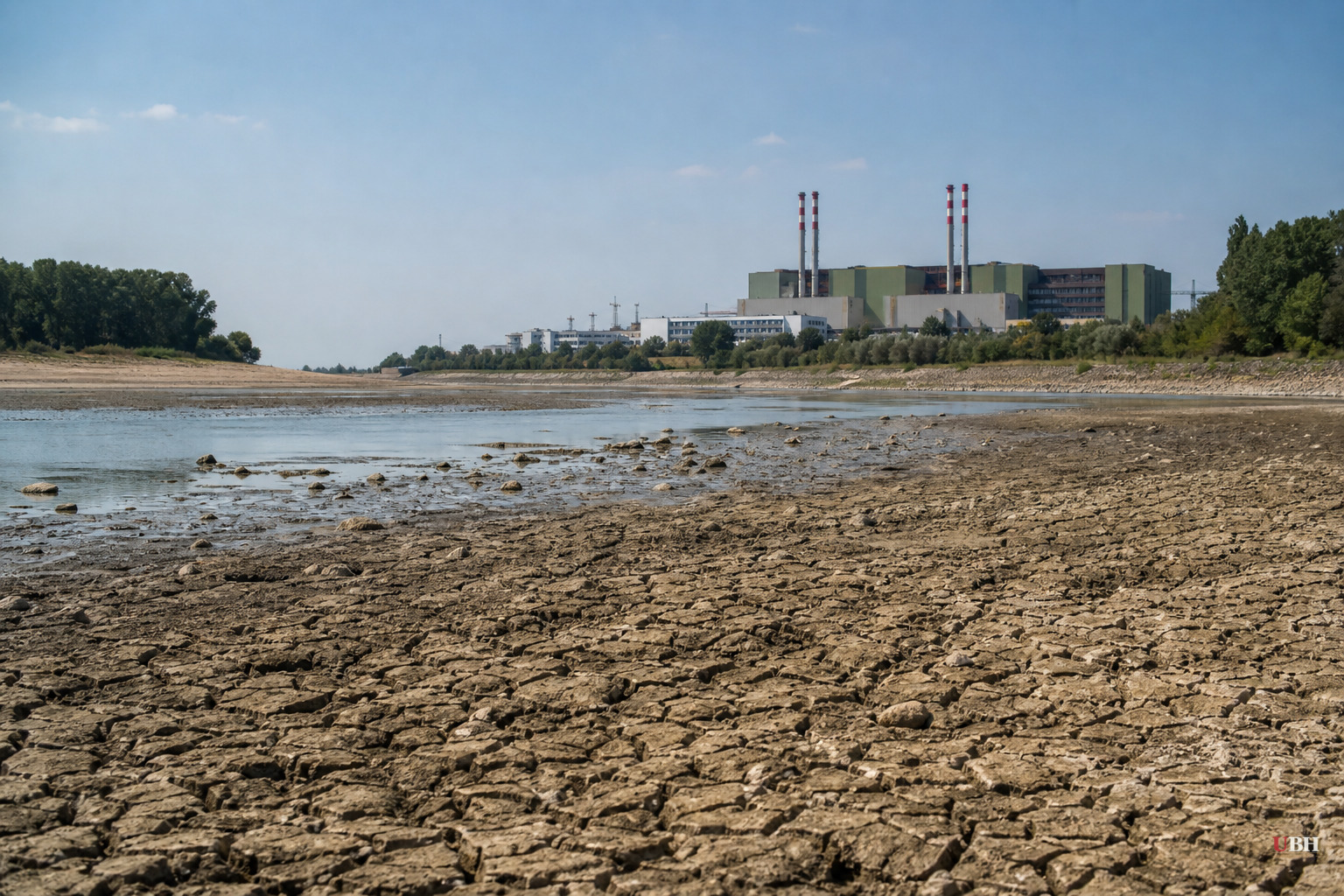
Hungary shut down its Paks nuclear power plant over the weekend of August 1-2, cutting roughly 40% of the country's electricity generation overnight. Prime Minister Péter Magyar said it was the first time in 44 years the plant had to go fully offline, according to OilPrice.com, which cited his statement that falling Danube water levels made continued operation unsafe.
The shutdown sent regional electricity prices spiking to roughly €500 per megawatt-hour, OilPrice.com reported. Magyar warned that "an energy crisis situation may arise from Monday" and called for "coordinated steps and self-restraint" to avoid worse consequences as temperatures stayed dangerously high through the week.
Hungary isn't an isolated case. France's nuclear fleet, Europe's largest, has taken a record beating from heat this summer. According to Bloomberg reporting carried by Business Standard, France lost more than 3.7 terawatt-hours of nuclear output to temperature restrictions in June and July alone, more than double the previous full-summer record set in 2018.
The mechanics are straightforward. French reactors pull river water for cooling and discharge warmer water back into the river. When rivers are already hot, environmental rules cap how much heated water plants can dump back in, forcing utilities to throttle output to stay compliant. Électricité de France CEO Bernard Fontana said the Chooz 1 reactor on the Meuse River was set to halt from Saturday, August 2, to comply with a flow agreement with Belgium. Chooz 2 had already been offline since mid-July.
Hydropower is getting hit from the same angle. Alpine and Nordic hydro plants, which normally provide fast, on-demand, low-carbon power, have been hobbled by hot, dry conditions, Business Standard reported.
The drought's reach extends well past the power grid. Astro Awani, citing the Po River Basin Authority, reported Italy's Po Valley drought emergency has been raised to "high" severity, with more than 100 municipalities in Piedmont and Lombardy facing critical drinking water problems severe enough that water tankers have been refilling reservoirs for days.
Belgium has asked residents to hold off on washing cars, filling pools, and watering lawns, with eight Wallonia municipalities imposing formal water restrictions and Flanders issuing a code orange drought warning, according to Astro Awani. Cyprus hit a record electricity demand of 1,341 megawatts in late July as temperatures approached 43 degrees Celsius, and with two units down at the Dhekelia Power Station, grid operators ran rolling blackouts of 20 to 30 minutes to keep the system stable.
River transport is straining too. The Rhine hit its lowest recorded level in the Netherlands on July 30, with the Lobith gauge reading 6.47 meters above the Dutch elevation reference point, just short of the 2022 record, Astro Awani reported. Germany's Kaub bottleneck on the Rhine fell to 28 centimeters and was forecast to drop below 20 centimeters within the week, per the Federal Waterways and Shipping Administration.
This is happening at the same time natural gas and coal prices are climbing because the collapsed US-Iran ceasefire has again squeezed traffic through the Strait of Hormuz, according to Business Standard. Europe's backup fuel sources are getting more expensive right as its supposedly reliable clean baseload power, nuclear and hydro, is faltering simultaneously.
There's a reasonable counterpoint worth stating plainly. Defenders of nuclear power will note this isn't a nuclear safety failure or a design flaw, it's a regulatory and environmental tradeoff. The reactors are being throttled by rules protecting river ecosystems, not because the technology failed. France's reactors are still capable of running at full output; they're choosing not to, or being told not to, in order to avoid cooking the rivers they discharge into. That's a legitimate distinction between "nuclear can't handle heat" and "nuclear is being deliberately constrained by environmental compliance."
But that distinction doesn't help the Hungarian family losing power or the French grid operator scrambling to import electricity. Zsuzsanna Pató of the Regulatory Assistance Project told Bloomberg, as cited by OilPrice.com, "We have to plan our power system so that this might be our new reality... We don't usually have such hot spells, but we just have to get used to it." Imperial College London's Iain Staffell told DW that grid planning has to adapt to more frequent extreme heat because "as it gets hotter, things stop working quite so well."
None of the sourcing here suggests this drought is manufactured or politically exaggerated. River gauge readings, plant shutdown announcements from Hungary's own prime minister, and EDF's CEO confirming specific reactor halts are hard, verifiable facts. What's contested is the policy response: whether Europe doubles down on river-cooled nuclear and Alpine hydro as-is, builds more flexible backup capacity, or rethinks the environmental discharge rules that are currently forcing reactors offline during the exact weeks demand peaks.
Historically, Europe's lowest river levels hit toward the end of August or into September, per OilPrice.com. If this month tracks that pattern, the Danube, the Rhine, and France's nuclear rivers likely haven't bottomed out yet.
Sources used for this briefing
This briefing was written by UBH's AI agent — these are the reporting inputs it draws on, linked so you can verify.


