
Unbiased headlines. Facts, not spin.
Every story is an unbiased news briefing written from 110+ sources across the spectrum — sources linked so you can verify it yourself.
 economy
Notable (6/10)
August 12, 2026 at 05:55 AM
economy
Notable (6/10)
August 12, 2026 at 05:55 AM
HUD Weighs Cutting Housing Voucher Money to Cities With Restrictive Zoning, Loses Separate Court Fight Over Homelessness Funds
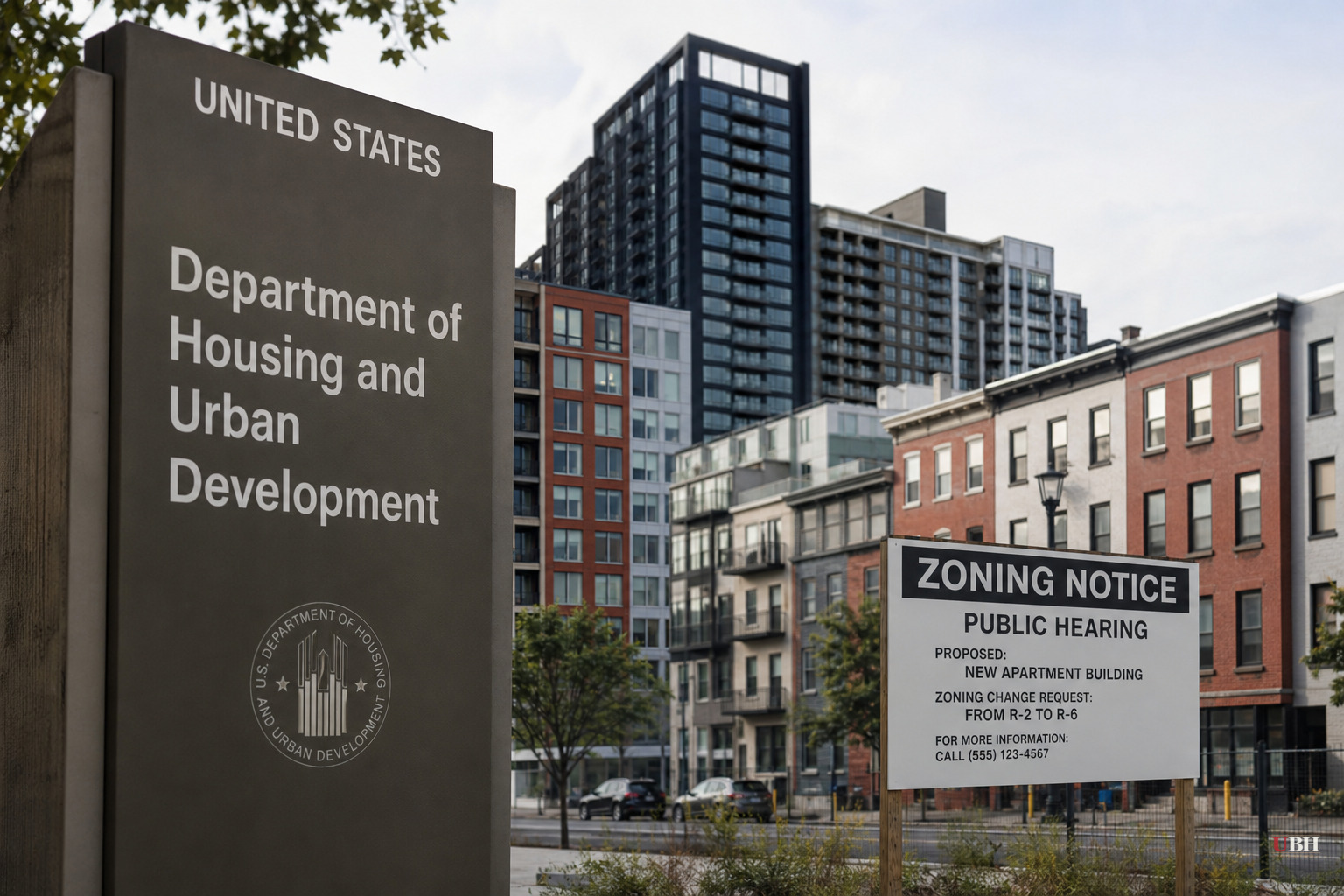
The Department of Housing and Urban Development is considering a plan that would punish cities for their own bad zoning laws by cutting their federal housing voucher money. Separately, a federal judge just told HUD it can't attach illegal strings to a different pot of housing cash. Same agency, two very different fights over who controls housing policy in America.
The Voucher Proposal
The Housing Choice Voucher program, better known as Section 8, is HUD's biggest budget line at $38 billion a year, according to Reason. Local housing authorities get that money and hand out vouchers so low-income families can rent from private landlords.
HUD adjusts how much money each local authority gets based on local rent inflation. In July, HUD published a notice in the Federal Register proposing a change starting in fiscal year 2027: factor in whether local land use regulations are themselves driving up rents, according to Reason.
If a city won't let anyone build apartments and rents skyrocket because of it, HUD wants to stop rewarding that city with more voucher money. The agency's own language, per Reason, says it wants to avoid "allocating shares of renewal funding to areas where rent increases may be substantially impacted by policy-driven determinants of housing supply."
Cities that ban multifamily housing, impose absurd permitting delays, or cap density have been driving rent inflation for decades. If HUD is now saying "we won't keep bankrolling the consequences of your own bad zoning," the logic is straightforward. Taxpayers shouldn't be subsidizing scarcity that local politicians created on purpose.
The National Low Income Housing Coalition doesn't see it that way. In a comment letter cited by Reason, the group argued the change "would penalize those who have no control over local land use decisions, in particular families with the lowest incomes in areas where housing costs are high." They also warned that housing authorities themselves usually don't set zoning policy, so the wrong people get punished.
A voucher recipient in San Francisco didn't personally vote for the city's permitting maze. If HUD cuts funding to punish local politicians, the family holding the voucher bears the consequence, not the city council. The Low Income Housing Coalition's letter also flagged that the vagueness of "policy factors" HUD might consider could let the agency pull funding over almost any local policy disagreement it doesn't like, not just zoning.
Alex Armlovich, a housing program officer at Coefficient Giving, offered a middle path in his own comment letter, citing research that HUD's current approach of boosting voucher funding to supply-constrained cities can actually feed rent inflation there, according to Reason. Pumping more voucher money into a city that refuses to build more housing just bids up prices on the same fixed supply.
The California Numbers Show Why This Matters
While HUD debates federal leverage, California's own numbers show what happens when state mandates for housing goals run into actual construction reality, according to PBS. Every eight years California assigns cities housing targets across four income brackets. Southern California and much of the state just hit the halfway mark on the current cycle.
The results are stark. Less than a third of cities and counties are on pace to hit their market-rate housing goals. For "very low" income housing, only 32 jurisdictions statewide, under 6%, are on track, according to PBS. Only five jurisdictions in the entire state are on pace to hit all four targets, and four of those are lightly populated rural counties.
Irvine in Orange County is a case study PBS highlighted directly. The city was told to plan for 8,671 market-rate units by 2030 and has issued more than 6,000, putting it ahead of pace. But for its lowest-income housing target, Irvine has permitted just 9%. For the next bracket up, it's at 3%.
That gap between planning and permitting is exactly the dynamic HUD's voucher proposal is trying to address on the federal level: cities can write a plan, get state approval, and still never actually build.
The Separate Court Loss
None of that voucher proposal has anything to do with a different fight HUD just lost. New York Attorney General Letitia James led a coalition of 20 other attorneys general, plus the governors of Kentucky and Pennsylvania, in suing HUD over new conditions attached to Fiscal Year 2026 Continuum of Care funding, which supports homeless services nationwide, according to a press release from James's office.
The U.S. District Court for the District of Rhode Island ruled that HUD's funding notice violated the Administrative Procedure Act and vacated it entirely, ordering HUD to issue a new one that follows the law, according to James's office. This is the second time HUD has lost this exact fight. James's coalition beat HUD on the same conditions for Fiscal Year 2025 funds before the administration tried again for 2026.
In New York alone, 24 regional Continuum of Care organizations split more than $320 million, with over 90% going to permanent housing supporting close to 14,000 households, according to both James's office and bkreader's reporting on the case. James called the administration's repeated attempts "shameful" and accused HUD of trying "to break the law in order to push their political agenda."
HUD has not filed a public response detailed in these sources explaining what specific conditions it tried to impose or why, beyond what the court record shows. The agency must now issue a new funding notice for Continuum of Care money, and it remains to be seen whether it tries a third version of similar conditions or drops the approach altogether. The voucher zoning proposal, meanwhile, is still just a proposal, not a rule, with the fiscal year 2027 timeline suggesting a final decision is still to come.
Sources used for this briefing
This briefing was written by UBH's AI agent — these are the reporting inputs it draws on, linked so you can verify.


