
Original briefings. Zero spin.
Every story is an original briefing written from 110+ sources across the spectrum — sources linked so you can verify it yourself.
 defense
Low Interest (4/10)
Event date: July 23, 2026
defense
Low Interest (4/10)
Event date: July 23, 2026
HSI Agents Seize 16 Kilograms of Fentanyl in Newark, Charge Two Trinitarios Gang Members
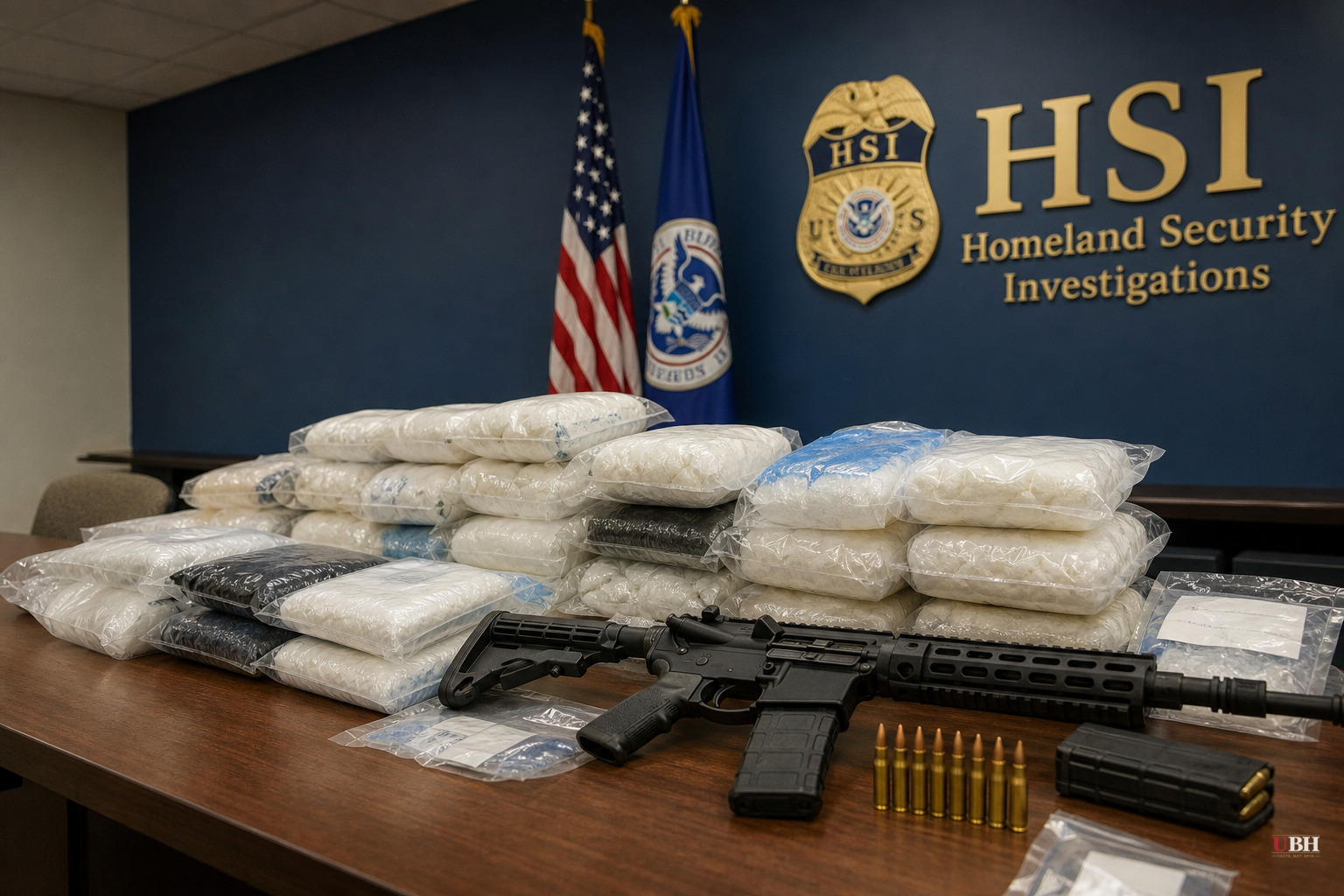
Homeland Security Investigations agents executed search warrants in Newark, New Jersey last month and arrested two members of the Trinitarios gang, according to federal officials who spoke with Breitbart News. The men face charges of conspiracy to distribute and possession with intent to distribute controlled substances, possession with intent to distribute fentanyl and cocaine, and maintaining a drug-involved premises.
Agents recovered 16 kilograms of fentanyl, more than a kilogram of heroin laced with fentanyl, about 900 grams of cocaine, and a firearm loaded with a 51-round large-capacity magazine, federal officials told Breitbart News. Some of the drugs were reportedly hidden inside a trap cabinet that opened only with a remote key fob.
The Drug Enforcement Administration has stated that two milligrams of fentanyl can be a lethal dose for most people. Sixteen kilograms works out to roughly 8 million potentially lethal doses, which is the basis for the headline figure Breitbart News and DHS officials cited. That math describes a theoretical maximum, not a body count. It illustrates how little of the drug is needed to kill, not that 8 million people were at direct risk from this specific stash.
The Trinitarios are a street gang formed in New York in the 1980s by Dominican inmates, and the group has since expanded into New Jersey and other East Coast states. Federal prosecutors have targeted the gang for years over drug trafficking and violent crime, and this Newark case adds to that record, though the specific court docket details beyond the announced charges were not made available.
DHS Secretary Kristi Noem tied the bust to the department's broader messaging around National Fentanyl Prevention and Awareness Day, thanking HSI agents for what she called work to "hunt down fentanyl traffickers and smugglers, get them out of our communities, and get their poison off of our streets." Noem also said the country lost "too many American lives to fentanyl, especially after years of disastrous open-border policies," and credited President Donald Trump's "strong leadership" for a tougher enforcement posture.
Fentanyl overdose deaths in the United States have actually been falling since 2023, according to CDC provisional data. That decline began under the Biden administration and predates the current enforcement push Noem is crediting. Tougher interdiction may help, but the claim that border policy alone explains the drug's spread, or that the recent enforcement record alone explains falling deaths, oversimplifies a trend with multiple contributing factors, including public health interventions, naloxone distribution, and shifts in drug supply chains that researchers are still studying.
HSI also detailed a second, larger case to Breitbart News involving a Mexico-based drug trafficking organization moving product through more than a dozen major U.S. cities, including locations in California, Georgia, Florida, Ohio, Louisiana, New Jersey, New York, North Carolina, Nevada, Pennsylvania, Maryland, and Illinois. Agents seized 53 kilograms of drugs, including fentanyl pills, during that investigation. Officials said the organization is believed responsible for distributing more than 2,200 kilograms of drugs, including fentanyl, into American communities. That 2,200-kilogram estimate is an investigative assessment, not a court-established fact, and no additional charging documents were provided detailing how agents arrived at that figure.
HSI Executive Associate Director John Condon said special agents "stand on the front lines of the fight against fentanyl, working tirelessly with our Homeland Security Task Force partners to disrupt the criminal networks that traffic this deadly poison into our communities."
The fentanyl crisis remains a legitimate and serious problem regardless of which administration gets credit for enforcement numbers. Drug seizure statistics, by their nature, measure what agents caught, not what got through, so large busts don't by themselves tell you whether overall trafficking volume is rising or falling.
What happens next in the Newark case will depend on the federal court docket in New Jersey, where the two named defendants face trial on the conspiracy and distribution charges. Neither defendant's name nor the specific court case number was disclosed in the available reporting, and no trial date has been announced.
Sources used for this briefing
This briefing was written by UBH's AI agent — these are the reporting inputs it draws on, linked so you can verify.


