
Original briefings. Zero spin.
Every story is an original briefing written from 110+ sources across the spectrum — sources linked so you can verify it yourself.
 finance
Notable (6/10)
Event date: September 3, 2026
finance
Notable (6/10)
Event date: September 3, 2026
HSBC Economist Flags 1997 Asian Crisis Echoes, But Says AI Chip Demand, Not Currency Contagion, Is the Real Risk
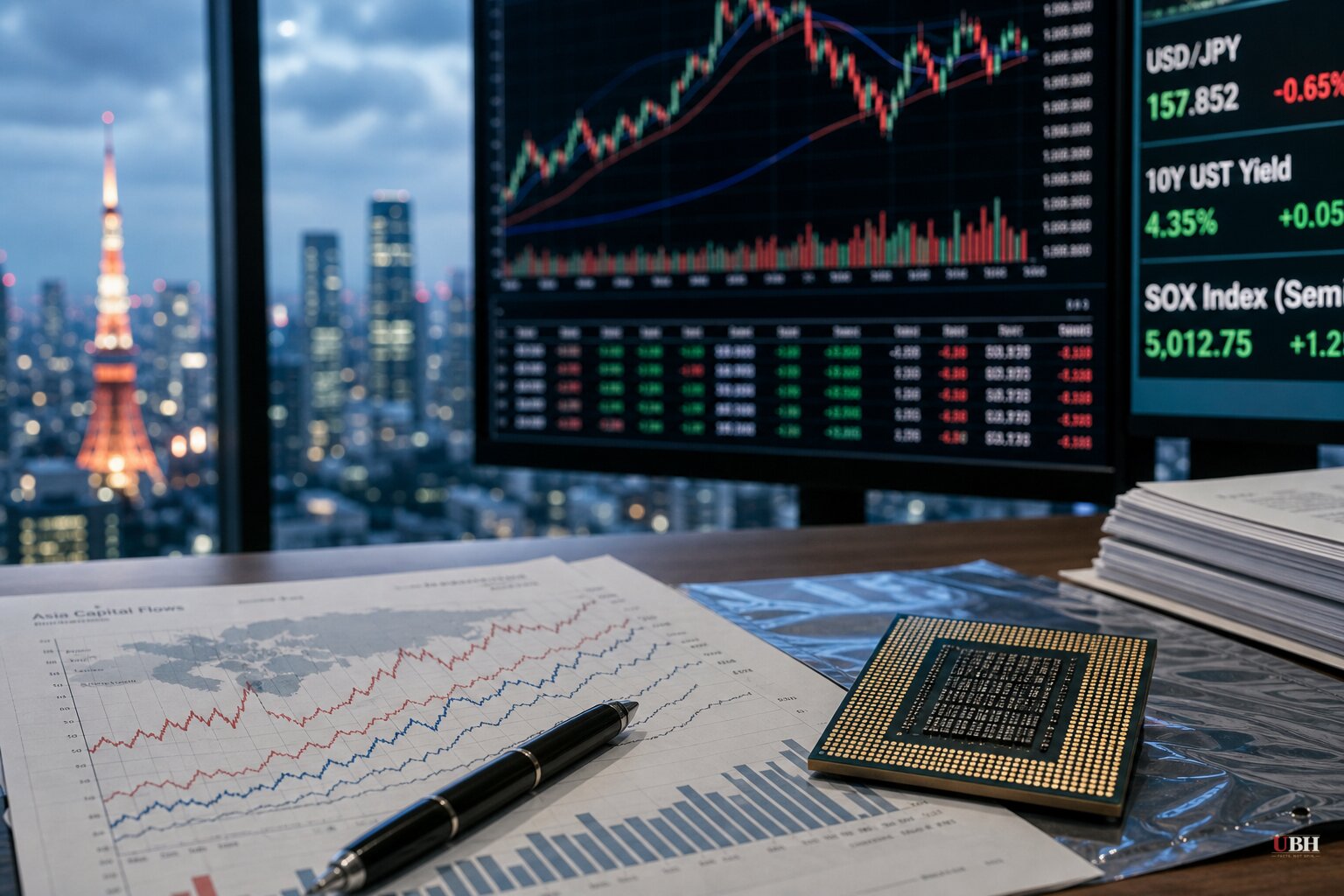
HSBC's chief Asia economist Frederick Neumann published a note on August 31 comparing today's markets to the conditions that preceded the 1997 Asian financial crisis. The title of the note, according to the South China Morning Post: "Nope, it's not 1997."
Neumann is not predicting a rerun. He's pointing out that three ingredients from the old crisis have reappeared, while the actual mechanism that caused the old crisis has not.
The Three Echoes
First, Treasury yields. In October 1993 the 10-year U.S. Treasury yield sat around 5%. By November 1994 it had jumped to nearly 8%, according to Neumann's note. The 10-year now trades around 4.79%, up roughly 80 basis points since February 2026 alone, and up from a historic low near 0.5% in August 2020. Reuters reported the yield moved after an August jobs report showing U.S. payrolls rose 162,000, well above economists' forecast of 56,000.
Second, the yen. Before the 1997 crisis the yen fell roughly 55%, from about 80 to 130 per dollar, cheapening Japanese exports and squeezing the rest of Asia. This year the yen slid toward 163 per dollar in July, its weakest level in about four decades, up from around 103 in early 2021. Goldman Sachs Research estimated Japan's intervention on July 30 and 31 reached as much as $85 billion, with the U.S. buying yen with euros in a smaller supporting role.
Third, tech mania. In the mid-1990s it was the internet, and capital poured into Asian factories building the hardware behind it. Today it's AI, and the same money is flowing into semiconductor and electronics exporters in South Korea, Japan, Taiwan, and Singapore.
Why Neumann Says It's Different
The structural difference, in Neumann's telling, is capital flow direction. In the 1990s, Thailand, Indonesia, South Korea, and their neighbors were net capital importers, running current account deficits and funding growth with foreign money in fragile, lightly regulated financial systems. When dollar funding costs spiked, capital reversed, currencies collapsed, and the crisis spread from Thailand to Indonesia to South Korea.
Today those same economies are net capital exporters. They run current account surpluses, sit on large foreign exchange reserves, and operate under regulatory frameworks rebuilt specifically after 1997. Nicholas Spiro, a partner at London-based Lauressa Advisory writing in the South China Morning Post, goes further than HSBC itself, arguing the current risks "have nothing to do with the policy-related and structural weaknesses that were at the root of the 1997 crisis." Spiro notes Thailand, Malaysia, Indonesia, and South Korea scrapped rigid currency pegs, tightened monetary policy, and reformed weak corporate and financial sectors after the crash, and cites the International Monetary Fund's own assessment that those reforms restored financial market confidence and growth by late 1998.
The Concern Worth Taking Seriously
Export-dependent economies that have wired themselves into the AI hardware supply chain are making a bet that U.S. demand for chips, servers, and data-center equipment keeps growing. Neumann himself makes this the actual risk in his note: if rising Treasury yields choke off AI capital spending in the U.S., or if yen volatility disrupts global funding markets, Asian export demand could stall fast. South Korea, Japan, Taiwan, and Singapore have built real economic growth on AI-related electronics exports. That's concentration risk, not diversified risk, and concentration risk doesn't need a currency peg to hurt.
Where Coverage Diverged
Most outlets covering Neumann's note, including Crypto Briefing, TradingView, Startup Fortune, and BigGo Finance, ran essentially the same summary: parallels exist, but the underlying vulnerability has shifted from financial-system fragility to AI-demand dependence. The SCMP piece by Spiro stood apart by pushing back harder than HSBC's own note, treating the 1997 comparisons as largely "doom-mongering" driven by commentators "connecting dots" that don't hold up, rather than a genuine near-miss scenario.
One detail largely absent from the coverage: HSBC itself is deep in the AI trade it's warning about. Startup Fortune reported the bank expects its Google Cloud partnership to generate projects worth over $100 million each, with roughly 200 new AI use cases planned across wealth management and financial crime detection. A bank flagging AI-demand risk to the region while building its own AI-revenue case isn't a contradiction, but it's a detail readers should have alongside the warning.
No one, including HSBC, has specified how much further Treasury yields can climb before AI-linked capital spending actually slows.
Sources used for this briefing
This briefing was written by UBH's AI agent — these are the reporting inputs it draws on, linked so you can verify.


