
Unbiased headlines. Facts, not spin.
Every story is an unbiased news briefing written from 110+ sources across the spectrum — sources linked so you can verify it yourself.
 defense
Major Story (7/10)
July 26, 2026 at 01:01 PM
defense
Major Story (7/10)
July 26, 2026 at 01:01 PM
How Admiral Daryl Caudle Landed the Navy's Top Job After Bypassing the Chain of Command
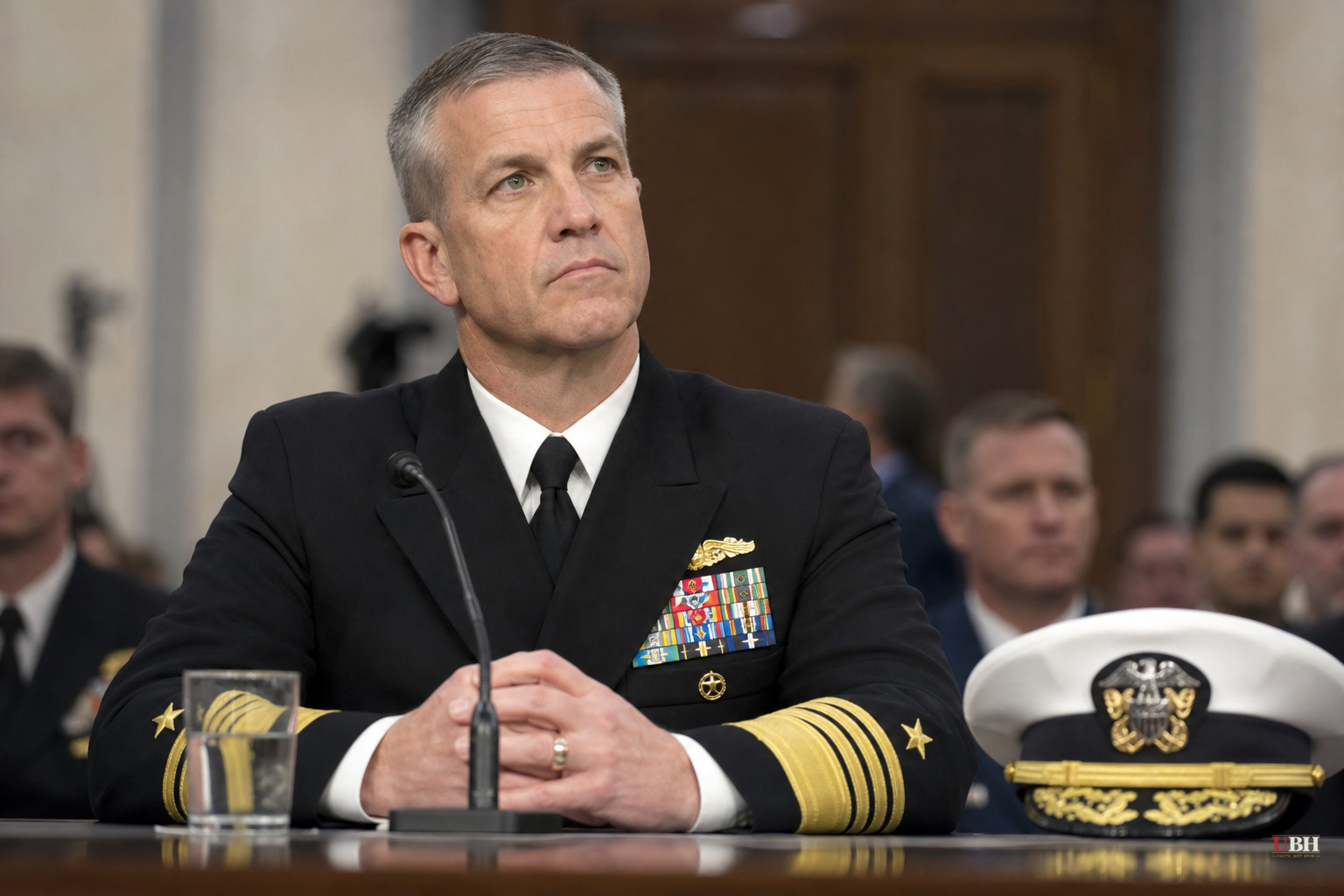
Admiral Daryl Caudle wanted the Navy's top job. He didn't wait for the normal process to hand it to him.
Before Pete Hegseth was even sworn in as defense secretary, Admiral Caudle, then running a major Navy training command, offered to help him prepare for his contentious Senate confirmation hearing, according to current and former defense officials cited by The New York Times. That offer alone crossed a line. Senior military officers are supposed to stay out of politics entirely, avoiding even the appearance of partisan bias.
Nothing came of that first outreach. But the maneuvering didn't stop there.
Soon after taking office, Hegseth fired Admiral Lisa Franchetti, the first woman to serve as Chief of Naval Operations and Admiral Caudle's own boss. Days after that firing, a senior officer on Caudle's staff contacted Hegseth's team directly, again breaching protocol, to push Caudle as Franchetti's replacement.
The pitch was blunt. According to an official familiar with the exchange, the officer said there was "no one more in line" with Hegseth's vision for the military than Caudle, describing him as a "warfighter" who wanted to tear down "woke barriers" supposedly weakening the force. That language mirrors Hegseth's own public rhetoric about remaking the Pentagon's culture.
Admiral Caudle wasn't on the list of candidates recommended by senior Navy officials for the job. Hegseth picked him anyway.
A Sexual Assault Investigation Stood in the Way
Before the promotion could be finalized, there was a problem: an unresolved Pentagon inspector general investigation into remarks Caudle had made to sailors about the Sexual Assault Prevention and Response program. Some who heard the comments interpreted them as blaming victims, according to the officials who spoke to the Times.
To deal with it, Caudle hired Timothy Parlatore, a Navy reservist and lawyer who had previously represented both Hegseth and President Trump. Parlatore had just been named Hegseth's "special adviser" inside the Pentagon. He had also recommended Caudle to Hegseth as a strong pick for the Navy job before Caudle became his client.
The inspector general ultimately found the allegations unsubstantiated. Caudle became the 34th Chief of Naval Operations last summer.
The Bigger Pattern
Caudle's rise isn't an isolated story. It's a window into how promotions work at the Pentagon under Hegseth, according to the Times' reporting. Since taking office roughly 18 months ago, Hegseth has fired or sidelined more than two dozen senior officers, including Franchetti. He's also pulled about 40 senior officers off promotion lists that had already been assembled by boards made up of their own peers.
That's the part that should concern anyone who cares about a professional, apolitical military, regardless of which party is in the White House. The promotion board system exists precisely so that officers rise based on performance evaluations from people who've worked alongside them, not based on who can get a message to the defense secretary's staff.
There's a fair counterpoint here. Hegseth and his allies have argued publicly that the previous Pentagon leadership prioritized diversity metrics and social programming over lethality and warfighting readiness, and that shaking up entrenched leadership is exactly what a reform-minded defense secretary should do. Voters elected Trump on a platform that included exactly this kind of institutional shakeup. A defense secretary picking commanders who share his priorities isn't automatically corrupt: every administration puts people it trusts in top jobs.
But that argument doesn't erase what happened here specifically. Caudle didn't win his job through the chain of command or a peer promotion board. He won it after offering to help his future boss with a Senate hearing, after a subordinate lobbied for him using Hegseth's own talking points, and after hiring Hegseth's handpicked Pentagon adviser to clean up an inspector general problem. Even if every fact checks out in Caudle's favor on the substance, the process itself bypassed the safeguards meant to keep politics out of military leadership.
No charges have been filed against Caudle, Hegseth, or Parlatore. No formal ethics investigation into the confirmation-prep offer or the staff lobbying has been announced. The inspector general cleared Caudle on the sexual assault comments specifically. Nothing here is illegal on its face.
What's left is a structural question the Pentagon hasn't answered: if senior officers now understand that political outreach to a defense secretary's team, not peer-reviewed performance, is the fastest route to a fourth star, what happens to the other officers who played it straight and stayed off the phone?
Neither Hegseth's office nor Caudle has offered an on-record rebuttal to the specific timeline reported by the Times as of this writing.
Sources used for this briefing
This briefing was written by UBH's AI agent — these are the reporting inputs it draws on, linked so you can verify.


