
Unbiased headlines. Facts, not spin.
Every story is an unbiased news briefing written from 110+ sources across the spectrum — sources linked so you can verify it yourself.
 defense
Major Story (7/10)
Event date: September 8, 2026
defense
Major Story (7/10)
Event date: September 8, 2026
Houthis Seize Yemen's Red Sea Coast, Gulf States Postpone Hormuz Talks With Iran as Oil Tops $100
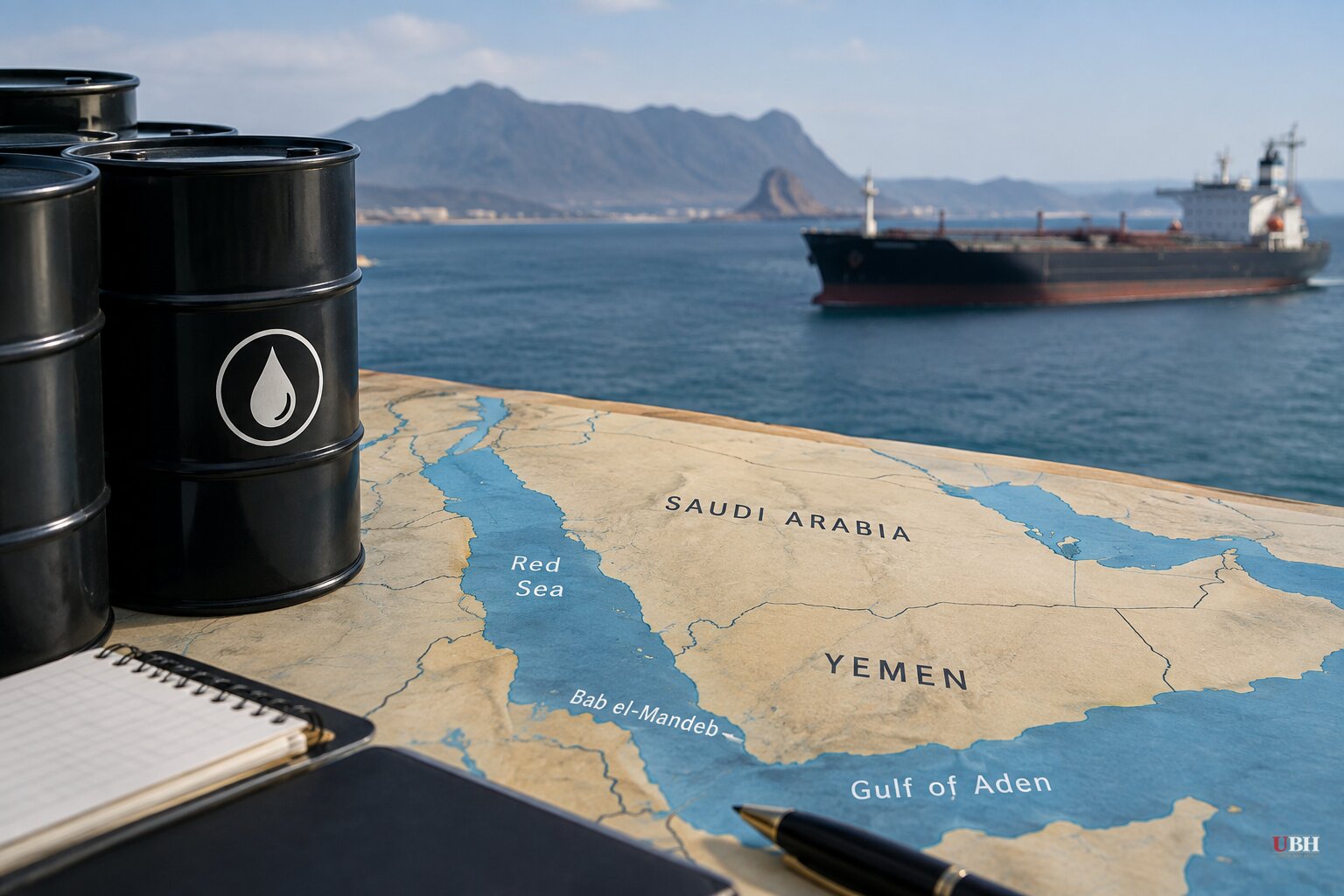
Since Houthi fighters captured the Red Sea port of Mocha last week and seized Perim Island on September 11, the Iran-backed group has kept advancing, taking the Greater and Lesser Hanish islands on Monday and pushing to within roughly 20 miles of Camp Lemonnier, the largest U.S. military base in Africa, according to the Daily Wire and the Associated Press.
The advance gives the Houthis effective control over the western approach to the Bab el-Mandeb Strait, an 18-mile-wide chokepoint that carries about 12% of global trade, according to Fox News. Traffic through the strait has already dropped 60% since Houthi attacks on shipping began there in 2023, per the Epoch Times.
A Second Front Opens as Hormuz Stays Choked
Saudi Arabia has leaned on its East-West pipeline to move oil to the Red Sea and bypass the Strait of Hormuz since Iran first threatened commercial shipping when the U.S.-Iran war began in February. That workaround took a hit on September 11 when a drone attack, which Saudi officials blame on Iranian-backed militias in Iraq, struck a pumping station and forced a shutdown, according to Reuters reporting carried by The Star (Malaysia).
Satellite images obtained by the Daily Wire show extensive fire damage to the station. Regional officials told the Associated Press the pipeline, which normally carries up to 4 million barrels a day, will likely stay offline for weeks, possibly up to five, while repairs are completed. Traders told the Epoch Times that Saudi Arabia has enough stored oil to maintain shipments for only five to seven days if the line stays down. Saudi Aramco has not issued a public statement on the damage.
In the Strait of Hormuz itself, vessel crossings have fallen into the single digits per day, down from roughly 130 before the war, according to the Epoch Times. An Iranian container ship was struck by an unidentified projectile near Hengam Island on Sunday, killing one crew member and injuring four, Iran's state news agency IRNA reported. The UK Maritime Trade Operations authority separately confirmed a vessel fire from an unknown projectile in the area.
Talks Postponed, Blame Flying Both Ways
A planned conference between Iran, Oman and Gulf Arab states over the future of the Strait of Hormuz was postponed, Omani Foreign Minister Sayyid Badr Albusaidi announced Sunday night, saying it was done "in the interest of consensus," according to Breitbart. Iranian officials countered that Saudi Arabia was the one who called off the meeting. Neither side's account is independently verified in available reporting, and the dispute remains unresolved.
Iran's self-declared "Persian Gulf Strait Authority" updated its list Monday of ships it says will be denied passage for "violating Iranian protocols," warning insurers and classification societies to cut ties with those vessels or face unspecified consequences, per Breitbart.
Mixed signals also came out of Washington and Tehran on whether talks to end the broader war could resume. President Trump wrote on Truth Social Monday that Iran wanted to "make a deal, quickly and badly," and said the U.S. was open to the "concept" of engagement, according to CBS News. Mohsen Rezaee, head of Iran's Supreme National Security Council, dismissed that as a distraction in a social media post the same evening, writing "No talks until Iran's conditions are met. Period!" Iran has repeatedly demanded the U.S. return to the terms of a memorandum of understanding signed in mid-June, which Tehran says collapsed by early July after Washington kept a military blockade on Iranian ports in place.
The Houthis' Stated Grievance
Houthi officials argue their campaign against Saudi Arabia is retaliation, not unprovoked aggression. Nasr al-Din Amer, head of the Houthi-run Saba news agency, told CNN the group will keep "pressuring" Saudi Arabia until Riyadh ends what he called a "siege" of northern Yemen. A Yemeni government official told Reuters, in reporting carried by The Star, that the dynamic is now cyclical: Saudi and allied Yemeni air forces have escalated bombardment of Houthi positions around Mocha, and the Houthis have answered with more missile and drone strikes. On Monday, the Houthis said they fired dozens of missiles and drones at the Khamis Mushait air base in southern Saudi Arabia; Saudi authorities issued emergency alerts there and in three other southern cities, and the Saudi-led coalition said 13 civilians were wounded.
Washington has so far declined direct Saudi requests for military intervention beyond intelligence sharing, three sources told Reuters. Trump said over the weekend that the Houthis themselves had reached out asking the U.S. to stay out of the fight. Saudi Crown Prince Mohammed bin Salman met with U.S. regional commander Admiral Brad Cooper in Jeddah on Monday, according to Saudi state media, and is scheduled to meet Egyptian President Abdel Fattah al-Sisi in Cairo, the Egyptian presidency said.
Oil markets are pricing in the risk on both flanks of the Arabian Peninsula. Brent crude jumped more than 4% intraday Monday before settling about 1% higher, according to reporting carried by the Economic Times, near $109 a barrel per the Daily Wire, while CBS News reports crude has stayed above $100. Hisham Al-Omeisy of the European Institute of Peace told Fox News Digital the twin chokepoints, Hormuz on one side and Bab el-Mandeb on the other, will "drive prices up exponentially" if both remain constrained.
The open question is whether Riyadh's East-West pipeline comes back online before its five- to seven-day emergency oil reserve runs out, and whether Washington's intelligence-only posture toward the Houthi advance holds if the group closes in further on the strait's western mouth.
Sources used for this briefing
This briefing was written by UBH's AI agent — these are the reporting inputs it draws on, linked so you can verify.


