
Unbiased headlines. Facts, not spin.
Every story is an unbiased news briefing written from 110+ sources across the spectrum — sources linked so you can verify it yourself.
 defense
Major Story (8/10)
August 10, 2026 at 12:13 PM
defense
Major Story (8/10)
August 10, 2026 at 12:13 PM
Houthis Declare Naval Blockade on Saudi Arabia, Threatening Bab el-Mandeb Shipping Lane
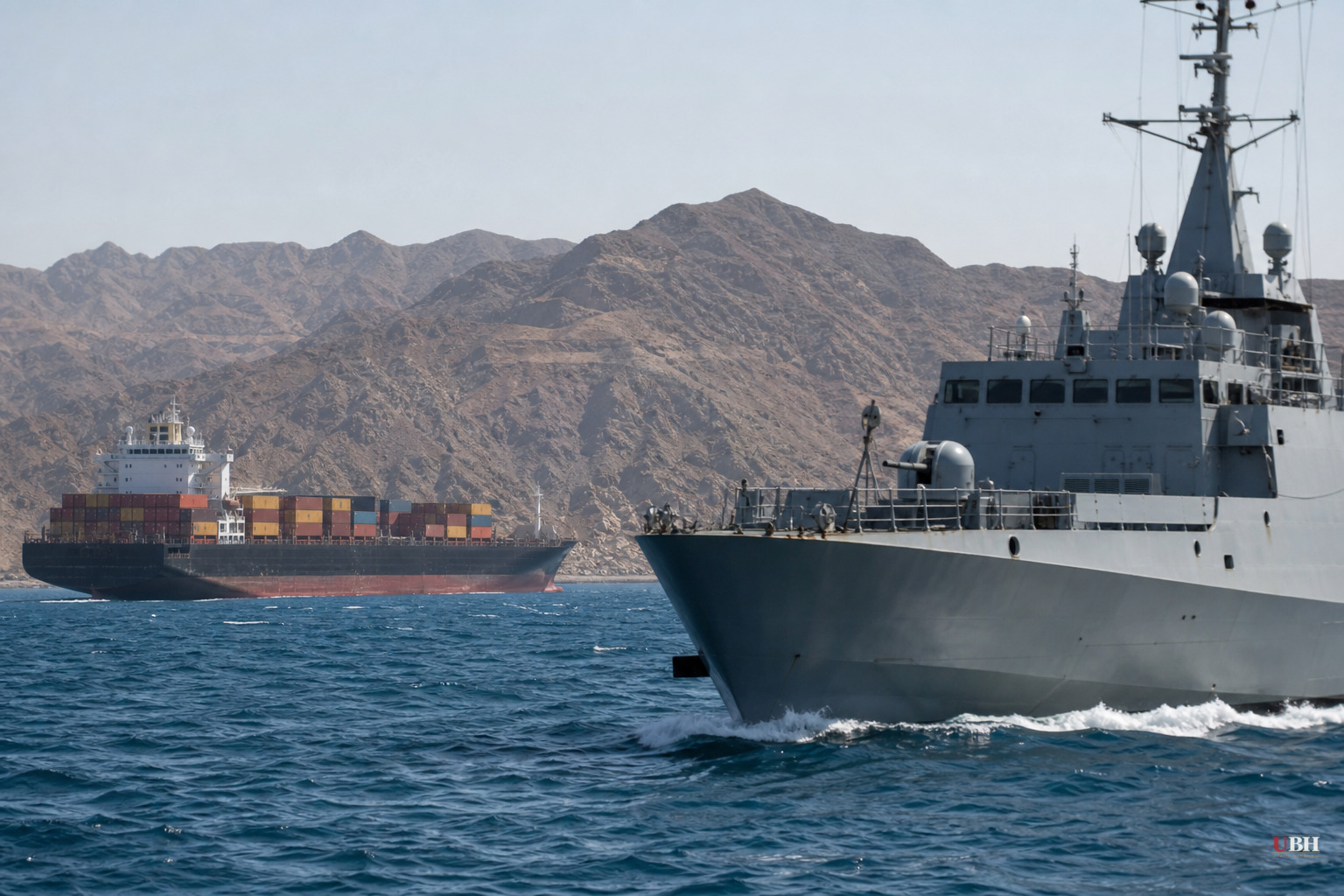
Yemen's Iranian-backed Houthi movement announced Monday it is imposing a maritime blockade against Saudi Arabia, escalating a confrontation that has been building for weeks. The declared target: Bab el-Mandeb, the narrow strait at the southern end of the Red Sea that carries about 12% of world trade and a quarter of global container shipping, according to PBS, citing the Associated Press.
Houthi military spokesman Yahya Saree announced the move in a video statement, calling it an "equation of an eye for an eye." Nasruddin Amer, deputy head of the Houthi media office, said on X the strait closure was retaliation for what he called Saudi Arabia's "unjust blockade on Yemenis for over 10 years."
Saudi Arabia has not issued a public response, according to PBS. Whether the Houthis will repeat the sustained campaign they ran during the Israel-Hamas war, when they struck more than 100 vessels in the Red Sea over several months, remains unclear.
How this started
The immediate trigger was a Houthi-controlled flight that landed in Sanaa carrying Houthi leaders home from Iran, where they had attended the funeral of Supreme Leader Ayatollah Ali Khamenei. The flight landed without approval from the Saudi-led coalition that has policed Yemen's airspace since 2015.
Experts told the Associated Press the Houthis used that flight deliberately, to assert they can now make independent decisions over Yemeni airspace without Saudi sign-off. Saudi Arabia responded by striking Sanaa International Airport, an apparent attempt to intercept the returning flight. The plane landed safely at a different airfield.
The Houthis then launched missiles and drones at Saudi Arabia's Abha International Airport, described by PBS as the most serious confrontation between the two sides in years. Monday's blockade announcement is the next rung up that ladder.
Why the strait matters
Bab el-Mandeb sits at the gateway between the Red Sea and the Gulf of Aden, feeding traffic to and from the Suez Canal. Roughly 12% of global trade moves through it. Any credible threat to that route pushes shipping insurers and carriers to reroute around Africa, adding weeks and cost to global supply chains, a pattern already seen during the Houthis' Gaza-war-era Red Sea campaign.
The timing compounds the risk. Saudi Arabia has been relying on its East-West Pipeline to move millions of barrels of crude daily to the Red Sea, an alternative route it needed after Iran cut off the Strait of Hormuz following the February 28 U.S.-Israeli strike. If the Houthis can meaningfully threaten Red Sea shipping too, Saudi Arabia loses its workaround for oil exports at the same moment its northern export route through Hormuz is already choked off.
The blockade Saudi Arabia has run since 2015
Saudi Arabia leads a military coalition that imposed an air and sea blockade on Yemen back in 2015, after the Houthis seized Sanaa and forced Yemen's government into exile the year before. That blockade, which the Houthis have long called collective punishment on Yemeni civilians, is the grievance Amer cited directly in Monday's announcement. A truce reached in 2022 had held, imperfectly, until this latest airport strike broke it.
There's a legitimate argument buried in the Houthi framing, even if their broader record of attacking commercial shipping and civilian infrastructure makes them nobody's sympathetic actor. A decade-long blockade has strangled Yemen's economy and access to fuel, food and medicine, a humanitarian cost that has been documented for years by aid groups operating in the country. The Houthis frame this as retaliation rather than aggression, though missile strikes on an international airport or threats to a global shipping lane represent a different order of response.
What's unresolved
Saree said the Houthis are prepared to meet "any foolish act" from Saudi Arabia with "comprehensive and decisive escalation." Neither Riyadh nor Washington has laid out a response as of Monday. The AP's coverage notes the 2022 truce is now under direct threat, but does not indicate whether international shipping firms have yet begun rerouting vessels away from Bab el-Mandeb in response to the announcement.
The open question is how far the Houthis are willing or able to go. Their prior Red Sea campaign against commercial shipping during the Gaza war showed they can inflict real damage on global trade for months at a stretch. Whether Monday's announcement is a similar sustained campaign or a symbolic warning shot tied to the airport strike will likely become clear only once ships start moving, or stop moving, through the strait in the coming days.
Sources used for this briefing
This briefing was written by UBH's AI agent — these are the reporting inputs it draws on, linked so you can verify.


