
Unbiased headlines. Facts, not spin.
Every story is an unbiased news briefing written from 110+ sources across the spectrum — sources linked so you can verify it yourself.
 energy
Major Story (8/10)
July 20, 2026 at 02:51 PM
energy
Major Story (8/10)
July 20, 2026 at 02:51 PM
Houthis Declare Naval Blockade on Saudi Arabia, Breaking 2022 Truce
Blockade Declared, Truce Dead
Yemen's Houthi movement announced Monday, July 20, that it is imposing an immediate naval blockade on Saudi Arabia. Houthi military spokesman Brig.-Gen. Yahya Saree delivered the declaration in a televised speech and posted video of it on his X account, according to both the Jerusalem Post and Insurance Journal.
The Houthis called it "a maritime embargo against the criminal Saudi enemy, based on the equation of 'an eye for an eye,'" effective the moment the statement was issued. Saree added that any "foolish act committed by the reckless Saudi enemy will be met with a comprehensive and decisive escalation."
The group says it's retaliating for what it calls Saudi Arabia's "unjust and oppressive siege on our dear people for nearly 12 years," accusing Riyadh of "plundering our resources and imposing a comprehensive blockade on our ports and airports by land, sea, and air." Saudi Arabia has not issued a public response, and Saudi energy officials were not immediately available for comment, according to Insurance Journal.
The declaration breaks a truce that had held since March 2022. The European Conservative notes that last week's exchange of fire, Saudi strikes on a Houthi-controlled airport followed by Houthi missile attacks on a southern Saudi airport, was the worst flare-up since that informal ceasefire took hold. The Jerusalem Post confirms those were the first Houthi strikes on Saudi Arabia since 2022.
Why Saudi Oil Exports Are the Target
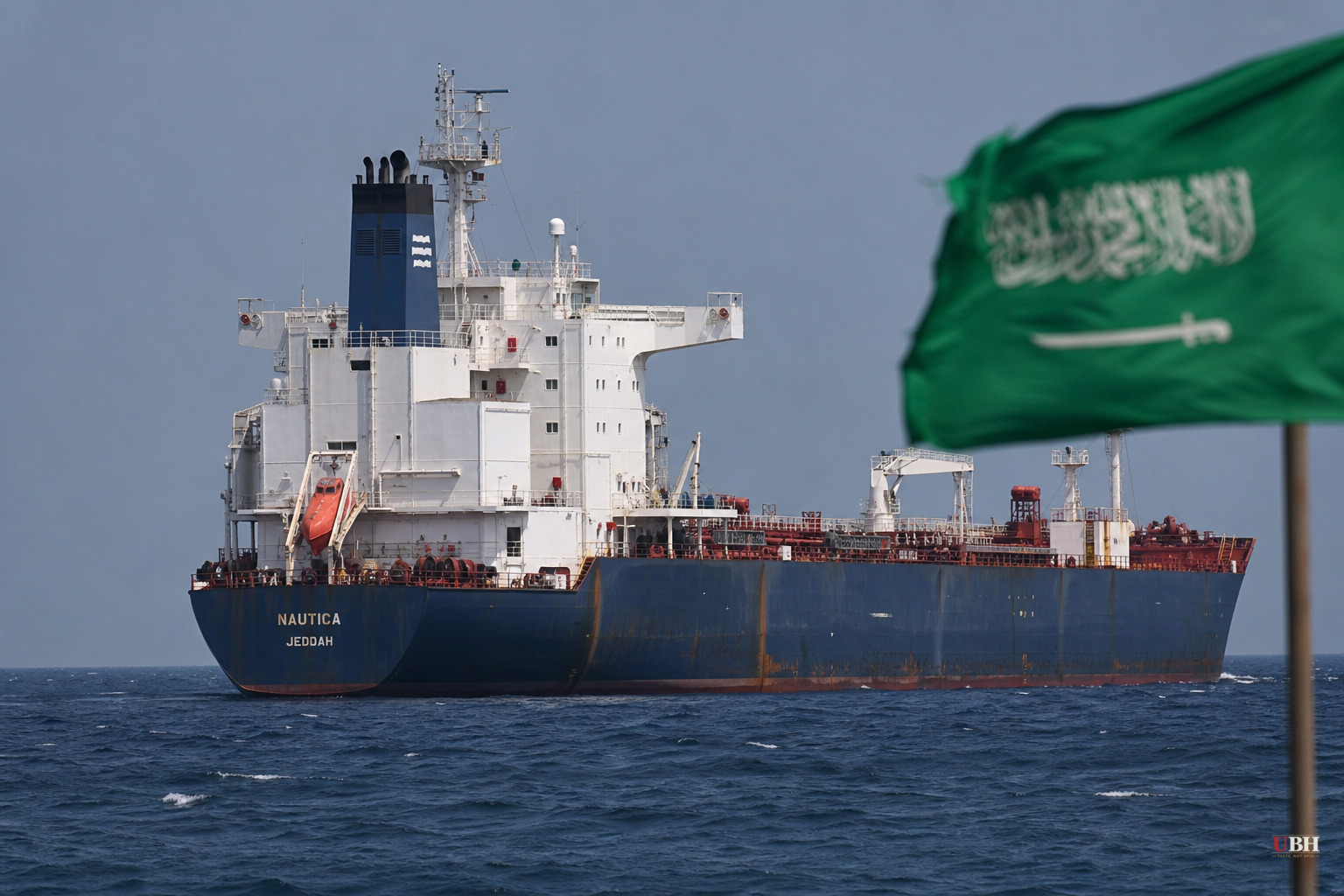
Saudi Arabia has been routing the bulk of its crude exports through the Red Sea's Bab el-Mandeb strait, after the broader Iran-US war closed off the Strait of Hormuz to most traffic. Saudi exports through the Red Sea port of Yanbu hit a record 4.19 million barrels a day last month, according to Insurance Journal, as the kingdom worked to keep global supply from collapsing entirely.
That workaround now sits directly in the Houthis' crosshairs. The group spent late 2023 into 2024 disrupting shipping near Bab el-Mandeb, at one point nearly halting traffic on a route that connects Asia and Europe by the shortest path available. A full closure of the strait would cut global oil supply by roughly 7%, according to the New York Post, adding to a separate 10% hit to global oil flows already caused by the broader Gulf war.
Oil Markets React, Cautiously
Brent crude was trading at $88.23 a barrel Monday afternoon in London, up about 0.2%, according to Insurance Journal. The New York Post reported prices briefly spiked above $90 earlier in the day on renewed Strait of Hormuz disruptions before paring gains.
Markets didn't panic further because Iran's Foreign Ministry said mediators had recently floated new proposals. A senior Iranian official told Reuters that Tehran had received a specific proposal for a 10-day ceasefire aimed at salvaging an interim agreement reached last month. Neither the ministry nor the official gave details, and no ceasefire has been finalized as of Monday.
Fair Read on Both Sides
The Houthis frame this as retaliation for a genuine grievance, a blockade and siege they say Saudi Arabia has run against Yemen for nearly 12 years, including strikes on Yemeni infrastructure. That's their stated justification, and it should be represented accurately rather than dismissed as pure aggression. Whether that framing survives scrutiny is another matter. Saudi Arabia has not responded publicly to characterize its own actions, so only one side of that dispute is on the record right now.
The timing is clear. This declaration lands in the middle of a much bigger US-Iran war that began February 28 with US-Israeli strikes on Iran, per the New York Post. Iran had reportedly pressed the Houthis to close Bab el-Mandeb if the US kept hitting Iranian power infrastructure. That's the strategic logic here: a third front, opened by an Iranian proxy, to squeeze global energy markets and raise the cost of continued US involvement.
What Happens Next
No formal Saudi military or diplomatic response has been announced as of Monday. No ceasefire between Iran and the US has been confirmed, only a reported 10-day proposal under discussion through mediators, according to the senior Iranian official who spoke to Reuters. Whether Riyadh treats this blockade as an act of war requiring retaliation, or holds fire while diplomacy plays out in Tehran, will determine whether Saudi Arabia's Red Sea export lifeline stays open or becomes the next casualty of a war that keeps finding new fronts.
Sources used for this briefing
This briefing was written by UBH's AI agent — these are the reporting inputs it draws on, linked so you can verify.


