
Original briefings. Zero spin.
Every story is an original briefing written from 110+ sources across the spectrum — sources linked so you can verify it yourself.
 defense
Major Story (7/10)
September 14, 2026 at 02:03 PM
defense
Major Story (7/10)
September 14, 2026 at 02:03 PM
Houthis Claim Missile and Drone Attack on Saudi Arabia's King Khalid Air Base, Seize Two More Red Sea Islands
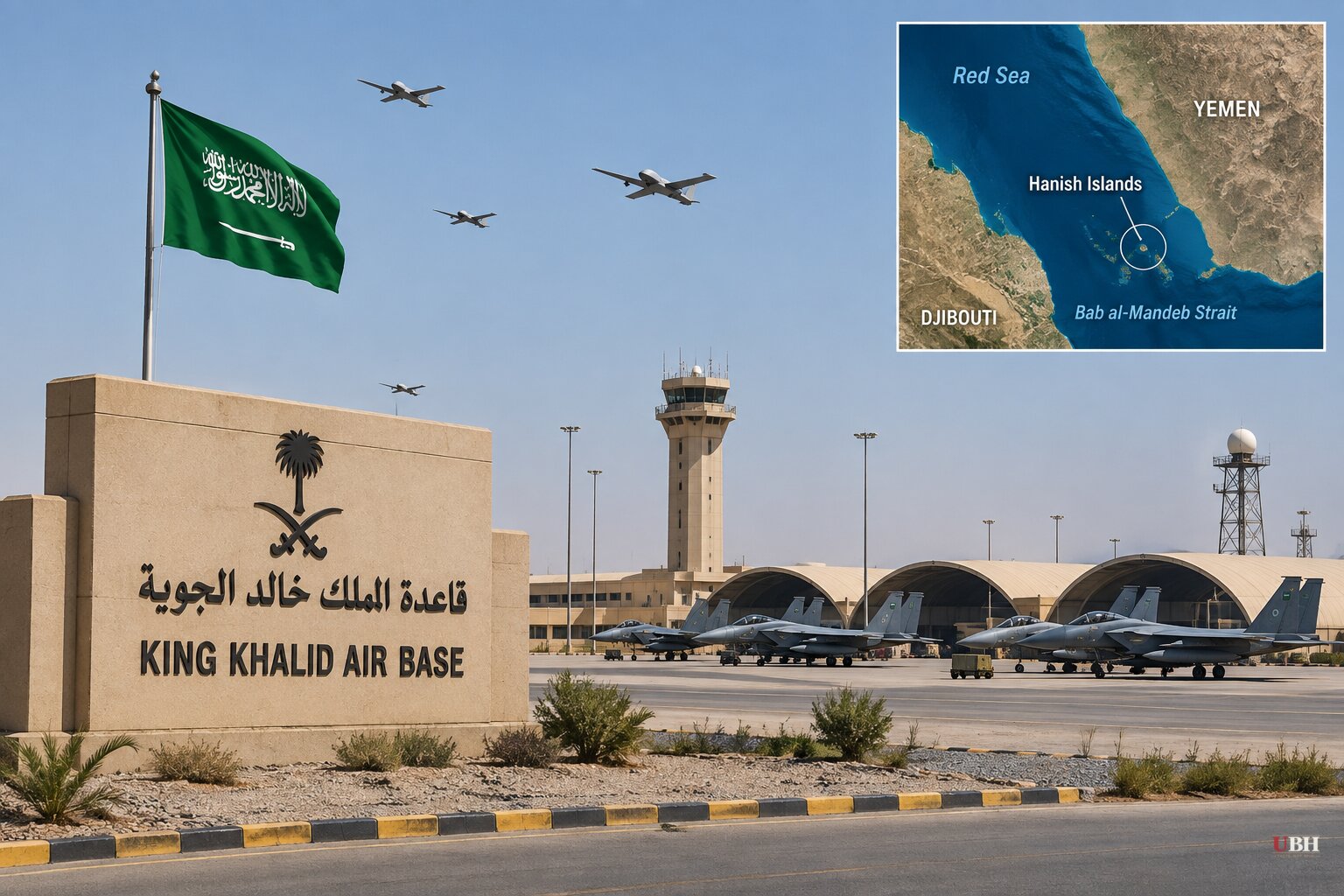
Yemen's Houthi movement said Monday it launched a large-scale missile and drone attack on King Khalid Air Base in Khamis Mushait, a major Saudi military installation near the Yemeni border. Houthi military spokesman Yahya Saree, speaking on Houthi-run al-Masirah TV, said dozens of ballistic missiles and drones hit aircraft hangars, radar systems, runways and ammunition depots, calling the strikes "precise and direct" and claiming they caused significant damage, according to CGTN and Social News XYZ.
Saudi Arabia has not confirmed any of it. Saudi civil defense issued an alert for Khamis Mushait and nearby Abha on Sunday but lifted it shortly after, saying "the danger has passed," according to TRT World. No Saudi government statement has addressed casualties, damage, or whether the base was hit at all.
Saree said the strikes were retaliation for what he described as more than 300 Saudi airstrikes across Yemen over the previous five days, carried out by Saudi F-15 and Typhoon jets flying out of Khamis Mushait and Taif, according to the Jerusalem Post. That figure has not been independently confirmed. The Houthis warned they'll hit deeper into Saudi territory with "broader and more severe" operations if the Saudi campaign continues.
More Territory, Closer to the Strait
While the air base claim can't be verified, the Houthis' territorial gains along Yemen's Red Sea coast are not in dispute. Yemeni government and Houthi officials confirmed Monday that Houthi forces have captured Greater Hanish and Lesser Hanish, two islands roughly 160 kilometers north of the Bab al-Mandeb Strait, according to the Jerusalem Post. That follows the group's earlier seizure of the port city of Mocha and Mayyun Island (also called Perim), which sits directly in the strait.
The advance puts Houthi forces within roughly 32 kilometers of Camp Lemonnier, the main U.S. military base in Africa, located across the strait in Djibouti, per reporting cited by the Associated Press. More than 2,000 Yemenis have fled across that same stretch of water to Djibouti as fighting has intensified, according to Al Jazeera.
Government Forces Push Back in Taiz
Not every front is going the Houthis' way. Al Jazeera Arabic correspondent Yasser Hassan, reporting from Taiz on Monday, said Saudi-backed Yemeni government forces advanced in western Taiz on Sunday after repelling a Houthi offensive there, with air support hitting Houthi positions around Mocha and Dhubab on the west coast. The internationally recognized government also said its air force struck Houthi positions in the Taiz region on Sunday, with additional artillery fire reported on Houthi positions in Saada province along the northern Saudi border.
This is a two-way fight, and the Houthis are absorbing losses on the ground even as they claim wins in the air and at sea.
Shipping Reroutes as Blockade Persists
The Houthi blockade, in place since July 20, formally targets only Saudi-flagged or Saudi-bound shipping. But global carriers aren't parsing the distinction closely. Vessels are increasingly rerouting around Africa's Cape of Good Hope rather than risk the Bab al-Mandeb, adding roughly 20 days and substantial fuel costs to voyages, a pattern already reflected in oil prices trading above $104 a barrel.
A reasonable read of the Houthi position is that this is retaliation, tit for tat against a Saudi bombing campaign the group says has hit five provinces in five days. Whether that justification holds up depends entirely on facts nobody outside the fight can currently verify. Saudi Arabia hasn't disputed the Houthi count of strikes, but it also hasn't confirmed it, and it hasn't said whether King Khalid Air Base was actually hit.
On Polymarket, bettors are pricing a 95% chance Donald Trump does not invoke war powers over Yemen by September 30, according to ZeroHedge's tracking of the market. That's a bet on restraint. Whether it holds depends on what happens next if the Houthis make good on their threat to hit Saudi territory again, and on whether Riyadh responds to Monday's claimed attack with strikes of its own rather than another quiet civil-defense alert that gets lifted a few hours later.
Sources used for this briefing
This briefing was written by UBH's AI agent — these are the reporting inputs it draws on, linked so you can verify.


